Nature
 PUBLISHED



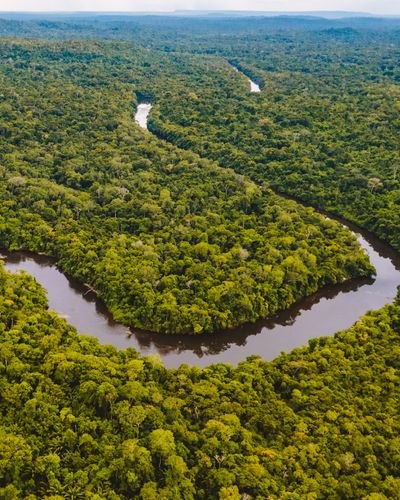


Deep in the Amazon rainforest are patches of mysterious soil. Standing in contrast with the typical reddish soil that dominates the verdant and richly biodiverse region, this strange, almost tar-black earth is known to be significantly more fertile. What's more, it may not be completely natural either.
The rest of this article is behind a paywall. Please sign in or subscribe to access the full content.For a long time, researchers have been aware of the existence of terra preta, or so-called “dark earth,” which has been found near rivers and in and around human settlements scattered throughout the Amazon basin. Some of these settlements are thousands of years old.
The soils are, in comparison with the acidic and relatively less fertile earth in the wider area, filled with nutrients – especially nitrogen, potassium, and phosphorus – and capable of sequestering larger amounts of carbon. They also contain an abundance of microbial communities.
As you can imagine, this has big impacts on the local ecology. In 2023, scientists found that trees grown in pots of dark earth soil were six times taller than those grown in typical Amazonian soil after 120 days. They also discovered that adding 20 percent terra preta to degraded soil doubled its crop yield. The researchers concluded that this incredible soil may offer a “secret weapon” in the fight against climate change.
“[O]ur data point to a mixture of soil nutrients and adapted microorganisms to improve the establishment of plant trees in restoration,” the team writes in their paper.
“[Amazonian dark earths] provide a wide range of organic matter, chemical compounds, and microorganisms that enhance plant development and may be used as biotechnological solutions in restoration ecology.”
The key point here is that the researchers aren't advocating using the earth to treat nutrient-poor areas. Doing so would quickly deplete this scarce resource that has taken centuries to develop. Instead, they believe it could be used as a kind of blueprint for creating similar rich soils for future ecological projects.
Dark earth is also an efficient carbon trap. Research has found it is capable of holding up to 150 grams (0.3 pounds) of carbon compared to the surrounding soils, which only hold around 20 to 30 grams (0.04 to 0.06 pounds).
Although debates surround the origins of this incredible earth, scholars generally agree that it was created by centuries of human activity. The soil contains a valuable mix of inorganic materials, including ash, pottery, bones, and shells, as well as organic matter like manure, urine, and food remains. But was this soil deliberately created, or was it an unintentional outcome of humans living in the area? Well, it looks like it may well have been the former, with ancient pre-Hispanic Indigenous civilizations creating the soils to foster better crops.
In another study from 2023, scientists at the Federal University of Santa Catarina, Brazil, examined soil of the Kuikuro Indigenous Territory on the upper Xingu River. This soil came from four archaeological sites, two historical villages, and one modern village in the southeastern Amazon of Brazil. Radiocarbon dating shows that the oldest dark earth samples were around 5000 years old, though most were between 300 and 1000 years of age.
The researchers compared soil samples taken from mounds bordering the archaeological and historical villages with those collected at the periphery of these sites. They found that samples taken from the residential areas had double the amount of organic carbon in them and a higher pH. This made the soil far more fertile than the periphery samples.
The team found a similar phenomenon in the soils taken from the modern village, suggesting that indigenous communities are continuing to cultivate dark earth, even today.
[HT BBC Science Focus]