Nature
 PUBLISHED



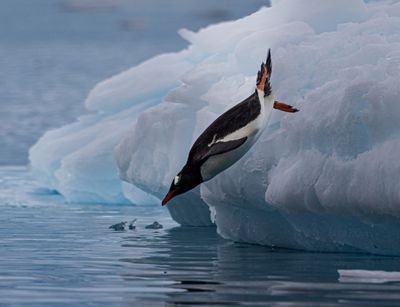


Penguins might be synonymous with the world’s coldest places, but how many species actually are there? For the past 100 years or so, scientists have recognized 17, but new research suggests we’ve been miscounting, and that there should actually be four distinct species of gentoo penguins instead of one.
The rest of this article is behind a paywall. Please sign in or subscribe to access the full content.Gentoo penguins live both on Antarctica and the surrounding islands, including South Georgia and the South Shetland Islands. The penguins are very loyal to their nest sites and will return year after year to the same ones.
These factors combined prevent large amounts of gene flow and can cause genetic isolation between penguins at different nest sites, especially those separated on different islands. This, alongside other factors, has led a group of researchers to conclude there are four species of gentoos, rather than one.
Three of these species are already known subspecies, which the researchers recommend are elevated to full species status level, while one is a new species altogether.
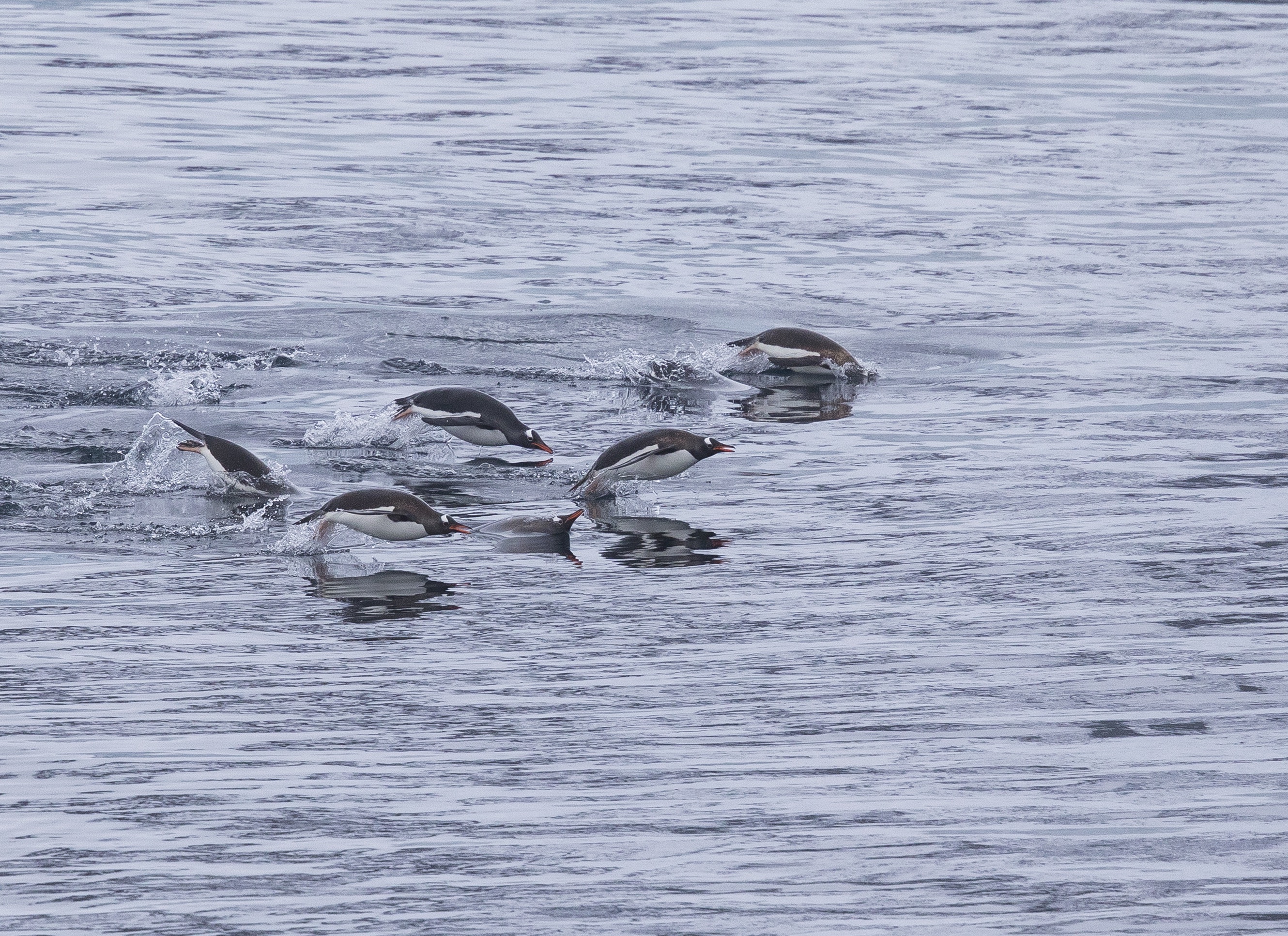
“There's probably no species of penguin where the taxonomy has been more debated than the gentoo penguin,” said Bowie, a curator at UC Berkeley’s Museum of Vertebrate Zoology, in a statement. “For over 100 years it's been controversial as to how many species or how many subspecies there are. What this paper does is try to address that question using cutting-edge integrative approaches.”
The team suggests that the species arose due to genetic isolation and then became adapted to their specific island habitat niche due to the differing geography of each area. To confirm what they thought, the team looked at the genetic data of 64 gentoo penguins across 10 different breeding colonies around the Southern Ocean, representing almost the whole geographical spread of gentoo populations.
The team observed that eastern gentoos were found in habitats with high precipitation and mostly stable temperatures, with the genetic adaptations to match. Southern gentoos were more likely to be found in regions with high salt content in the water and ice cover. They were also associated with sea temperatures consistent with the changing temperatures seen around the Antarctic Polar Front over a year.
Based on both genetic and morphological results, the team suggests elevating these three previous subspecies in their paper to full species status:
- “The northern gentoo, Pygoscelis papua, is restricted to the Falkland/Malvinas and Martillo Islands in South America.
- The southern gentoo, P. ellsworthi, is the only polar species distributed across the Antarctic Peninsula, the South Orkneys, the South Shetlands, and South Georgia Islands, the latter showing signs of incipient genomic divergence and important morphological differentiation. In this context, we propose designating the South Georgia gentoo penguin as the subspecies P. e. poncetii, while those inhabiting the remainder of the Antarctic distribution correspond to P. e. ellsworthi.
- The eastern gentoo, P. taeniata, includes colonies on the Crozet, Marion, and Macquarie islands, represented by the subspecies P. t. taeniata from Macquarie Island and an as-yet undescribed subspecies to be described from Crozet and Marion islands."
The gentoos of the Kerguelen Islands, also known as the Desolation Islands, are – according to the researchers – an entirely new species not even recognized as a sub-species before. This represents the first new penguin species named in over 100 years, the southeastern gentoo penguin, Pygoscelis kerguelensis.
While this research shows how each species is adapted to its specific environment, it does raise concerns about whether the penguins will survive in each of these conditions when faced with the challenges of climate change. Unfortunately, using climate models that show what the habitats might look like in 2050, all but one of the species would be living on uninhabitable islands. Only the species on Antarctica itself will have the potential to expand its range.
“In terms of climate change, island species that have really low population sizes could be compared with the sub-Antarctic gentoo penguins,” said Juliana Vianna, one of the paper’s senior authors and a professor of ecosystems and environment at Andrés Bello National University in Santiago, Chile. “Galapagos and other island penguin species, because they’re endemic to these islands, will find no place to go after a change in their environment. Those islands are very isolated, and these penguins cannot adapt easily to colonize any other region.”
The paper is published in Current Biology.