Humans
 PUBLISHED



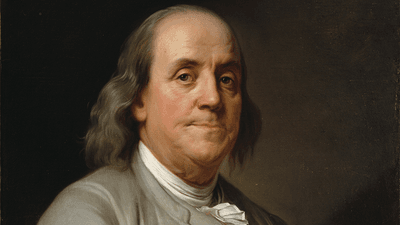


Benjamin Franklin lived in London from 1757 to 1774 CE. No. 36 Craven Street, the house he occupied whilst working in England, is now the last still-standing home formerly lived in by the Founding Father.
The rest of this article is behind a paywall. Please sign in or subscribe to access the full content.In 1998, The Friends of Benjamin Franklin House began work to turn the house into a museum, dedicated to Franklin's life. At that point, there wasn't much reason to suspect they would find over a thousand bone fragments belonging to multiple individuals, but excavating a small pit in the back of the house, in an area that was once a garden, that's exactly what they discovered.
When they first found the bones, it prompted them to contact the authorities for investigation. The bones and bone fragments, those investigations found, belonged to at least 15 individuals, and showed signs of being methodically cut apart.
Of course, we are not talking about a secret serial-killer life of one of the US Founding Fathers, but gathering all the facts they found that it was likely that Franklin knew of the body parts, knew of illegal activities within the house, and was at the house when they were buried there 200 years prior.
Looking at the house's history, it was quickly clear what had happened. Whilst staying on Craven Street, Franklin lived with his landlady Margaret Stevenson, her daughter Polly, and Polly's husband William Hewson, the culprit behind the pile of bones discovered in what used to be the garden.
Hewson, born in 1739, came to London to train in medicine under esteemed surgeons and anatomists William and John Hunter. After studying with the two, they allowed Hewson to begin teaching other students in anatomy.
A disagreement broke out between Hewson and William at one point, after Hewson decided not to live with the anatomists at their house or lecture halls, but was settled when Franklin mediated between them. Hewson eventually began working from home, which is a little unusual for a modern-day anatomist. In September 1772, whilst Franklin was still there, he began teaching anatomy on Craven Street.
It wasn't exactly the most legal of professions back then. In 1752, with pressure from the medical profession, the Murder Act allowed anatomists to take the bodies of executed murderers for study and teaching new medical professionals, though only at the Company of Surgeons in London. The problem was that there weren't nearly enough murderers to go around, and so anyone looking to teach or study anatomy often resorted to paying "resurrectionists" or, to be more accurate, "graverobbers" to supply bodies to them. In the case of Burke and Hare, they cut out the middle-man and simply murdered people, transforming them directly into what the anatomists were looking for.
Franklin was likely aware of the school of anatomy taking place within his house, and the methods through which anatomists came by their cadavers, though there isn't much evidence to suggest that he was involved in dissections on the premises. Though maybe you aren't too concerned with those kinds of morals, when you yourself own slaves.
Unfortunately, the project did not last very long. In 1774, Hewson contracted septicemia during a dissection, and died shortly afterwards. The loss had an effect on Franklin.
"Our Family here is in great Distress. Poor Mrs. Hewson has lost her Husband, and Mrs. Stevenson her Son-in-law. He died last Sunday Morning of a Fever which baffled the Skill of our best Physicians," Franklin wrote in a letter to his wife, neglecting to mention his occasional habit of burying body parts in the garden.
"He was an excellent young Man, ingenious, industrious, useful, and belov’d by all that knew him. She is left with two young Children, and a third soon expected. He was just established in a profitable growing Business, with the best Prospects of bringing up his young Family advantageously.”
Whilst certainly surprising to find all those body parts, many with precise cuts demonstrating amputation, it was a bit of a bonus for the museum. As well as being the last surviving home of Franklin, visitors now get a bit of history of medical dissections and graverobbing thrown into the deal.