


 Humans
 PUBLISHED



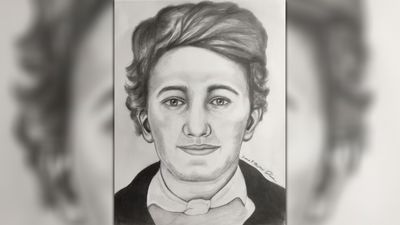


Researchers have identified the remains of four more members of the crews of the Terror and Erebus. This achievement was only possible because distant relatives offered DNA donations to help with the process, which has finally settled a debate that has lasted more than a century.
The rest of this article is behind a paywall. Please sign in or subscribe to access the full content.The failed expedition has now become something of legend. The mysterious fates of its two ships, HMS Terror and HMS Erebus, have even inspired historical horror fiction. The story goes like this: On May 19, 1845, the expedition led by Sir John Franklin set sail from Greenhithe, in Kent, England, in order to explore the Northwest Passage, an uncharted sea route across the top of North America in Arctic waters.
When the expedition set off, there was a total of 134 members of crew aboard the two vessels, which were equipped with the latest technologies the British Admiralty believed they would need for the mission. They also carried enough supplies to last the crew for three years, though Franklin believed they could be rationed for five years if needed.
During the first leg of the journey, the expedition lost five crew members who either quit due to poor health or disciplinary issues. The ships carried on with the 129 men, but this was only the first setback. Things were about to get a lot worse.
In September 1846, after surviving a winter off Beechey Island, Nunavut, the ships got trapped in ice just off King William Island. Then, in 1847, Franklin died. The remaining crew remained with the trapped ships until April 22, 1848, when they eventually decided to abandon them to their frozen fate as they tried to make their way to the Canadian mainland. No one survived.
Three years in the Arctic would have severely weakened the survivors before they even ventured out on the ice sheets. In 1848, Jane Franklin (Franklin’s wife) and British officers sent the first of two missions to investigate the lost expedition. During this time, the British Navy found the graves of some crew members (John Torrington, William Braine, and John Hartnell) on Beechey Island. While exploring the Boothia Peninsula during the second mission in 1854, Dr John Rae, a Scottish surgeon and explorer, met members of the Inuit who reported that some white men had died of starvation near the Great Fish River.
They told Rae that some of the crew members had even resorted to cannibalism in a desperate attempt to survive – a report that caused extreme controversy back in Britain.
One hundred and sixty years after Rae’s search, researchers finally pinpointed the site of the Erebus and then, two years later in 2016, the site of the Terror. This was achieved with modern technology as well as Inuit testimonies. Then, in 2019, Parks Canada released incredible footage showing the interiors of the two sunken vessels.
Over the decades, researchers have also uncovered remains thought to belong to the lost crew members on King William Island and the Adelaide Peninsula. In 2021, anthropologists from the Faculty of Arts at the University of Waterloo used DNA donated by relatives to identify John Gregory, an engineer of HMS Erebus. Then, in 2024, they identified James Fitzjames, the Captain of the Erebus who showed signs of being cannibalized.
Now, the team have identified another three crewmen from this tragic venture, bringing the total up to six identified persons.
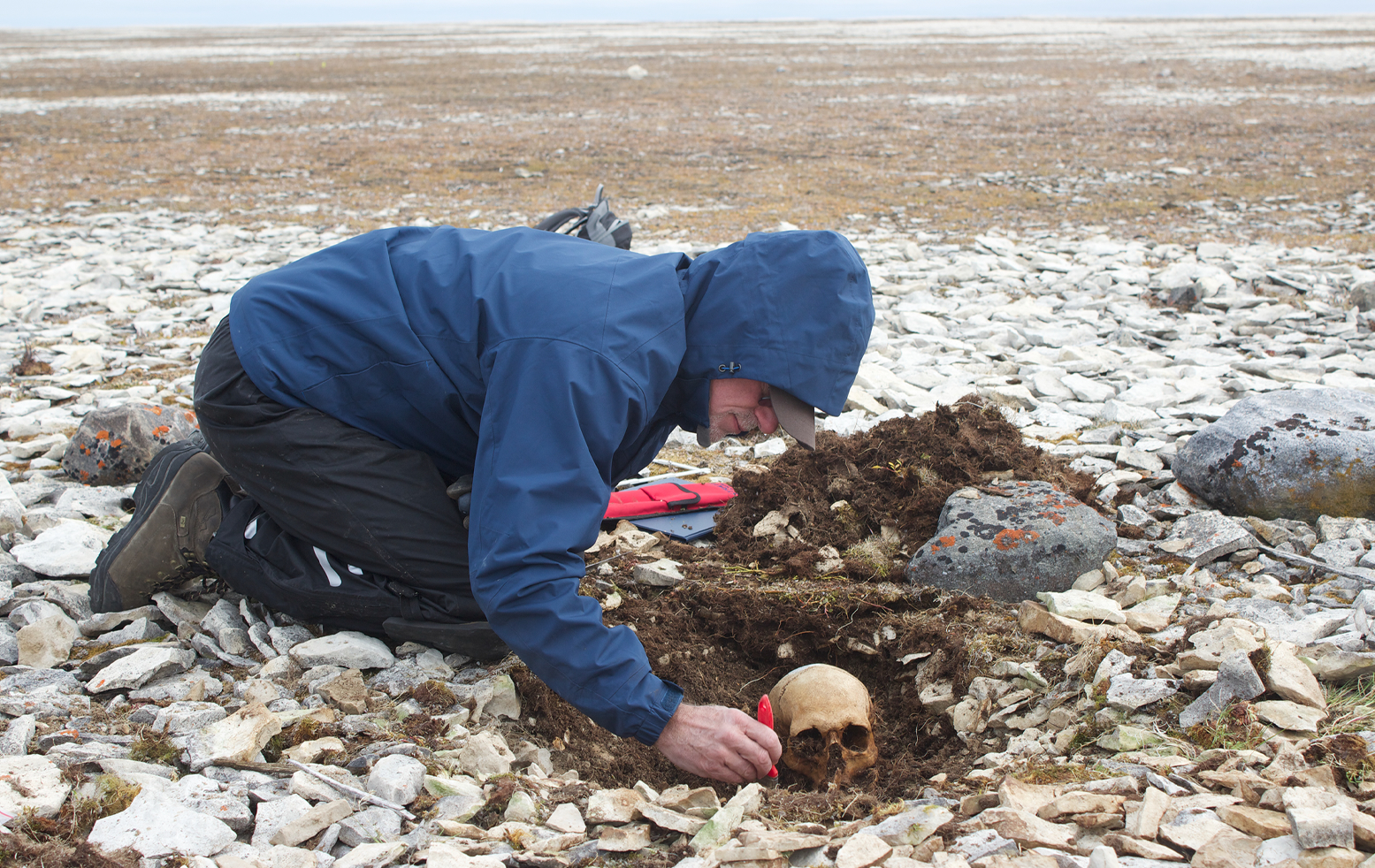
“Three of the sailors we have identified are from HMS Erebus, and they all died at Erebus Bay. The fourth, the only sailor from the HMS Terror to be definitively identified by DNA analysis, was found 130 kilometres [81 miles] away,” Dr Douglas Stenton, Adjunct Assistant Professor of anthropology at Waterloo, explained in a statement.
This lone sailor has been identified as Harry Peglar, the Captain of the Foretop on HMS Terror. This marks a significant moment in the story of the lost expedition as it settles a mystery that dates back to 1859, when a body was discovered with Peglar’s personal documents but was not wearing clothing appropriate to his rank. These documents, known as the “Peglar Papers” included some poetry, Peglar’s seaman’s certificate and descriptions of some events from the expedition.
“It was interesting to conclusively identify this sailor because the body was found with almost the only written documents from the expedition ever found,” Dr Robert Park, Professor of anthropology at Waterloo, added.
The researchers identified the three other expedition members as William Orren, an Able Seaman; David Young, Boy 1st Class; and John Bridgens, Subordinate Officer’s Steward.
Their identification shows that they were among the crew who managed to survive the first three years of the expedition but died while trying to escape the Arctic.
“For the living descendants, these findings provide previously unavailable details regarding the circumstances and locations of their relatives’ deaths, as well as the identities of some of the shipmates who died with them,” Stenton explained.
In addition to giving names to some of the remains recovered over the years, the research also showed that John Bridgens is an ancestor of a BBC journalist, Rich Preston.
“I was so intrigued when Dr. Stenton first contacted me telling me about his work and asking if I’d be willing to provide a DNA sample,” Preston said.
“It was such a huge surprise to hear from the team that my DNA was a match with one of the sailors on the doomed Franklin expedition. I used to work on a genealogy show for the BBC that traced people’s fascinating family stories, and so to discover that there’s such an interesting tale in my own family’s past feels very exciting.”
The key to these identifications rests in the DNA donated by descendants of the deceased. Stephen Fratpietro, study co-author from Lakehead University, extracted DNA from the archaeological samples and compared them with mitochondrial and Y-chromosome DNA from these descendants. The analysis yielded matches with genetic distance of zero, which is strong proof that they share a common ancestor.
Eligible descendants are determined by genealogical documentation that demonstrates a direct and unbroken maternal or paternal lineage. As there remain many more bodies left to be identified, the researchers are calling for other descendants of the Franklin expedition to connect with them to see if their DNA can help give a name to another lost person.
The study is published in two papers in Journal of Archaeological Science: Reports and Polar Record.



 7
7