Culture and Society
 PUBLISHED





Imagine the following scenario: you’re at home alone one day when you realize your house has been invaded. This invasion has nothing to do with people. Instead, your home has been infiltrated by something much smaller: a mouse. You’ve not seen this little critter directly, but every day you see more and more signs that such a creature has invaded your space. Perhaps you see something resembling droppings in a corner, maybe you notice nibble marks on food packages, or maybe you even hear rustling under the floorboards or behind the walls. Something has to be there, right, and a mouse is a likely culprit.
The rest of this article is behind a paywall. Please sign in or subscribe to access the full content.But what if it is just your imagination? The droppings could be bits of dirt – you’ve never seen mouse poop after all, but you know they produce it – and maybe the nibble marks were actually packaging damage that was always there. Houses make noises, and so maybe before you were told by your neighbor that so-and-so down the road has had mice recently, you would have barely registered the odd sound. And yet ever since you’ve started noticing these small, isolated signs, you’ve started detecting more and more, as if your senses are now so finally turned to the possibility of a rodent invasion that you’re now seeing evidence of them everywhere.
How do you confirm your suspicions? How do you prove that the thing you haven’t actually seen is indeed there?
This may sound like a trivial question, after all, mice invade homes across the world, but it is one that strikes at the heart of what it is to be convinced of something’s presence or existence and yet struggle to definitely prove it is real. In fact, there are whole communities of people who believe that something exists and then invest significant time and intellectual effort into finding it.
Bigfooters are an example of this type of community. In fact, I appropriated this mouse example from a new book – Bigfooters and Scientific Inquiry – coauthored by Dr Jamie Lewis, a Reader in Sociology in the School of Social Sciences at Cardiff University, Wales, and Dr Andy Bartlett, a Research Associate at the School of Sociological Studies, Politics and International Relations at the University of Sheffield, England, who use a similar rodent-y scenario to introduce their research into this community.
I spoke to Lewis and Bartlett about this work, and their insights offered a fascinating perspective on this growing community.
To be clear, Bigfooters are people who believe in or claim to have witnessed America’s quintessential ape-like cryptid, Bigfoot, not only believing it is a living creature roaming in the wild but actively looking for it. And far from being dismissible cranks or hostile to science, these passionate cryptozoologists use sophisticated techniques and science-like methods to try to collect and validate evidence of their oh-so-elusive quarry.
The story of the Bigfooters demonstrates that rather than rejecting science, groups of people on the fringes of accepted belief use it to negotiate meaning as well as to orientate themselves within their communities.
Tracking Bigfoot(ers)
The question of whether Bigfoot is real is more or less of secondary concern for this story. At present, there is no credible, verifiable scientific evidence that it exists, despite decades of supposed sightings and investigations, and there is no reason to think this will change. However, just because something lacks a material reality does not mean the idea of it cannot exert an influence on people’s lives.
Ever since Bigfoot became a popular cryptid, many people have become fascinated by its story and the possibility of its existence. And it’s easy to see why. Like its fellow cryptids, Bigfoot appears in innumerable pop culture references that continue to add a mystique to its story, plenty of which blur the lines between presenting it as a creature of myth and one that lives, breathes, and roams the forests of North America.
Documentaries are a good example of this. In recent years, there has been a rise in TV shows exploring fringe beliefs such as Bigfoot, other cryptids like the Loch Ness Monster, ghosts, aliens, so-called Skinwalkers, and so on. Many of these “documentaries” present themselves as factual, evidence-based narratives that look into the “truth” of phenomena that actually have no actual scientific basis to support their claims. And yet, they all invariably rely on a range of scientific ideas or methods to try to make their claims sound convincing.
It was while watching such documentaries during the first COVID-19 lockdown that Lewis became interested in Bigfooters.
“It started with me watching a TV program, I think it was about elephants, on either Animal Planet or the Discovery Channel,” Lewis told IFLScience. “And then the next program that came on was what I thought at the time was a kind of phantom monster hunt. It was four people looking for Bigfoot in the forested areas of North America. A show I later learned was a cult TV show, particularly in America, called Finding Bigfoot.”
These shows, like Finding Bigfoot, Chasing Bigfoot, and Expedition Bigfoot, were all filmed on location and followed Bigfooters as they sought evidence of the creature’s existence in often entertaining, tension-riddled narratives. For Lewis, these performances sparked interesting questions about how communities like Bigfooters accumulate evidence of their specific focus and then attempt to use it to make credible, empirical knowledge claims.
Teaming up with Bartlett, the two set out on their own hunt – rather than searching for the monster itself, they hunted its hunters.
When COVID-19 hit, “travel was out of the question”, Lewis explained; “we were analyzing these TV shows to begin with and Andy said I should supplement them with interviews. The first idea was to maybe get 20 interviews or maybe 30. But it sort of spiraled out of control.”
To date, Lewis and Bartlett have collected 166 interviews with different people. Of these, 104 can be counted as interviews with Bigfooters – non-scientists who spend a lot of time looking for evidence of the creature – 11 people from the wider cryptozoology community, 22 academics from different disciplines, 17 people from the media, and 12 from skeptics who, to varying degrees, are antagonistic towards the community.
A community of communities
One of the first things that the two sociologists point out about their research is that the Bigfooter community is not a homogenous group. Instead, it is a community made up of different voices with different beliefs about the creature.
“I think you'd be hard pressed to call it a community. I think it is a set of communities, at the very least two different communities. But with a lot of factions and a lot of personality disagreements,” Lewis explained.
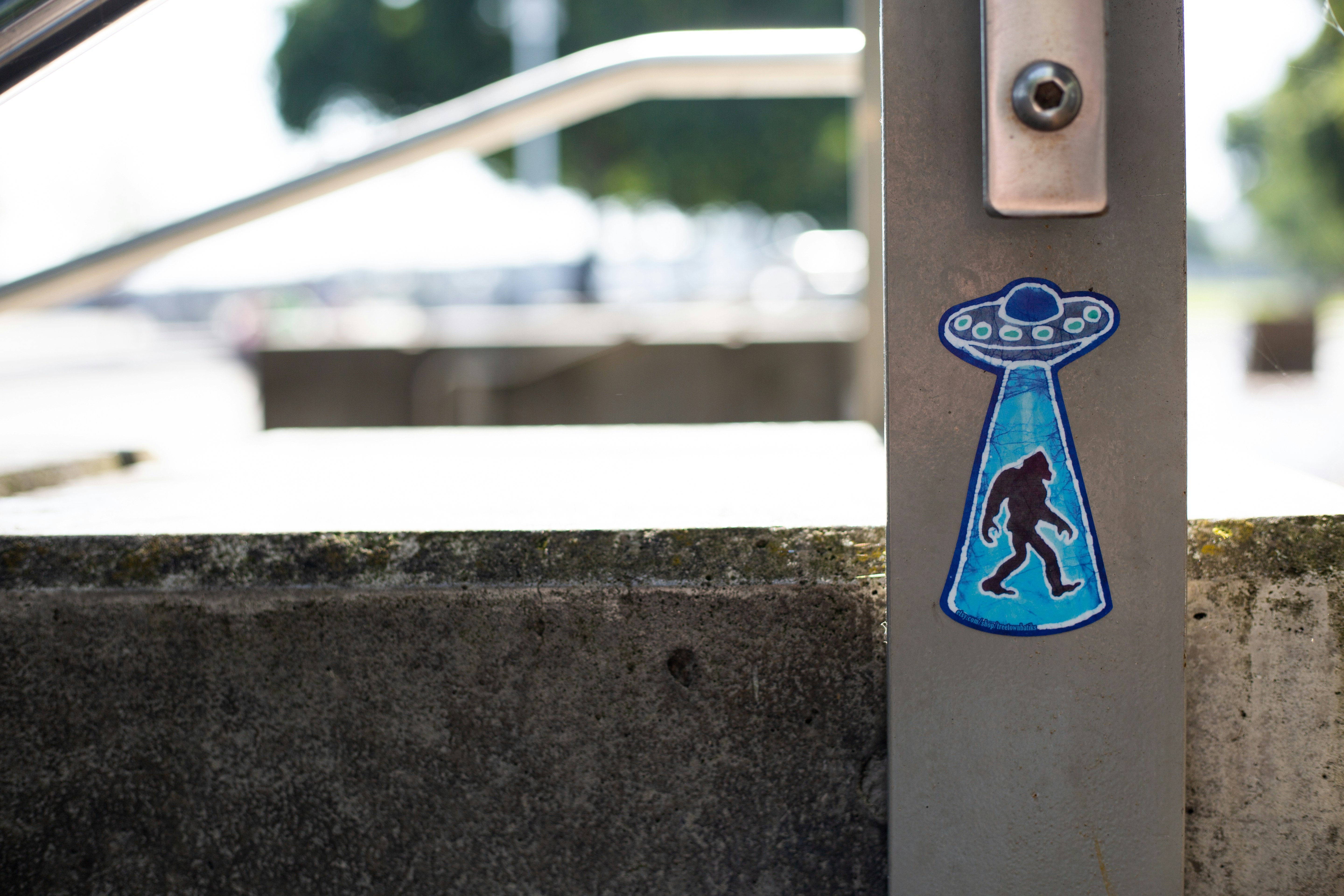
On the one hand, you have a minority of Bigfooters who believe it is actually an extraterrestrial or some other dimensional or supernatural being. These individuals make up around 10 percent of the overall Bigfooter community, and their views are colloquially referred to as “the Woo”. But while they are disparaged by the wider community, their interpretation of the creature’s origins offer a baked-in explanation for why it has never been found – because, you know, “aliens”.
Then there are the other Bigfooters who believe Bigfoot is a hitherto undiscovered or unidentified primate or other biological creature that just needs to be formally identified and classified. Referred to as the “Apers”, these people often believe they are taking part in a science-like activity – looking for evidence and using it to prove something. Rather than being antagonistic to science as a practice, these people are “orthogonal” to it – they respect science while being somewhat counter-establishment.
It is these Bigfooters that formed the focus of this research, but even this more “science”-minded group was made up of subgroups.
For example, Bartlett explained, the Bigfoot Field Researchers Organization (BFRO), which was founded in 1995, “talk about what they think they're doing vis-a-vis science, where they talk about themselves as being in almost a pre-science state, likening themselves to say, the natural historians or natural philosophers of the early modern period.”
The BFRO are probably the largest group of Bigfooters and they’ve constructed a huge database of witness testimonies collected over the years. This means they are often involved in discussions around oral accounts as credible evidence for Bigfoot.
“They talk about questions like ‘to what degree can witness testimonies be evidence?’” Bartlett added. They point out that “we accept that evidence as valid ways of making a knowledge claim in the court or in journalism, so why not in science?”
Then there’s the Olympic Project, which is based in Washington State's Olympic Peninsula.
“They're probably the most scientific of the groups,” Lewis said. “They’re out there collecting evidence. They're less of a membership. They're a smaller, tighter group. And there's a division of labor there. There are people collecting sounds. There are people producing DNA and [environmental DNA (eDNA)] kits. There are people with camera traps.”
There is also the North American Wood Ape Conservancy (NAWAC), which has a much more heroic approach to Bigfoot hunting. This group, which is based in Texas – somewhat far away from where most Bigfoot sightings occur – will regularly go out looking for the creature with the more old-fashioned idea of shooting it and presenting a body as evidence. This is a specific feature of the NAWAC, as the BFRO and the Olympic Project explicitly ban guns on their expeditions.
Evidence and hoaxes
The differences between these groups of Bigfooters may seem trivial given that they are all searching for the same thing, but their criticisms of one another’s respective methods serves another purpose: it’s a way to demarcate legitimacy. By adopting what Lewis and Bartlett refer to as the “performance of scepticism”, one group of Bigfooters can make themselves look more credible than others, while also having a means to rescue Bigfooting more generally if someone else embarrasses the whole endeavor.
“It's important to present yourself as credible,” Bartlett explained, “and there's no better way to present yourself as credible than by saying you're sceptical”.
Bigfooters, it seems, are faced with wider challenges than the average zoologist or scientist working in the natural sciences.
“Any scientist has to make sure they're not fooled by nature. They need to avoid being fooled by their results; they need to avoid being fooled by what they see in the microscope or the telescope or whatever,” Bartlett said.
“But Bigfooters (like the BFRO) also have to deal with other people who mistake bears for Bigfoot. They have to deal with a bunch of people who are just calling in for a laugh and saying they’ve seen Bigfoot. And they’ve got to deal with other people who, quite frankly despise them, and who are willing to go out and create hoaxes.”
Throughout their research, Lewis and Bartlett spoke to multiple Bigfooters who were willing to talk about these challenges. Rather than denying them, many of them admitted that they’d been fooled by the occasional hoax, such as fake footprints, while also conceding that there are a lot of “junk” reports out there.
But rather than damaging their position, this admission allows Bigfooters to present themselves as earnest investigators, trying to discern between fake and real evidence. They present themselves as credible and skeptical interpreters of evidence, of their own senses, and of other people’s claims. Rather than being credulous or acting in bad faith, they see themselves as experienced individuals, not prone to getting disoriented in dark forests or making mistaken identifications (such as confusing a bear with Bigfoot).
Making knowledge from absence
By this point, we have learnt a great deal about the types of communities, groups, and individuals who are hunting Bigfoot. We’ve also seen how they try to position themselves as credible investigators, navigating bad actors and difficult forest environments alike. But one thing keeps coming up over and over again: the importance of evidence. So, what counts as evidence for Bigfooters?
To answer this, we need to return to the mouse scenario presented up top. Bigfooters take Bigfoot’s existence as a fact – usually confirmed, in their minds at least, by the thousands of sightings and reports that have come in over the decades. But ever since the Bigfoot hype started, no one has been able to provide any verifiable evidence to support this claim. At first, Bigfoot hunters wanted to capture a living or dead specimen to show the world, but as the years have gone by and no body has turned up, the type of evidence the community is seeking has begun to shrink into increasingly specialized and discrete traces or fragments.
So, in the absence of a body, as Lewis and Bartlett contend, Bigfooters seek evidence to stand as a proxy for it. This can include eyewitness testimony, footprints, hair samples, scat, eDNA, or the recordings of Bigfoot calls. If you find a recording that has some anonymous noise, then that is Bigfoot; if you find a clump of hair caught on a tree, then that could be Bigfoot (especially if it is missing the part that holds DNA); if you stumble on a well-beaten track in an otherwise remote part of a wood, that could be caused by Bigfoot.
In many ways, the evolution of what the community believes to be important evidence has followed trends in science and technology more generally – adding to the view that Bigfooting is a kind of citizen science. This is quite clearly seen with the increased interest in identifying potential signs of the cryptid with techniques such as eDNA, which can be used to detect the presence of species and assess biodiversity in a given environment. But at the same time, the hope is that some anonymous DNA will turn up, and because no one will know what it is, that absence will be able to be posited as Bigfoot.
“The central argument in our book is how in the absence of seeing Bigfoot, Bigfooters see its presence in its absences. They can come up with knowledge about Bigfoot that explains why they didn’t see it and why we rarely see it, based on those absences,” Lewis explained.
The belief in Bigfoot is not a waning phenomenon. In fact it seems belief in the cryptid is actually rising again. While some may find this to be a disheartening phenomenon, it is far from unusual. As the world continues to move into uncertain times, the presence of something supposedly elusive, like Bigfoot or other cryptids, can help offer people something to focus on or pursue. It helps re-enchant the world.
At the end of the day, as Bartlett mused, if you believe something exists in the dark forest – especially if science rejects it – why not be the one who is brave enough, with both a strong conviction and a pioneering spirit, to find it while others scoff? "If nobody's scoffing at you, it's probably not half as much fun.”

 1
1