Technology
 PUBLISHED





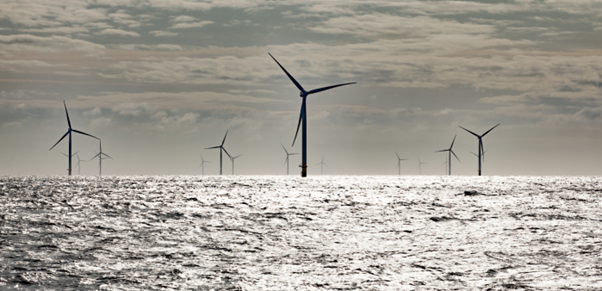
The Hornsea 3 windfarm in the North Sea, which will be the world’s largest once complete, has passed a significant milestone as one of the cables that will eventually transmit its yearly output of 11 terawatt-hours to the UK has made landfall in Norfolk.
The rest of this article is behind a paywall. Please sign in or subscribe to access the full content.Hornsea 3 is expected to power 3.3 million homes in the UK, although if spiking petrol and gas prices drive a surge in electric vehicles and heat pumps, the total may be a little smaller than that.
That surge, caused largely by the blockage of the Strait of Hormuz, has reminded the world that the reasons to transition away from fossil fuels aren’t just environmental.
One option is wind power, but its once exponential growth turned linear more than a decade ago. Prospects for growth look better for offshore wind, however. Although only a small fraction of its onshore component, it may play a big part in avoiding repeats of the current crisis.
One of the reasons offshore wind is catching up to its onshore counterpart, despite initially having been much more expensive, is that it offers economies of scale few places on land can match, and Hornsea 3 will take advantage of that potential more than anywhere else so far.
As recently as 2009, the world’s entire offshore wind capacity was 2.1 gigawatts. Hornsea 1 opened in 2019, setting a size record at 1.218 gigawatts, double the largest previously opened windfarm. Hornsea 2 passed that in 2022 with 1.386 gigawatts.
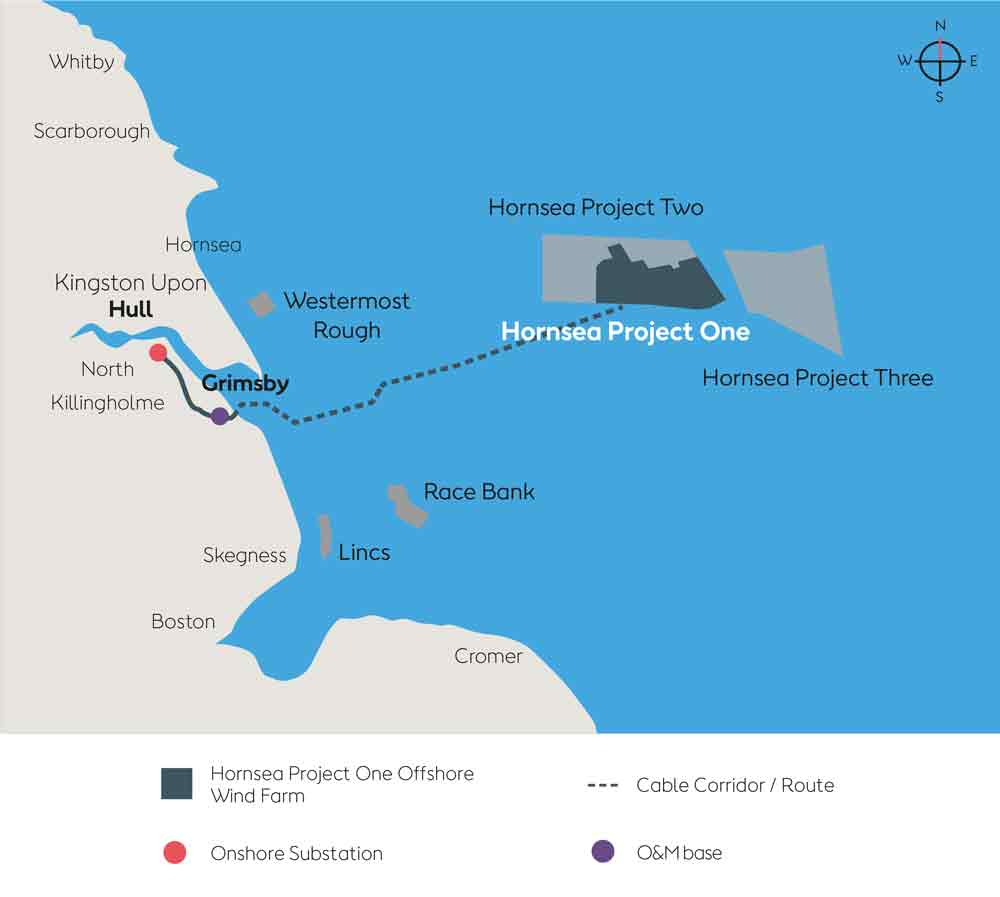
When complete, Hornsea 3 will be larger than its two siblings combined. That’s not expected to happen until 2027, which is a long time to wait in the current squeeze on natural gas supplies. However, work is advancing rapidly, and a fraction of the power may be available this year.
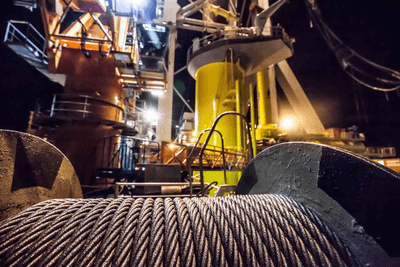
In February, the first foundations for the turbines were delivered, to be installed 120 kilometers (75 miles) off the coast, and this week North Norfolk News reported the pulling ashore of one of the cables near the village of Weybourne.
“The arrival of the first cable onshore marks a significant milestone for Hornsea 3 and is a testament to the hard work of our teams at Ørsted, Jan de Nuul and NKT,” Luke Bridgman, who is managing Hornsea 3 for Ørsted told North Norfolk News. The cable combines two individual high voltage direct current cables bundled together with a fiber optic cable that will transmit data from the turbines to the operations center.
The UK already gets 17 percent of its electricity from offshore wind – more than either onshore or nuclear. Hornsea 3 is the largest of seven giant UK offshore windfarms expected to be completed in the next two years, with a combined capacity of more than 10 gigawatts. Once completed, wind power will probably pass gas as the UK’s largest source of electricity.
Although Hornsea 3 will be the world’s largest offshore windfarm when it is complete, it is likely that title will be temporarily taken away from the Hornsea area by two windfarms: Sofia and Coastal Virginia Offshore Windfarm (CVOW).
Like Hornsea, Sofia is located in the North Sea, but it is part of the separate Dogger Bank cluster. It is nearly complete, and will be a little larger than Hornsea 2 at 1.4 gigawatts. Some people like to combine all the projects in the Dogger Bank complex, which will collectively exceed the Hornsea set, at least for a while.
At 2.64 gigawatts, the CVOW – located off the coast of Virginia – will far exceed Hornsea 2 or Sofia and produced its first power last week, albeit less than 1 percent of its ultimate total.
Stop work orders from the Trump administration slowed CVOW’s construction until courts ruled in the farm’s favor in January, leaving Virginia much more dependent on fossil fuels than necessary over the coming months.
Two offshore windfarms that were to be built by TotalEnergies off the coast of New York and North Carolina weren’t so lucky. The French energy company paid $928 million for the right to build windfarms on the sites under the Biden Administration. However, at the same time as CVOW electricity started flowing, the US government gave the money back to the company in return for a promise to invest it in fossil fuel programs.
All the projects we’ve yet spoken about may ultimately be dwarfed, even in combination, by China’s Guangdong East Site 7 windfarm. When this behemoth was announced in 2022, it was planned to be 32.5 gigawatts, which would allow it to produce more electricity than medium-sized countries. However, while China has added most of the world’s offshore wind in recent years, the status of this particular project is unclear.
Besides its status as the global offshore champion, Hornsea 3 will also be larger than any onshore windfarm