Culture and Society
 PUBLISHED



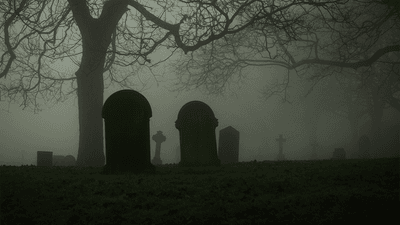


Ghost hoaxes were surprisingly common in the 19th century Britain, partly thanks to an aristocracy with far too much time on their hands.
The rest of this article is behind a paywall. Please sign in or subscribe to access the full content.For example, there is the case of "Spring-Heeled Jack". In the 1800s, and peaking in the 1880s, residents of England from London to Liverpool reported seeing an odd creature leaping about the streets. According to accounts, the monster had horns, sometimes a goatee or fiery eyes, and the ability to take huge leaps across buildings. Rather than some sort of Victorian superhero, complete with super jumping abilities, Spring-Heeled Jack largely spent his time scaring the crap out of strangers, and in particular women.
"First a young girl, then a man, felt a hand on their shoulder, and turned to see the infernal one with glowing face, bidding them a good evening," the Birmingham Post reported in September 1886, per the BBC.
It's not clear who this "prankster" was, though it was generally thought to be someone in the aristocracy, and some point the finger at Henry de La Poer Beresford, an eccentric man possibly responsible for the phrase "paint the town red" after one drunken night of doing just that, as well as recoloring a few police officers whilst he was at it.
But enough about England – what were ghost stories like on the other side of the planet? In Australia in the late 19th century, according to folklorists David and Sharn Waldron, most ghost hoaxes were down to "larrikins", a word used to describe working class troublemakers. Though society had grown more rational around this time, there were still plenty of European-style ghost stories in the country, with tales of spirit animals, headless horsemen, and ghostly apparitions of women wearing white proliferating in the media in stories told between residents.
"By the 1890s the popularity of these stories, combined with routine pranks and hoaxing, came to be referred to in the papers as the ‘ghost nuisance’," the two explain in a paper. "The panics these claims and subsequent media reportage generated were a drain on police resources and a waste of public time and money."
In fact, the problem got so bad that newspaper editorials called for ghosts to be shot on sight, with the reasoning being that if they really were ghosts then that's ok, you can't dead them twice. While England had Spring-Heeled Jack, a lot of Australia's ghost hoaxes were equally quirky. The simple ones were fairly clasic. Mainly men, but a few women, would dress in elaborate ghost costumes and wait for a passing stranger, before letting out a few screams. The costumes usually led to a nickname in the local press, rewarding the effort.
Glowing paint, only recently introduced to the Australian public, was a favorite of ghost pranksters. Whilst many went classic and simply covered a sheet in the paint, or gave themselves an eerie glow, one man in Horsham dressed up as a knight with the words "prepare to meet thy doom" glowing on his breastplate. This was actually not a great idea, with phosphorescent paint being highly toxic, causing everything from diarrhea and incontinence to seizures, comas, and death. Although it wouldn't really count as backfiring if that happened, as I don't think there's anything much spookier than seeing a ghost die.
One particularly quirky chap earned himself the nickname the "Wizard Bombardier", with his signature costume of white robes and a sugarloaf hat, popular in earlier centuries in Europe. The "bombardier" part of his name simply alluded to the fact that he liked to scare passers-by by screaming and throwing rocks at them, and appeared to enjoy running away from the scenes of his crimes, whether from the authorities or locals who had had enough of his bullshit. After a good run, however, he stopped after being beaten by two local vigilantes. Sort of like Scooby Doo, but with a lot fewer hotel mysteries and a lot more internal injuries.
It wasn't all just innocent games of scaring the shit out of strangers, however, with many people committing crimes under the guise of ghost pranks. Many of the perpetrators would harass women, with one man even stabbing another man who had stepped in to defend a woman he had been attacking, whilst wearing a coffin lid strapped to his back and phosphorescent paint on his face.
A particularly famous example of this was the case of Herbert Patrick McLennan, who in 1904 began harassing and exposing himself women whilst wearing a long white coat, boots, and brandishing a cat-o'-nine-tails. He was so persistent that police began disguising themselves as women in an attempt to catch the ghost in the act, pre-empting further plots of Scooby Doo.
He was eventually arrested, but not before he had written a letter to the mayor of Ballarat, taunting him for his lack of capture, and signing off as "the ghost".
With so many ghosts about the place, a ghostbuster was perhaps inevitable. The press was pretty encouraging of stories of people fighting back against these ghoulish menaces, with editorials calling for the patrol of cemeteries, and favorable coverage when these ghosts were dealt with by vigilantes.
One man, a retired soldier named Charles Horman, received praise twice for dealing with ghosts. On one occasion he caught a ghost harassing one woman and began beating it with his cane, whilst on another he was patrolling a cemetery and shot a ghost in the buttocks.
With the onset of World War I, the ghost pranks died down. Which given the chances of assault, paint poisoning, and vigilante beatings, is probably for the best.

 1
1