Health and Medicine
 PUBLISHED





An international team of researchers have, for the first time, identified the bacterium behind scarlet fever in a pre-Columbian mummy in Bolivia. By reconstructing the genome of this centuries-old pathogen, the team may have demonstrated that the disease was present in the Americas before Europeans arrived.
The rest of this article is behind a paywall. Please sign in or subscribe to access the full content.Scarlet fever, a contagious bacterial infection caused by Streptococcus pyogenes (group A strep), has witnessed a significant resurgence in recent years. Although it was nearly eradicated by the 1940s due to improved hygiene and access to antibiotics, new strains of the disease contributed to its return. But while it is easier to treat the infection today, scarlet fever was once a leading cause of death for children across the world.
The bacterium is not just capable of producing scarlet fever. Alongside milder infections, such as strep throat, it can also cause life-threatening invasive diseases such as necrotizing fasciitis, toxic shock syndrome, and even post-infectious complications such as acute rheumatic fever.
But while we are aware of its historical and present-day impacts on human health, we know much less about its long-term evolutionary history, especially its virulence among ancient human populations. Given the pathogens current prominence, understanding this story could help us understand how it will behave in the future. So it was something of a serendipitous moment when researchers led by Eurac Research, a private research center based in South Tyrol, North Italy, stumbled upon evidence of the bacterium when examining naturally mummified remains from Bolivia.
“We weren’t looking for this pathogen specifically,” study author Frank Maixner, director of the Eurac Research Institute for Mummy Studies, explained in a statement.
“When conducting genetic analyses of mummies, we approach the work with an open mind, analyzing not only human genetic material but also the DNA of the numerous microorganisms present in human remains.”
Using radiocarbon dating, along with the genetic analysis, the mummy belonged to a young male of Indigenous descent. It is likely the skull was originally found in a chullpa – a typical burial tower of the Bolivian Altiplano.
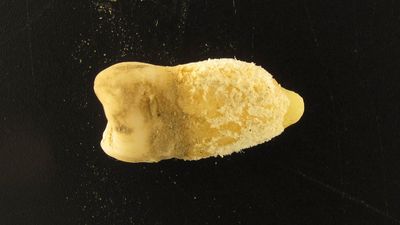
While examining the tooth of the mummified individual, who lived sometime between 1283-1383 CE, during the Late Intermediate Period, Maixner and colleagues found DNA traces of various bacteria; Streptococcus pyogenes was common among them. They decided to do a more thorough examination of this particular pathogen because of its current significance in medicine.
To reconstruct the ancient genome, the team used a method called de novo assembly, a computational process that reconstructs a genome from scratch, rather than having to piece together the various fragments of DNA using a reference genome as a template.
“You can think of it like putting together a puzzle without knowing the picture on the box,” co-first author and microbiologist Mohamed Sarhan of Eurac Research added.
“This method has a major advantage for reconstructing ancient genomes: we are not influenced by modern references – we work without preconceptions. This allows us to discover entirely new insights and also identify genetic variants that may no longer exist today, such as extinct bacterial strains.”
It also helped that the bacterial DNA was remarkably well-preserved for its age. It is though that is due to the dry and cold conditions in the Bolivian highlands – the same conditions that would have helped along the mummification.
“The DNA’s excellent preservation enabled us to reconstruct a nearly complete genome, yielding a wealth of information and demonstrating, for example, that the bacterium was already capable of causing disease: the ancient strain carried many – though not all – of the pathogenic genes found in modern Streptococcus pyogenes strains,” co-first author Guido Valverde said.
In further evidence that the pathogen has been overlooked in ancient samples until now, while looking for other publicly available datasets of ancient DNA, the researchers also found the bacterium in samples from people living in Europe around 4,000 years ago. Additionally, they found closely related Streptococcus species in 200-year-old remains of gorillas from Africa.
The team’s genetic analysis further indicate that the evolutionary lineages of most modern Streptococcus pyogenes strains diverged from each other around 5,000 years ago. That is around the same time when humans were becoming more sedentary and living closer to one another, factors that may have allowed the pathogen to spread and diversify.
The study is published in Nature Communications.


 1
1