Health and Medicine
 PUBLISHED



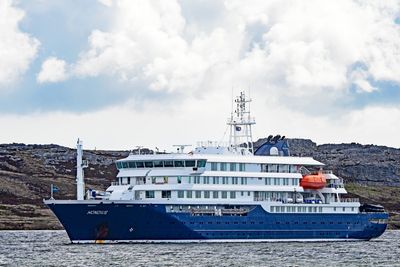


An Andes hantavirus outbreak aboard the cruise ship m/v Hondius has now been linked to eight cases, five of which are confirmed. So far, there have been three deaths associated with the outbreak, with other patients receiving medical care. The World Health Organization continues to assess the risk to public health as “low”, though the situation is being monitored very closely.
The rest of this article is behind a paywall. Please sign in or subscribe to access the full content.This is a fast-moving story with more updates expected in the coming days, but here’s what we know so far about the eight cases, thanks to a May 7 press briefing from World Health Organization (WHO) Director-General Dr Tedros Adhanom Ghebreyesus.
- The first case was in a man who became ill onboard ship on April 6 and died on April 11. At that time, the symptoms were consistent with other respiratory diseases, so hantavirus – which is a rare infection in humans – was not suspected.
- The man’s wife left the ship when it docked at Saint Helena on April 24. She was also unwell, and deteriorated during a flight to Johannesburg, South Africa on April 25. She died on April 26.
- A third patient became unwell on the ship on April 28 and died on May 2.
- A fourth patient also reported to the ship’s doctor with symptoms on April 24. He was evacuated to South Africa on April 27 and remains in intensive care.
- Three further patients were evacuated to the Netherlands for treatment, after the ship had been anchored off the coast of Cabo Verde. Two are currently in a stable condition in hospital, and one now-asymptomatic passenger has traveled onward to Germany.
- The eighth case was in a man who disembarked the ship at Saint Helena and traveled onward to Zurich, Switzerland. Whilst there, he received a notice from the ship’s operator Oceanwide Expeditions, and presented at hospital with symptoms. His infection was confirmed to be the Andes strain of hantavirus.
While the primary route of transmission for human hantavirus infections is from contact with infected rodents, their droppings, and urine, Andes hantaviruses have been seen to spread from person to person following close contact.
The incubation period for these viruses is long, up to six weeks, so it’s possible more cases will emerge.
There’s no vaccine for hantavirus, though some scientists are working to develop one, and no specific antiviral treatment.
What’s going to happen to the rest of the passengers?
The ship is on the move again, this time towards the Tenerife in the Canary Islands where the Spanish government has given it permission to dock. This decision was met with some opposition from local government.
The port of Granadilla is reportedly being considered to receive the 147 people still on the ship, likely in the early hours of Sunday, May 10. A statement from the Spanish Ministry of Health reports that there are 14 Spanish nationals onboard who will transported on to Madrid after medical assessments, while the remaining passengers and crew will be repatriated to their countries of origin.
At present, those on the ship have been asked to remain in their cabins, with anyone showing symptoms being isolated. Disinfection protocols are also being carried out.
Residents of 12 countries left the ship at Saint Helena, and the WHO has informed the respective governments – including the USA, UK, Canada, and New Zealand.
Health authorities in South Africa are also being supported to trace any potential contacts of the woman who flew from Saint Helena to Johannesburg and later died. There had been some reports of a flight attendant from the KLM flight showing symptoms consistent with the virus. She was admitted to hospital in Amsterdam, but it has since been confirmed that she has tested negative for hantavirus.
This is not another COVID: WHO officials
“This is not the same situation we were in six years ago,” Dr Maria Van Kerkhove, Acting Director of the WHO’s Department of Epidemic and Pandemic Threat Management, said in the May 7 press briefing.
“[Hantavirus] doesn’t spread the same way, like coronaviruses do. It’s very different. It’s that close, intimate contact that we’ve seen.”
Van Kerkhove went on to say that the precautionary measures being taken are designed to prevent any onward spread of the virus beyond those associated with the initial outbreak on the ship.
There’s no denying, though, that this situation is unusual.
“What is most unusual […] is that we have transmission in a boat,” said Anaïs Legand, Technical Lead for Viral Hemorrhagic Fevers, “the first documented to date with this particular virus.”
This, Legand explained, is “a very specific environment” – passengers are in close quarters for long periods of time, and may be more likely to mix with others than if they were at home and unwell, for example. We see this a lot with other viruses, notably norovirus, which can spread like wildfire on cruises, but hantavirus outbreaks aren’t typically seen in these kinds of settings.
“There is no indication to date that there is something further unusual” with this virus, Legand said.
That’s not to say that authorities aren’t taking this outbreak very seriously, and that there aren’t lessons to be learned when it comes to general pandemic preparedness.
What we can learn from this outbreak
Hantaviruses in general are uncommon in humans but some of the worry is coming from the high case fatality rate that they can have. Hantavirus cardiopulmonary syndrome, one of the diseases caused by some strains of these viruses, often has a case fatality rate of between 20 and 40 percent.
That is much higher than the COVID-19 case fatality rate, even before we had vaccines. But health experts consider many other factors when judging whether a virus is likely to cause an epidemic or pandemic.
With COVID, for example, we now know that people can spread the infection before they get sick themselves, and that virus particles can accumulate in the air, meaning that very close contact is not always needed to spread the disease. This does not seem to be the case with hantaviruses.
“Asymptomatic contacts are very unlikely to spread hantavirus. Transmission, where it occurs, requires close, prolonged contact with someone who is already showing symptoms,” commented Dr Raymond Alvarez, an immunologist and virologist, to the UK Science Media Centre.
It’s worth remembering that most hantaviruses don’t spread from person to person at all – this has only been documented with the Andes virus that’s behind this outbreak.
“In general, transmission of hantavirus is still overwhelmingly driven by rodent-to-human exposure, particularly through inhalation of aerosolized rodent excreta in endemic areas,” said Alvarez.
These are zoonotic viruses that can sometimes jump from their usual rodent hosts into humans, something epidemiologists and virologists keep a close eye on. Factors like climate change and human activities like wildlife trade all make these spillover events more likely and increase the likelihood of a new pandemic virus – not necessarily a hantavirus – emerging.
“[I]f we spend enough time with a mammal – and keep it in poor conditions – something might make the jump sooner or later,” Colin J. Carlson, Assistant Professor in the Department of Epidemiology of Microbial Diseases at Yale University School of Public Health, previously told IFLScience.
In the WHO press briefing, the Director-General highlighted the importance of collective efforts to control viral outbreaks around the world. “Solidarity is our best immunity,” he said.
Some have pointed out that the kind of surveillance required to keep tabs on emerging pathogens and infectious outbreaks has been threatened by cuts at the United States Department of Health and Human Services under Robert F. Kennedy, Jr.
As part of these cuts, over 2,000 Centers for Disease Control and Prevention (CDC) employees were reportedly laid off, including staff working on the agency’s Vessel Sanitation Program – which conducts inspections and investigates outbreaks on cruise ships.


 1
1