Culture and Society
 PUBLISHED
 1
1



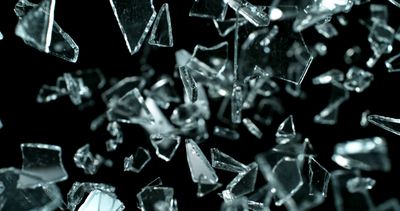


The year is 1393. The 24-year-old Charles VI sits on the throne of France. To some, he’s known as “the Beloved”, but over the last year, some have begun to call him “le Fou” – “the Mad” – after an event in which he killed four of his own knights. And now, he believes he’s made of glass.
The rest of this article is behind a paywall. Please sign in or subscribe to access the full content.But while Charles is perhaps most famous person known to have had this belief, known as the “glass delusion”, he would be far from the only one. Over the following 400 or so years of European history, various other medical and literary accounts would pop up that described people believing themselves to be made either entirely or partially of glass.
This included body parts like bones and heads, but something that seems to have been particularly common was glass buttocks. People with this form of the glass delusion were reportedly afraid of shattering upon sitting down, and in one case from 1626, a Parisian glassmaker kept a cushion tied to his rear to prevent this. He was apparently cured of his belief by a “thrashing” given by royal physician Louis de Caseneuve.
Charles VI’s belief extended to his entire body; in fact, he may have even been the first known such case. He took his approach to shatter prevention a step further than butt cushions alone, wearing reinforced clothing and not letting people touch him.
What was behind these people’s beliefs and fears? Physicians looked for answers in the dominant theory of understanding the human body at the time: humoral theory. Usually attributed to Hippocrates and refined by Galen, the theory goes that the human body consists of four humors: black bile, yellow bile, phlegm, and blood. To be healthy was to have all four humors in balance.
Having an excess of black bile, it was thought, would lead to “melancholia”. This was a condition characterized by feelings of sadness and fear – and what those observing “glass people” proposed to explain their affliction.
Luckily for those of us with health problems in the modern age, doctors now know humoral theory to be a bunch of BS. Today, we’d recognize that people with a belief that they were made of glass were likely experiencing psychiatric illness, and it’d be quite rightly frowned upon to call anyone experiencing it “mad” – or thrash them until they were “cured”.
However, many questions about the glass delusion remain unanswered. What caused these people to become ill in the first place? Why did their illness manifest with a focus on glass? Why was this the case in multiple different accounts?
Answering these questions is tricky. In part, that’s because these accounts are historical; trying to retrospectively explain someone’s mental illness is controversial at the best of times, not least because, as is the case with the glass delusion, there simply isn’t enough detail to do so with authority.
If the glass delusion was still something we saw today, this would perhaps be less of a problem. Scientists could study patients and collect evidence in real time. Trouble is, accounts of the glass delusion effectively disappear from the records by the end of the early modern period. There are some modern examples, but they’re extremely few and far between.
From that, it could be suggested that it was something about the late Middle Ages and early modern period in particular that led to the glass delusion. While human-made glass had been around for thousands of years by that point, it was being used in new ways at that time – like in the creation of spectacles and the invention of the microscope and telescope.
People were seeing the world (and beyond) as never before; in many ways, glass was upending everything we thought we knew. It’s this that historian of psychiatry Professor Edward Shorter told the BBC was “key” to understanding the glass delusion; there’s a historical pattern of the “inventive unconscious mind” forming delusions around new materials and technologies.
There may be something more complex at play when it comes to individual cases – again, it’s difficult to know this for certain with scant historical detail – but if we look at them as a collective, through a societal lens, this could explain why the glass delusion appeared in the first place, and then petered out. Glass isn’t new anymore.
There’s a lot that will remain unclear about the glass delusion, but focusing instead on what the modern vulnerable mind latches onto might help us to understand similar phenomena better in the future.