Nature
 PUBLISHED



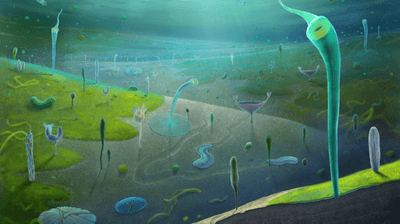


A tranche of fossils from the end of the Ediacaran Period has shown up branches of the tree of life previously thought to have appeared millions of years later in the Cambrian. The discovery fills a gap in the fossil record palaeontologists have debated for decades and makes the Cambrian explosion less of an inexplicable event.
The rest of this article is behind a paywall. Please sign in or subscribe to access the full content.The Ediacaran Period is when the first animals appear in the fossil record, but most specimens are simple, soft-bodied creatures. Then, 535 million years ago, sites such as the Burgess Shale, the Chengjiang fossil beds, and deep in the Grand Canyon reveal a sudden diversity of life, known as the Cambrian explosion, when creatures appeared with a staggering array of body shapes.
The earliest identifiable ancestors of vertebrates and spiders date from this time, along with many forms of life that died out soon after, sometimes referred to as evolutionary “experiments”.
However, there have been hints that this revolution wasn’t as sudden as the fossil record suggested, and some of the groundwork was laid during the Ediacaran Period. Now, for the first time, proof of this has been found. The discovery comes from Jiangchuan in the southern Chinese province of Yunnan, where 554–539-million-year-old deposits contain what appear to be ancestors of important Cambrian groups.
“Our discovery closes a major gap in the earliest phases of animal diversification,” said Gaorong Li – then at Yunnan University and now at the Museum of Natural History, University of Oxford – in a statement.
“For the first time, we demonstrate that many complex animals, normally only found in the Cambrian, were present in the Ediacaran period, meaning that they evolved much earlier than previously demonstrated by fossil evidence.”
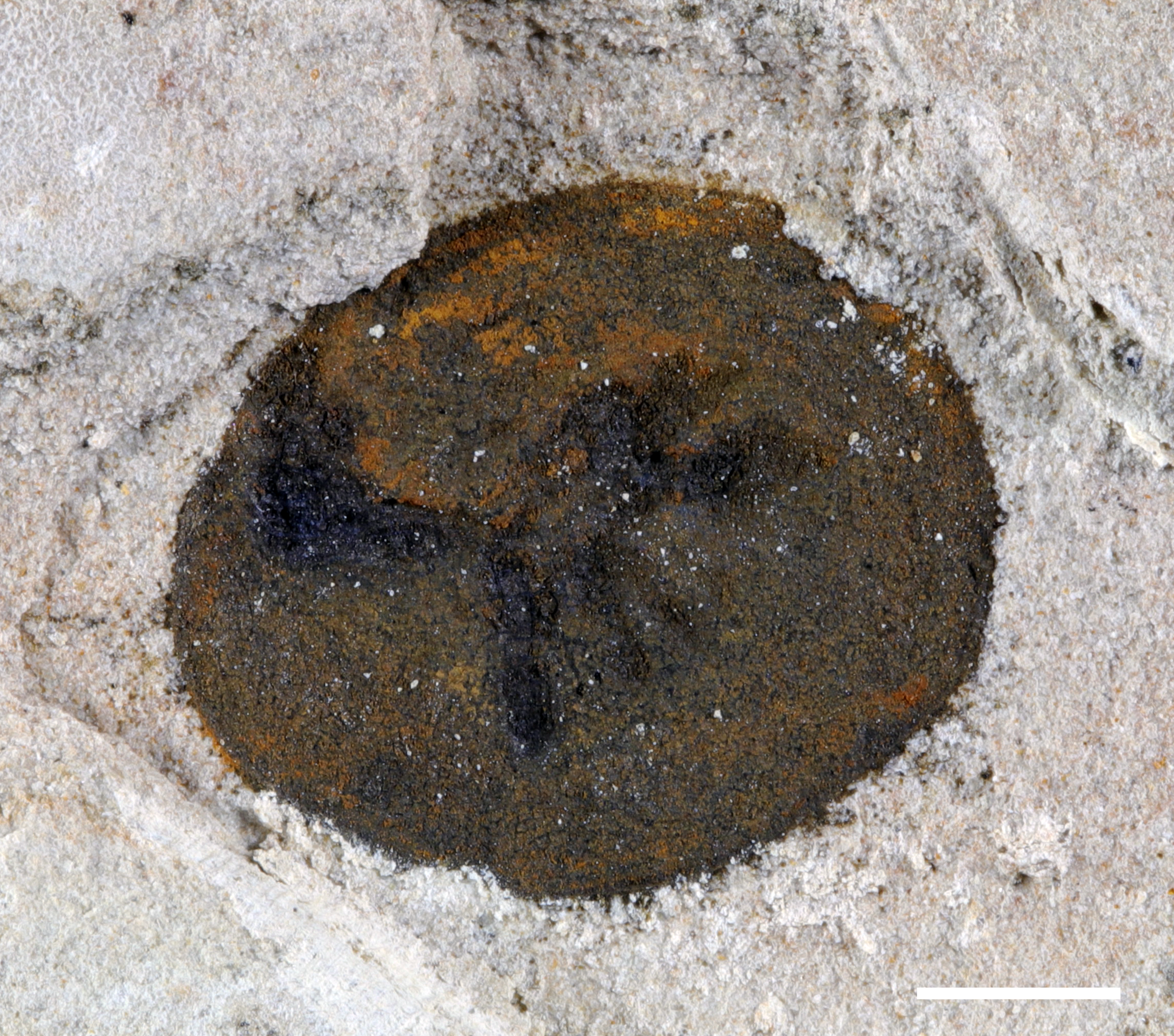
The most important of the Ediacaran Jiangchuan biota, at least to our biased human eyes, are what are thought to be the oldest known deuterostome ancestors. The deuterostomes are a superphylum – essentially a massive category of organisms – that includes vertebrates, such as ourselves, sea squirts, the echinoderms (starfish and their like) and the lesser-known hemichordates (Ambulacraria or acorn worms).
You may think you have nothing in common with a sea urchin, but the way your digestive system developed as an embryo says otherwise – both you and that sea urchin started life as nothing but an anus. The first deuterostomes would have been ancestors to all these branches, but those found at Jiangchuan appear to be on the echinoderm and hemichordate lines after they broke off from the chordates, us included. Maybe this can be an excuse to delay making room for an echinoderm at the family Christmas a little longer, although let’s face it, most of us have much closer relatives that embarrass us more.
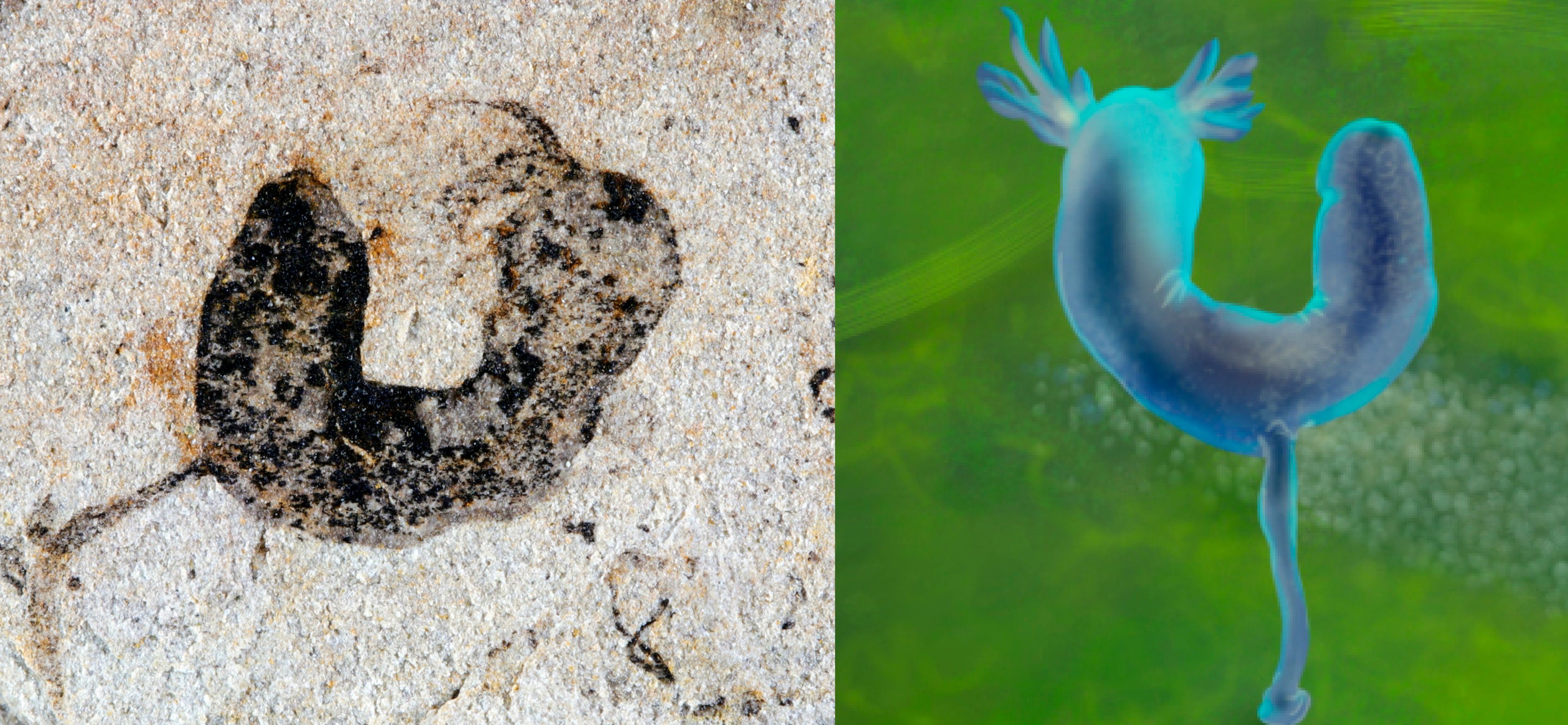
“The presence of these ambulacrarians in the Ediacaran period is really exciting,” said Frankie Dunn at the Museum of Natural History, University of Oxford. “We have already found fossils which are distant relatives of starfish and sea cucumbers and are looking for more. The discovery of ambulacrarian fossils in the Jiangchuan biota also means that the chordates – animals with a backbone – must also have existed at this time.”
With more than 700 specimens identified so far, it’s not surprising many don’t resemble any known species from either the Ediacaran or Cambrian Periods and have yet to be placed. “For instance, one specimen looks a lot like the sand worm from Dune!” Dunn said.
Creationists often like to claim an absence of “transitional species” in the fossil record as evidence against evolution. However, not only are transitional species common, but co-author Luke Parry at the University of Oxford refers to the Jiangchuan ecosystem as a “transitional community”.
Although these fossils are the first Ediacaran representatives of these groups to be found, many biologists have argued these phyla must have existed in the Ediacaran. That confidence was based on a combination of trace fossils showing the imprints of more complex species than had been identified, and molecular clocks, which indicate the timing of two species’ last common ancestor.
“We knew there were traces animals made in the seafloor from a number of Ediacaran localities worldwide,” co-author Ross Anderson told IFLScience. “These showed that animals with bilateral symmetry were already present at that time. But we didn’t really know what the animals that made the traces looked like. Very few bilateral fossils were known from the Ediacaran, and most were controversial.”
Anderson added Jiangchuan doesn’t just reveal the nature of some of these fossils, but “also shows that bilaterian animals were already ecologically diverse, with varied lifestyles. We have fossil bilaterians that had active lifestyles like those making the trace fossils but also some that were sessile on the seafloor.”
“Our results indicate that the apparent absence of these complex animal groups from other Ediacaran sites may reflect differences in preservation rather than true biological absence. Carbonaceous compressions like those at Jiangchuan are rare in rocks of this age, meaning that similar communities may simply not have been preserved elsewhere,” Anderson said.
Nevertheless, Anderson told IFLScience: “We actually don't yet know what was special about the site that led to the carbonaceous compressions. We know these fossils were covered with sediment very quickly, which likely prevented their decay to some extent.”
Whether something rare for the time allowed the carbonaceous compressions at Jiangchuan but not elsewhere is still unclear. Previous exploration in the area had found algal fossils at several sites, but not animals. Some of these appear to have involved similar geological processes.
“What distinguishes each site locally is a priority question for our group going forward,” Anderson told IFLScience. “Does our new locality have distinct preservational processes which allowed the animals to be uniquely preserved, or does it represent a slightly different environment where they were more likely to have lived.”
He added: “The discovery of Jiangchuan may also be a function of the area being so well-studied allowing us to uncover this rare example of exceptional fossil preservation. If we looked with the same intensity elsewhere, we might find similar deposits.”
The paper is published in Science.