Technology
 PUBLISHED



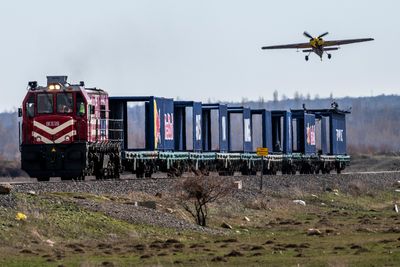


In the long human tradition of doing awesome things for the hell of it, a pilot has landed on a moving cargo train traveling at 120 kilometers (75 miles) per hour, before lifting off again in a vertical climb from the same container.
The rest of this article is behind a paywall. Please sign in or subscribe to access the full content.Dario Costa, an Italian Red Bull athlete, pulled off the world-first maneuver on February 15, 2026, at a stretch of train track in Afyonkarahisar, Turkey. You can check out the nail-biting footage below.
Known as “Train Landing”, the Red Bull-sponsored feat was performed in a Zivko Edge 540 aerobatic aircraft, which is powered by a 400-horsepower engine and has a wingspan of 7.5 meters (24.6 feet). Aside from optimizing the aircraft for lower-speed flight, no major structural modifications were made to the plane.
Costa approached the train as it sped down a straight section of track at 120 kilometers (75 miles) per hour. When the cruising aircraft was roughly 200 meters (656 feet) from the target carriage, the landing surface disappeared from the pilot's view due to his descent angle, effectively forcing him to fly blind.
Reducing the aircraft to a near-stall airspeed, Costa carefully lowered it toward the moving train, aligning himself with the narrow container top. Heavy turbulence from the train and shifting airflow made this phase especially dangerous, requiring continuous micro-adjustments to ensure the plane didn’t lose control.
Fortunately, Costa had spent extensive time training at the Red Bull Athlete Performance Center in Thalgau, Austria, sharpening his focus and reaction speed for precisely this kind of task.
After some tense moments, the plane briefly touched down on the top of the train carriage. To round it all off, he immediately lifts off into a vertical climb from the same container, completing the world-first sequence.
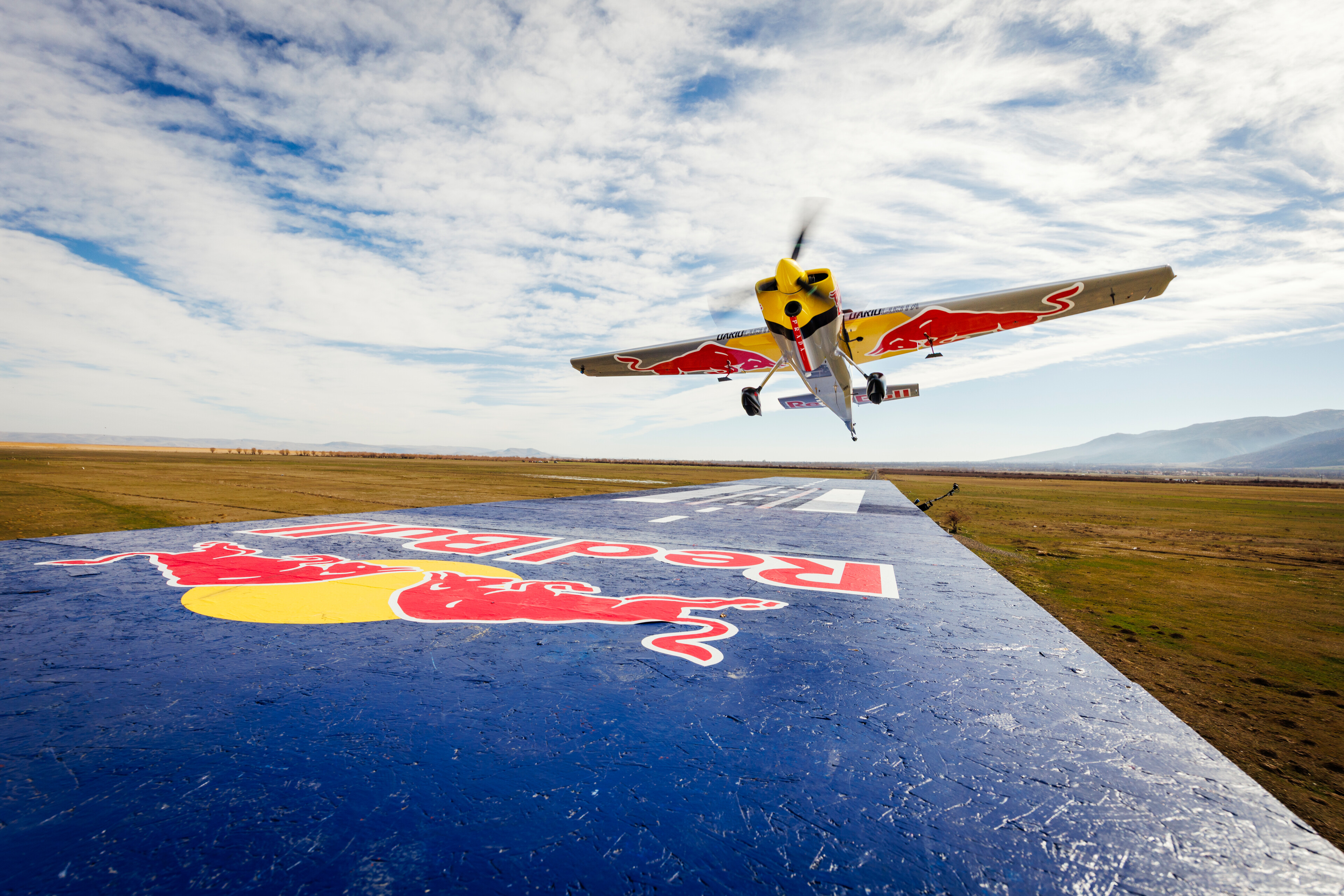
Costa is the same daredevil stunt pilot who flew an aircraft through a 1,730-meter (5,675-foot) tunnel near the Turkish capital of Istanbul back in September 2021. However, he says this latest stunt was even more taxing.
“Train Landing was one of the most challenging and demanding projects of my career. There were so many variables to measure, but the greatest test was learning to land blind on a very small moving runway - relying only on cognitive and flying skills,” Costa said in a statement.
“Despite the difficulty, it was a great experience. For the first time, an aircraft successfully interacted with a moving train, bringing together the oldest motorised transportation with the newest. It was a complex project that required precision, teamwork, and trust - and I’m proud we executed it as planned.”