Space and Physics
 PUBLISHED
 1
1


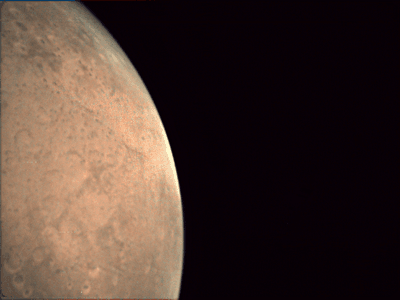


The first-ever live stream from the orbit of Mars is all set for Friday, June 2. The European Space Agency (ESA) will be broadcasting the one-hour feed, with new pictures appearing roughly every 50 seconds, providing viewers with an intimate look at the Red Planet.
The rest of this article is behind a paywall. Please sign in or subscribe to access the full content.ESA is sharing the live stream, which starts at 4 pm UTC (5 pm BST/12 pm EST) to celebrate the 20th birthday of Mars Express, their ongoing project to gain a deeper understanding of our closest planetary neighbor. The images will be beamed directly down to Earth from the Visual Monitoring Camera (VMC) onboard the orbiter, showing Mars from afar in all its glory.
Since this mission has been running for nearly two decades, the aged equipment has seen better days. It’s also the first time anything like this has been tried before, so the team is keeping their fingers crossed.
“This is an old camera, originally planned for engineering purposes, at a distance of almost three million kilometers [1,864,114 miles] from Earth – this hasn’t been tried before and to be honest, we’re not 100 percent certain it’ll work,” James Godfrey, Spacecraft Operations Manager at ESA’s mission control center in Darmstadt, said in a statement.
“But I’m pretty optimistic. Normally, we see images from Mars and know that they were taken days before. I’m excited to see Mars as it is now – as close to a martian ‘now’ as we can possibly get!’
It’s about as “live” as we can get from Mars as there will be a slight delay due to the time needed for light to travel the vast distance between Earth and Mars. The distance depends on the orbits of the two planets, but the average is around 225 million kilometers (140 million miles).
The time between the images being taken from orbit around Mars and appearing on your screen will be roughly 18 minutes: around 17 minutes for light to travel from Mars to Earth, and another minute to pass through the wires and servers on the ground. If you have a problem with that, you can take it up with the speed of light.

The gorgeous images regularly taken from the VMC are typically stored and then “downlinked” to Earth every couple of days, where they’re processed and made available to the world on Flickr. While these images are now primarily used for public outrage, some important scientific discoveries have been made thanks to the VMC.
“From these images, we discovered a great deal, including the evolution of a rare elongated cloud formation hovering above one of Mars’ most famous volcanoes – the 20 km [12.4-mile]-high Arsia Mons,” added Jorge Hernández Bernal, part of the VMC team at ESA.