Technology
 PUBLISHED


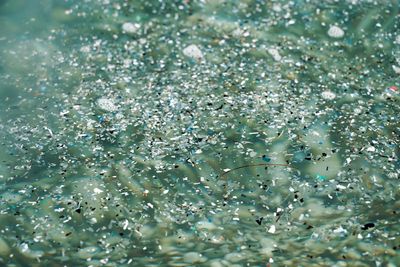


The world’s first microfiber recycling facility has just opened in Cornwall, England. Run by the Cleaner Seas Group, the new Microfibre Filter Hub, Microplastic Recycling Lab, and Return and Recycle Center aim to transform our approach to microplastic pollution in the world’s oceans.
The rest of this article is behind a paywall. Please sign in or subscribe to access the full content.Many of us are probably aware of the prevalence of microplastics, given the increasingly large amounts of coverage the tiny plastic shards have received recently. However, some people may be less familiar with microfiber pollution. This subcategory of microplastics mostly consists of polyester and nylon particles that are shed by synthetic fabrics when they’re washed. These particles are extremely thin, far thinner than even a human hair.
And they’re numerous too – some research suggests that every time we do our laundry, we’re inadvertently contributing an additional 640,000 to 1,500,000 microfiber pieces to the environment, as most washing machines cannot filter them out. In many cases, these microfibers find their way into our waterways and then into the oceans, where they pose a danger to ecosystems, marine life, and the food we eat.
This is why the new recycling center in Bude, Cornwall, is so exciting. The facility has been supported by the UK Shared Prosperity Fund and aims to convert captured microfibers into recyclable materials for use in various industries, such as packaging, battery materials, or even construction components. It does this through a low-impact, closed-loop process centered on the company's filters, which capture the fibers at their source – the washing machine. Once the filters are full, they can be sent to the center, where their contents will be cleaned and recycled.
“Let’s be honest – microplastic pollution is a global crisis hiding in plain sight. It’s in our oceans, our food, our brains and our bloodstreams. We’re told it’s too complex to fix, too late to act – but we’re proving that’s not true. This new facility isn’t just about filtration or recycling – it’s about completely shifting the way we deal with waste and sustainable materials,” Dave Miller, CEO at Cleaner Seas Group, told the Cornish and Devon Post.
Miller added, “We’ve built a system that stops microplastics before they enter our waterways and transforms them into materials with real value. That’s a genuine circular economy in action – not theory, not greenwash, but something tangible, scalable and right here in Cornwall.”
According to the CEO, this effort demonstrates that there is no need to distinguish between protecting the planet and building a commercially viable business.
“You can do both. And in a world crying out for climate action and practical solutions, we’re proud to be offering one. This is just the beginning.”
The Cleaner Seas Group hopes this new initiative will not only help save the world's oceans from microfiber pollution, but will also provide new job opportunities for people in Cornwall and elsewhere.