Space and Physics
 PUBLISHED
 3
3


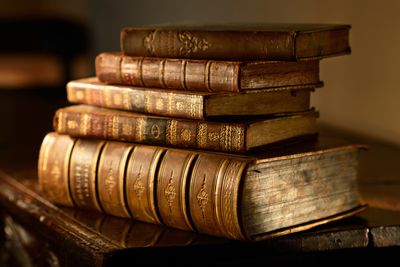


It’s not long since physical books were expected to be on their way out, replaced by digital readers for all but an eccentric few. The truth has turned out to be very different, and it’s likely an appreciation of the smell of old books has played a part.
The rest of this article is behind a paywall. Please sign in or subscribe to access the full content.The smell of old books has been celebrated in poetry and prose. It’s used to help determine the condition of a volume. The volatile organic compounds that give old books their smell can be sampled to identify those in need of extra preservation efforts without damage. An “electronic nose” designed for this purpose has been described in ACS Sensors.
For this to work, however, we need to know the molecules books release as they age, and under what conditions. Professor Matija Strlič of University College London is the leader in this niche – he’s an author of most of the papers on it.
In the wonderfully titled work Material Degradomics, Strlič and co-authors identified a number of volatile compounds produced by the breakdown of rosin in inks and lignin in paper with time. The study notes paper produces acetic acid, the essential ingredient in vinegar, as it ages.
In a subsequent paper Strlič proposed certain smells might be considered cultural heritage, and used the smell of historic paper as a case study. It’s not surprising then that Strlič talks about book smells the way connoisseurs of wine or coffee describe varieties, referring to “a combination of grassy notes with a tang of acids and a hint of vanilla over an underlying mustiness.”
What all these drugs have in common is a variety of compounds, whose interplay at varying concentrations produces something much more subtle than more common scents dominated by one or two molecules.
Compound Chemistry reported six molecules commonly found in old books, of which the aforementioned acetic acid was not one, showing how much variation there can be. These include vanillin, named for the spice it helps flavor, and benzaldehyde, which gives almonds their smell.
One of those Compound Chemistry does refer to is toluene (which sounds much less romantic under its systematic name of methylbenzene). Although usually considered highly unpleasant as the dominant smell in paint thinners and permanent markers, toluene is also used as an inhalant for its euphoric qualities, something bibliophiles might relate to.
There are many serious side effects from excessive toluene use, but so far no one has been reported to have overdosed on old books, other than losing too much time. Even the candles scented with book smell are probably safe, if they don’t set fire to the curtains, although being buried under a book avalanche from trying to take something off a high shelf might count as an overdose.
New books don’t have the same smell, partly because their components are less degraded, but also because for the last century or so we’ve been using lower-lignin paper.
Depending on when a book was printed there may be additional chemicals present, and these can even be useful when the text doesn’t identify the date. For example, high furfural concentrations are a marker of books published before the mid-1800s.
The papers referred to are published in ACS Sensors, Analytical Chemistry and Heritage Science.