Nature
 PUBLISHED




The egg is a glorious thing. Giver of life. Maker of shelter. And for predators, conveniently portable snack.
The rest of this article is behind a paywall. Please sign in or subscribe to access the full content.At times like spring or Easter, when the egg really has its day, we tend to think of chickens, but in truth, most of life on Earth comes from some kind of egg. It got us thinking, isn’t it high time we pushed the perfect oval to one side and gave the freaks their five minutes of fame? What are some of the weirdest eggs and egg-layers in nature?
Turns out, there’s an endless supply.
Blue crabs and “bulk-buying” sperm
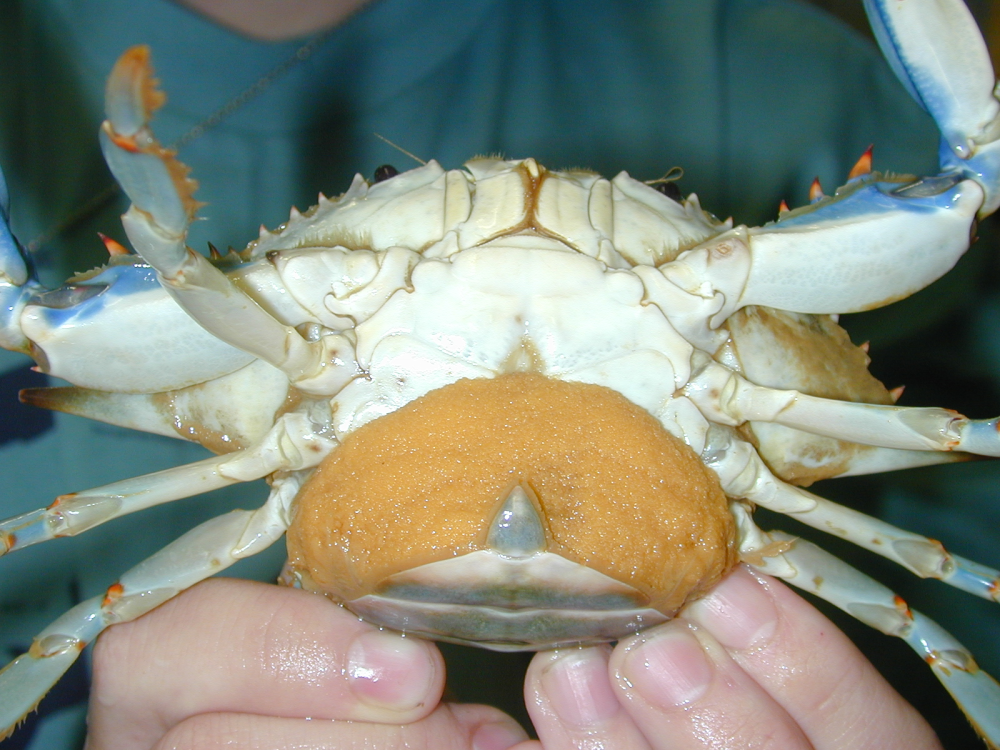
Blue crabs don’t like to do things by halves. Each of their broods involves somewhere in the region of 3 to 8 million eggs, and a female can churn out up to eight broods per season.
A lot of eggs calls for a lot of sperm, but the female blue crab doesn’t shop around for her supply. Oh no, she gets it all at once.
A single mating episode is all it takes for her to get all the sperm she will use to fertilize eggs throughout her lifetime. Like a Doomsday prepper storing up cans for the Big One, she keeps all that sperm in sacs in her body and fertilizes as she needs to. A strange approach, but one that has many benefits.
The complexity of mating and storing sperm is also an adaptation to their migratory life cycle.
Tuck Hines
“Producing a great many eggs is an adaptation that compensates for very high natural mortality rates of vulnerable small larval and juvenile crabs,” the Smithsonian's Tuck Hines, recently retired director of the Smithsonian Environmental Research Center (SERC), told IFLScience. “The complexity of mating and storing sperm is also an adaptation to their migratory life cycle in which juveniles move from high salinity habitats of the lower estuary into mid-salinity habitats to feed and grow to maturity and mate.”
“Our recent PNAS paper shows that the mid-salinity zone has much reduced predation by fish that commonly take small crabs in the high salinity zone. However, the females mate in those mid-salinities when they molt to maturity, and then they have to store sperm while they migrate as adults back to higher salinities where they brood their eggs and hatch their larvae.”
Spotted salamanders and the room-share egg
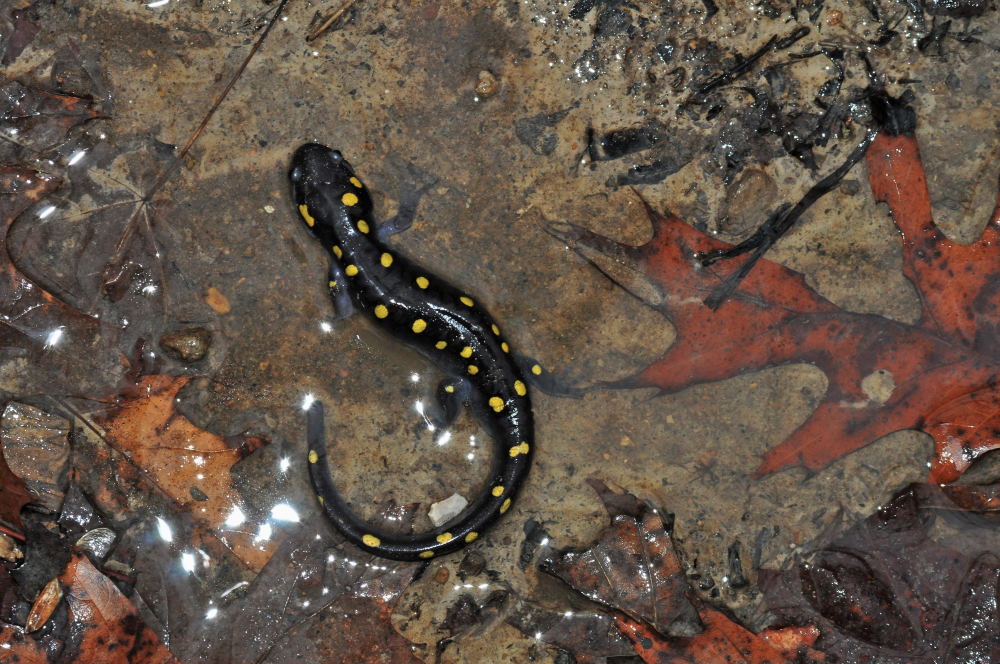
In life, it’s nice to have a bit of space for yourself, but that’s just too bad for the spotted salamander, which doesn’t even get to be alone in the egg. These amphibians live in the eastern half of the US and have evolved in tandem with a green algae that they share a symbiotic relationship with.
A female lays her gelatinous egg masses in spring pools that are also home to the green algae. Not content with sharing the water, the algae takes it one step further and migrates inside the egg cell.
It sounds cheeky, but it's not so bad for the salamander. It’s thought the algae provides a secondary energy source for the developing embryo, meanwhile the algae gets access to nutrients not available to it in open water.
It also feels like a super power that should be in a comic book, the super power of making your own food inside the body of a salamander!
Karen McDonald
"Spotted salamanders are fascinating in part because of how secretive they are," Karen McDonald, STEM Program Coordinator at the Smithsonian Environmental Research Center, told IFLScience. "They spend most of their lives under logs or in the ground where we never see them, but every year on the first warm rainy night of late winter, they have this coordinated emergence. They all come out and make their way back to the same vernal pool where they were hatched."
"The algae relationship is unique, even for researchers. The green alga Oophila amblystomatis doesn't just live on the eggs, it lives inside the embryo's cells, which makes it one of the only known examples of algae living inside a vertebrate's cells. The alga gets shelter and the CO2 from the embryo, and the embryo gets a direct supply of oxygen from photosynthesis inside the cell."
"Most people assume that it’s only things like lichens that have that symbiosis. It also feels like a super power that should be in a comic book, the super power of making your own food inside the body of a salamander!"
Bird eggs: The big, the bold, and the unusual
It's true that bird eggs are unfairly represented in the Easter egg bonanza, but to their credit, they host an incredible diversity of size, shape, and coloration. Notable examples include history’s largest: the elephant bird at 33 centimeters (13 inches) long. Then, at the opposite end of the spectrum, we have the vervain hummingbird with eggs just 1 centimeter (0.39 inches) long.
The Smithsonian’s National Museum of Natural History houses an expansive collection of 109,000 individual egg specimens, overseen by museum specialist Christina Gebhard. She’s seen a lot of eggs in her career, but one stands out above the rest.
“Tinamou eggs impress me the most,” she told IFLScience. “They are glossy as if they have a ceramic glaze on them. Even more impressive is that scientists researched these egg colors and discovered new pigments not found in any other bird egg.”
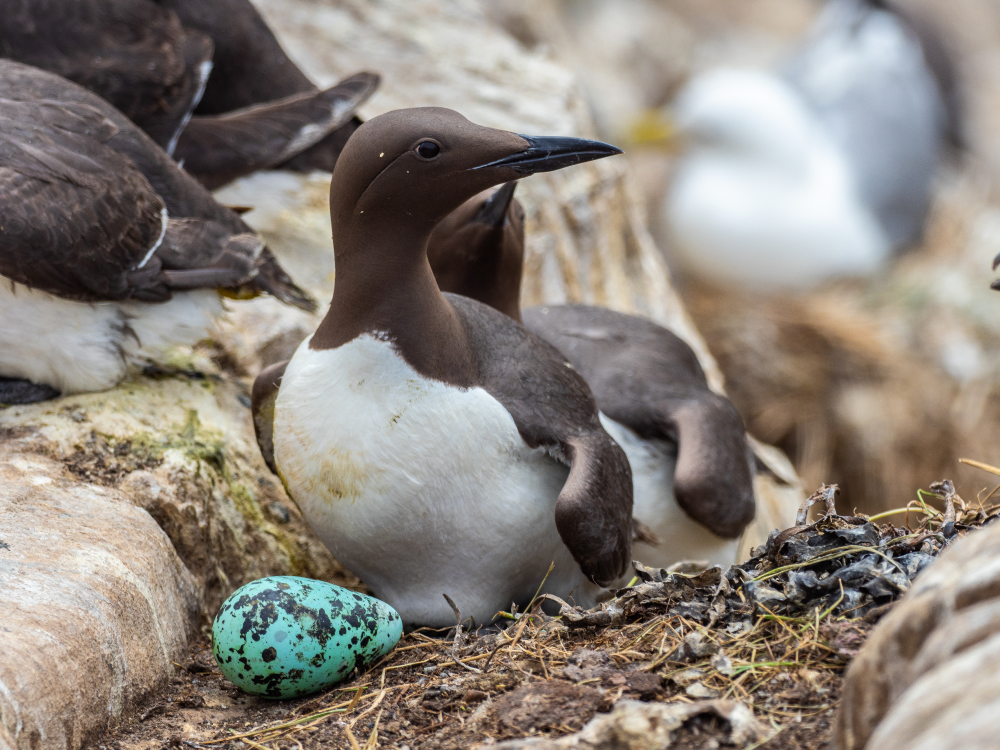
Another unusual entry is the Common Murre egg that’s pointed at one end and round at the other, making them look like odd speckled pears. The purpose of their shape puzzled scientists for hundreds of years, but in 2018, a team of scientists confirmed that the pyriform shape makes Common Murre eggs more stable on sloping surfaces and therefore less likely to fall from the birds’ nesting ledges.
Gloopy, dangerous, and very, very small? Yes, it’s the invertebrates
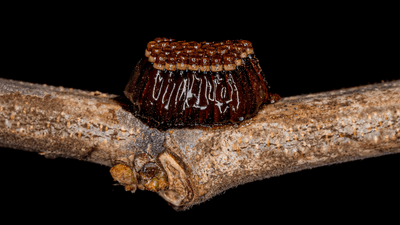
When it comes to invertebrates, throw a stick and you’ll crush several species famous for laying some really peculiar eggs. The assassin bug – yes, as in the venomous predator that wears corpses as camouflage – has eggs that look like a coffee blancmange. You can see them in all their wibble-wobble glory at the top of this article.
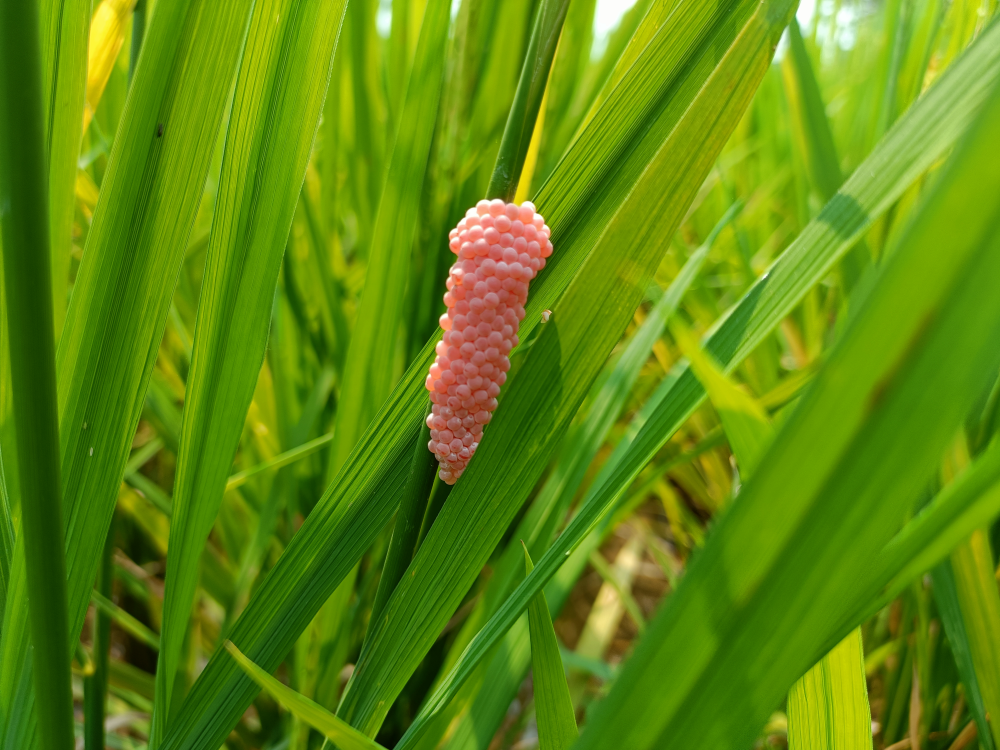
Texas officials told residents to “beware the pink goo” when cursed popsicles in the form of apple snail egg clutches started appearing on reeds. Though they look like berry boba, these eggs can harbor a dangerous parasite and since they’re stuffed full of a neurotoxin called perivitellin-2, or PV2, we can’t rely on any predators to hoover them up for us.
When you see the staggering variety that's out there, it makes you realize why candy designers opted for the easier-to-emulate chicken egg. Still, one can't help but think there's untapped potential for some seriously creative gummy sweets, if only someone out there had the courage to cook them up...
This article originally incorrectly stated guillemot eggs and has been corrected to Common Murre.