Humans
 PUBLISHED


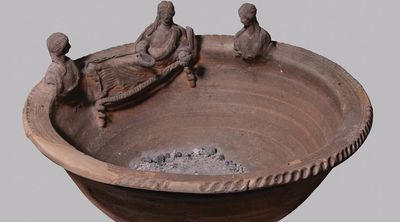


The residents of ancient Pompeii performed regular religious rituals using fancy imported incense resins that came from far beyond the borders of the Roman Empire. These sacrificial offerings are thought to have been conducted in order to purify homes and invite the gods to protect the household, its members, and their belongings.
The rest of this article is behind a paywall. Please sign in or subscribe to access the full content.The use of incense for such purposes is described by numerous Roman authors, and archaeologists commonly encounter incense burners at ancient sites. However, the ingredients used in these smoky offerings had until now remained unclear.
At Pompeii, however, the catastrophic eruption of Vesuvius in 79 CE had the fortuitous effect of preserving ashes and residues on incense burners throughout the ill-fated town. Using a combination of microscopy and spectroscopy, researchers were able to analyze the charred leftovers on two Pompeian censers, revealing a heady blend of plants and resins.
Among the wood types detected were oak, laurel, and mulberry, although it’s unclear if these were included as fuel or as part of the actual incense offering. Interestingly, though, writings by Pliny the Elder indicate that oak may have been associated with the god Jupiter, while laurel was sometimes burned in honor of Apollo.
You can imagine the smoke from the incense rising as the wine on the altar vaporizes, creating a visual connection to the realm of the deities.
Dr Johannes Eber
Numerous ancient texts also refer to the sacrificial burning of aromatic resins such as frankincense, and the results of this study provide the first archaeological detection of these components in actual incense burners. “Surprisingly, the resin we found is not proper frankincense – which comes mainly from Arabia – but is another resin from another type of tree which only grows in India or in the African rainforest,” said study author Dr Johannes Eber from the University of Zurich.
Known as elemi, this particular resin is obtained from a tree belonging to the same Burseraceae family as frankincense, yet has slightly different properties. Speaking to IFLScience, Eber explained that “the Egyptians used elemi in the mummification process, but this is the first time we’ve ever found this resin in a Roman context.”
The presence of such an exotic ingredient at Pompeii indicates that this provincial town was well-connected to global trade links that extended all the way to Asia and sub-Saharan Africa.
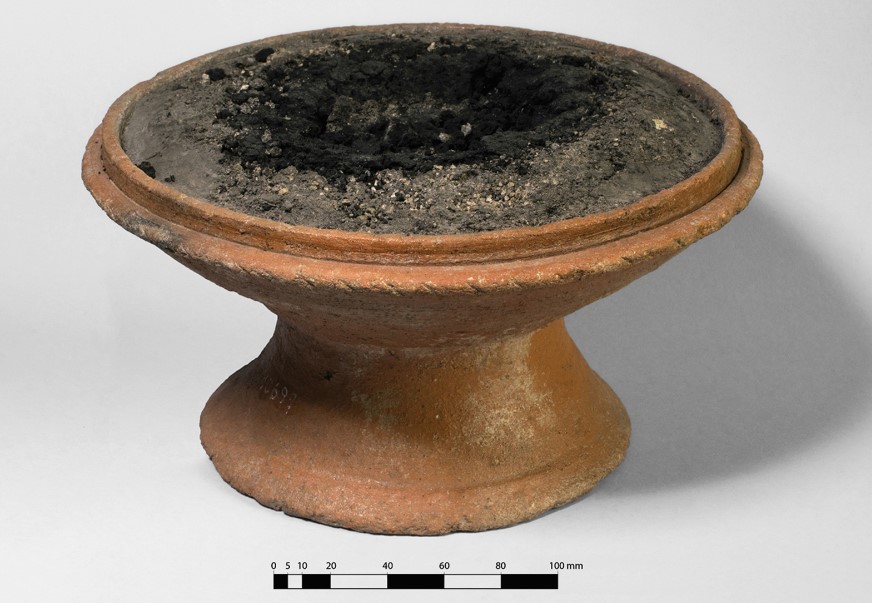
Alongside this resin, the researchers also found traces of a grape product such as wine, which may reflect a type of Roman sacrificial ritual known as the praefatio. Depicted in numerous ancient artworks, this common offering involved burning wine and incense together and was strongly associated with the Early Imperial funerary cult.
“You can imagine the smoke from the incense rising as the wine on the altar vaporizes, creating a visual connection to the realm of the deities,” says Eber. “So it's an invitation to the gods and it's also kind of a purification because of the smell and the smoke.”
According to Eber, such rituals would have been performed in homes across Pompeii “on a monthly or even a daily basis”, probably to ask the gods for protection and prosperity. Such sacrificial acts are well documented from ancient Rome, although the big surprise here is that these common rites involved the use of “a rather special ingredient.”
The study is published in the journal Antiquity.