Humans
 PUBLISHED
 18
18


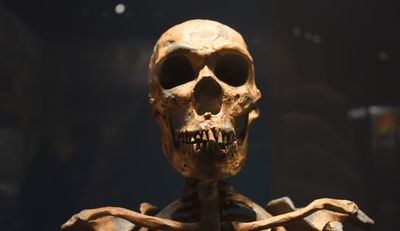


When our ancient ancestors made the journey out of Africa and took their first steps in Eurasia, they came face-to-face with Neanderthals for the first time – and boy, did they hit it off. In fact, pretty much everywhere that these prehistoric humans went, they found themselves getting into bed with their new neighbours, resulting in the creation of a hybrid lineage.
The rest of this article is behind a paywall. Please sign in or subscribe to access the full content.Today, all non-African populations can consider themselves the love-children of these Neanderthal-Homo sapiens couples, with roughly 2 percent of each of our genomes being made up of Neanderthal DNA. However, while the genetic signals of this inter-hominin mating are unmistakable, researchers are still unsure of exactly where this Pleistocene pillowing took place.
To investigate, the authors of a new study – which is yet to be peer-reviewed – examined 4,147 ancient human genetic samples from 1,200 locations across Eurasia, ranging in age from 44,000 to 6,000 years. Assuming that Homo sapiens first entered the continent and encountered Neanderthals in the region around the Levant, the researchers looked for patterns in the concentration of Neanderthal genes among modern humans radiating outwards from this geographical area.
Previously, it had been hypothesized that the major interbreeding and hybridization event occurred close to this initial zone of contact in the Middle East, yet the researchers found that Neanderthal genetic introgression actually increases the further you go from this point, both eastwards into Asia and westwards into Europe. Overall, the hybridization zone was found to extend almost 4,000 kilometers (2,500 miles) in every direction, reaching as far north as the Baltic Sea.
“Our results suggest that the area of hybridisation was probably more extensive than only the Middle East/Southeast Europe, which is often cited as the area of hybridisation between the two species,” explained study author Dr Mathias Currat from the University of Geneva.
What this means is that modern humans mated with Neanderthals over a vast area. In fact, the hybridization zone spans the entire Neanderthal range, apart from the Altai Mountains in Siberia and the Iberian Peninsula. What’s more, because the pattern of introgression increases so neatly from the Levant, the study authors believe that these encounters occurred as part of a single continuous admixture pulse as Homo sapiens poured out of Africa from around 60,000 years ago.
However, while these results suggest that our intimate meetings with Neanderthals were widespread, it’s likely that only the most curious members of each species actually went all the way with each other, with the majority sticking to their own kind.
“Although our results suggest that hybridization spanned a broad geographical area and by deduction an extended timeframe, individual mating events were probably rare within this range, explaining why modern Eurasians carry only about two percent Neanderthal ancestry,” Currat told IFLScience.
It’s also unclear exactly when this interbreeding occurred, although recent studies have suggested it probably began around 50,000 years ago and lasted for up to seven millennia.
A preprint of the study, which has not yet undergone peer review, is available on bioRxiv.