Nature
 PUBLISHED


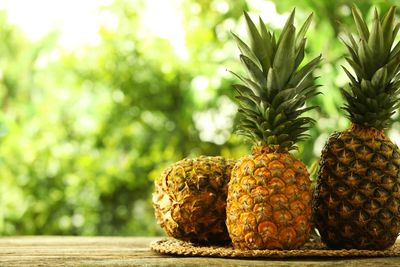


If you’ve ever bitten into a piece of fresh pineapple and suddenly felt like your mouth is full of mildly annoyed bees, you’re not alone. The weird, tingly, itchy feeling that comes from eating too much pineapple isn’t from allergies or intolerances – it’s near-universal. And the reason… is honestly kinda gross.
The rest of this article is behind a paywall. Please sign in or subscribe to access the full content.So what’s going on? Well, it probably comes down to how the pineapple plant defends itself. “Pineapples have pesky structures called ‘raphides’ that are needles of insoluble crystals made of calcium oxalate,” explained Haleh Cohn, then studying Anatomy and Cell Biology at McGill University, in a 2023 article for McGill's Office for Science and Society.
These tiny spikes are potentially “a way for plants to fight back against predators without being able to run, hide, or swat,” Cohn wrote. “If the plant is damaged, sap or saliva will trigger the expulsion of these needles, which can then prick the lining of the predator’s oral cavity and cause irritation.”
But that’s not all that’s going on. Pineapples are also acidic – they typically have a pH of between 3 and 4, which is about the same acidity as vinegar. And perhaps most important of all, they contain bromelain – an enzyme complex that breaks proteins down into their constituent amino acids. That’s why the fruit is so useful as a meat tenderizer – the bromelain is basically digesting the meat a tiny bit for you.
Each of those ingredients would be minor bad news for your mouth, but all three combined can team up into something bigger than the sum of its parts. “Bromelain has mucolytic effects, hence it can break down some of the [mucus] in our saliva that protects the lining of the oral cavity,” Cohn explained – a lining that, remember, has already been attacked by all those raphides as well.
“With this weakened defence line, the acidic pH of pineapple juice can cause an unpleasant prickle,” Cohn wrote.
So, with all these aggressive constituents of pineapples, should we all stop eating them? Well, not so fast: “When you eat pineapple, the concentration of bromelain is about 500 micrograms per milliliter,” Alessandro Colletti, a pharmacologist who studies bromelain at the University of Turin in Italy, told Live Science in 2022. “So the concentration is not really high.”
Even if it were, there wouldn’t necessarily be reason to worry. Bromelain might be responsible for your tingly mouth (and quite a lot of dead caterpillars, according to at least one study), but it’s also potentially pretty good for you. A small number of studies have shown that bromelain can help reduce symptoms of sinusitis, as well as pain and swelling after wisdom tooth extraction; since 2022, it’s been used in the US in a topical treatment for the removal of dead tissue after severe burns.
The scientific evidence may not be robust just yet – but it might explain why pineapples were used for so long in South and Central American traditional medicine. Of course, there are other healthful reasons to eat pineapples in any case, so if you can bear the tingle, chow down! Just don’t put them on pizza, ok?