Humans
 PUBLISHED
 1
1


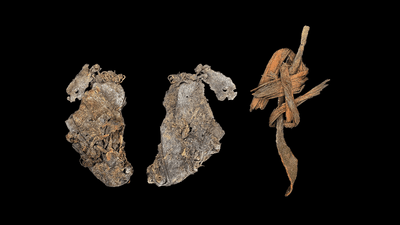


Around 12,400 years ago, the world was very different. It was cold, at least in the Northern Hemisphere: about 3°C (5.4°F) cooler in North America than it is today, and as much as 10°C (18°F) colder elsewhere. Humans were universally nomadic, using the natural world for their survival rather than growing crops or raising animals for themselves. Woolly mammoths and dire wolves abounded in the environment.
The rest of this article is behind a paywall. Please sign in or subscribe to access the full content.But some things never change – and now, in a couple of caves in the high desert of Oregon, we’ve found the earliest evidence of the ancient human urge to look as fly as possible.
“Structurally and functionally complex technologies were a defining element of Late Pleistocene societies,” begins a new paper. “But physical examples of them remain extremely rare in the archaeological record because most were made from perishable raw materials.”
Now, though: “We present radiocarbon, Zooarchaeology by Mass Spectrometry, and other taxonomic identification data,” the authors write, “including the oldest known physical remains of sewn hide.”
It’s not much to look at – just two tiny scraps of elk hide, barely a few square centimeters in area – but the discovery has an outsized impact on our understanding of human history. It confirms something we’ve long supposed, but so far never been able to prove: how our ancient ancestors coped, all those years ago, with the bitter cold of a world in the grip of the Younger Dryas.
“By ~45,000 years ago, modern humans became the only hominins to live permanently above 45°N latitude,” the paper points out – places “where cold temperatures and limited biodiversity make survival impossible without the assistance of thermoregulatory and complex food-acquisition technologies.”
To that end, the Oregon caves offer a wealth of evidence. While it’s the earliest scraps of sewn fabric that are the headline discovery, the team also found a vast range of natural materials from the region: “The diversity in the wood and plant species used to make the different items, with so many represented just in this small sample was incredible to me,” Richard Rosencrance, an archaeologist from the University of Nevada, Reno, and lead author of the paper, told Haaretz.
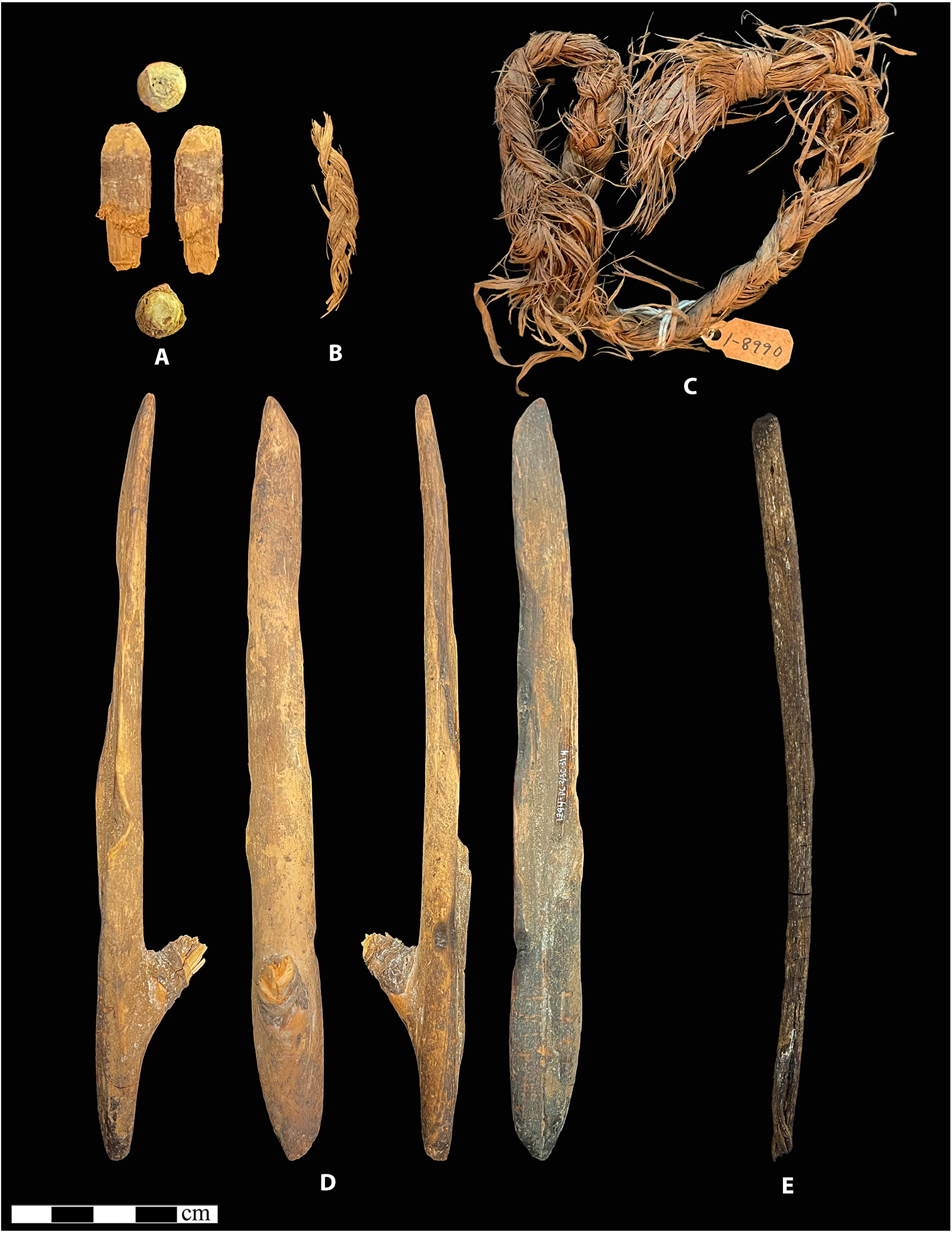
Added to that was what the team believe to be the triggers for deadfall traps – simple contraptions that lure a small animal like a rabbit under a rock and then, ahem, smash it. It may not sound impressive, but again, it’s more than it first appears: “small game [were] dietary staples,” the paper points out, and these traps imply a level of sophistication that is often underappreciated when we consider ancient hunter-gatherers.
Would those rabbits have been used for clothes too? Perhaps – though the fragments found in the cave are from elk, which the authors explain is easier to work with and provides more insulation than bunny fur. But what really made the difference, practically speaking, would have been the structure of the garment: “Fitted, multilayered clothing provides more protection against cold and wind chill,” the paper explains, and “[t]hus, seasonally in cold environments, complex clothing is more important to daily survival than food.”
In other words: the discovery of sewn hide, especially combined with the surrounding evidence, tells a story of powerful human ingenuity. As the world snapped into a dramatically colder climate, our species didn’t retreat or give up and die. Instead, we started trapping animals for food and fur. We braided fibers and created cords – tools that “could have been used for a huge range of things,” Rosencrance said.
We invented tailoring. And we survived. And that’s pretty cool.
The study is published in the journal Science Advances.