Humans
 PUBLISHED


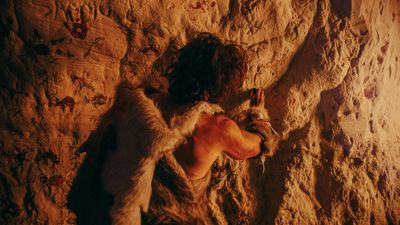


Palaeolithic humans living on both sides of the Strait of Gibraltar were a creative bunch to say the least, and were responsible for producing the only intercontinental rock art collection anywhere in the world. Contributions to this unparalleled body of work came from both modern humans and Neanderthals, making the region between Spain and Morocco truly unique in the archaeological record.
The rest of this article is behind a paywall. Please sign in or subscribe to access the full content.Despite this, the various painted sites found on either side of the Strait remain largely understudied and unprotected, with UNESCO yet to evaluate the collection or award any special status to this remarkable scattering of artworks. Highlighting the region’s importance, the authors of a new study call for more research and a redoubling of conservation efforts at decorated rock faces in both countries.
According to the researchers, the combined assemblage “represents the full temporal range of humanity, from the beginning of rock art to historical periods, reflecting not only the replacements of hunter–gatherer–fisher groups by tribal societies but also the neanderthalensis–sapiens transition on both sides of the Strait, in a region that was the last stronghold of the Neanderthal people.”
Evidence suggests that some Neanderthals may even have survived at a site called Gorham’s cave in Gibraltar until as recently as 30,500 years ago, and it was here that archaeologists discovered the first-ever evidence of Neanderthal rock art, in the form of cross-hatching engraved into the bedrock of the cave. Later, Stone Age modern humans produced more advanced designs, including depictions of boats at the site of Laja Alta, which some researchers believe date all the way back to the Neolithic and act as a record of the birth of long-distance sailing across the Mediterranean.
Older than these, though, are the Palaeolithic hand stencils found at various sites across the region. Produced by placing a hand on a wall and blowing pigment over it, these primordial artworks mirror those seen a little further north in the Maltravieso cave, located in Extremadura, western Spain. The oldest handprints at Maltravieso have been dated to around 64,000 years ago and attributed to Neanderthals, while later stencils are thought to have been made by modern humans, making this the only other site where both species are known to have produced artwork.
Around the Strait of Gibraltar, more than 300 hand stencils have been identified at various rock shelters, and while many of these haven’t been dated or studied in detail, the researchers say it’s reasonable to expect that some may have been made by Neanderthals, while others were probably produced by Homo sapiens.
The study authors also address the question of whether the artworks found on either side of the Strait of Gibraltar can be considered as part of the same corpus or must be treated as separate phenomena. After all, southern Spain and northern Morocco are separated by a stretch of sea that would have presented a major barrier to cultural transmission in prehistoric times.
However, referencing the work of several previous investigators, they conclude that the similarities in artistic styles and pigments used in both countries leave little doubt that the artworks do indeed represent a single, intercontinental tradition. Given the uniqueness of this phenomenon on a global scale, the study authors lament that a lack of research in the region “hampers public administrations on decision making,” and insist that “it is therefore necessary to implement effective measures of protection for the rock art sites”.
The study is published in the journal Quaternary.