Culture and Society
 PUBLISHED



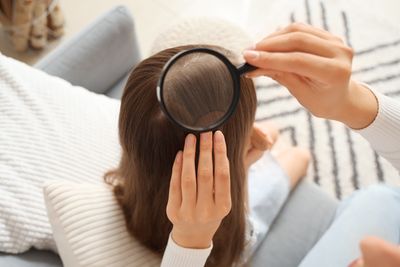


Have you ever been accused or accused someone else of “nitpicking”? It’s one of those old idioms that’s often thrown around without consideration for where it comes from. But is a nitpicker really nitpicking in the traditional sense? The origins of this phrase may well make your skin crawl.
The rest of this article is behind a paywall. Please sign in or subscribe to access the full content.What does it mean to nitpick? You’ve probably encountered someone you consider a nitpicker at some time in your life. Perhaps it’s a friend or relative who, during a discussion or debate, gets bogged down in seemingly superfluous details, rather than taking in the whole or the spirit of the argument. Maybe it’s a schoolteacher who always seemed to focus on your small mistakes, picking you up on them at any given chance.
Or maybe you’ve spent even the smallest amount of time in a Reddit fan community for a media franchise. Here you likely saw frequent examples of nitpicking in action. After all, online communities love to nitpick over trivia (or one another’s spelling, phrasing, or very being).
As used today, a “nitpicker” is effectively someone who is particularly pedantic about things that others see as insignificant. According to the Cambridge Online Dictionary, “nitpicking” is to give “too much attention to details that are not important, especially as a way of criticizing.”
It’s pretty straightforward. But to nitpick the term nitpick, we have to ask “where does it come from?” And that turns out to have been a very different context.
The term first appeared as a phrase in the 1950s and was used to describe the act of removing parasites. “Nit” is an Old English word referring to the small eggs of lice, or sometimes the young lice themselves. And by lice, I mean the ones kids love to pick up from one another at school – most people are likely familiar with the term from its association with child hygiene and parenting advice.
The act of actually picking nits, literally as opposed to figuratively, can be eased by using specific combs that are designed to remove them quickly, helping to reduce the risk of them spreading.
Rather than being inconsequential details, head lice are a persistent issue in the US and other countries. Although there’s no reliable data on how many people get them, it has been estimated that between 6 and 12 million infestations occur in the US each year.
Some research, according to the Centers For Disease Control And Prevention (CDC), has suggested that girls get head lice more than boys, possibly because they have more head-to-head contact.
So to “nitpick” in the original sense was to spend time removing eggs or small parasites from other people (or yourself), one by one. The behavior is common among animal species, especially primates, who use parasite removal as part of their social bonding strategies. Over time, the word has expanded from its original grooming roots – I was going to make a hair roots pun but thought that would encourage nitpicking in the comments.
[H/T Mental Floss]


 1
1