Space and Physics
 PUBLISHED


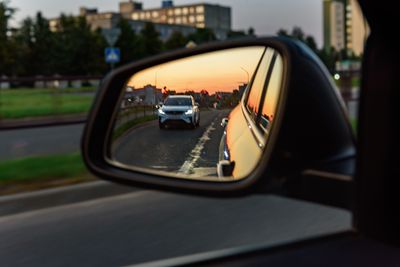


Every driver knows the frustration: you overtake the slowpoke in front of you, zip off ahead… only for them to pull up immediately behind you again at the next red light. Your haste was useless: slow and steady really did, somehow, win the race – or at least, draw even.
The rest of this article is behind a paywall. Please sign in or subscribe to access the full content.But why? A new paper from Dublin City University materials scientist Conor Boland has the answer – and he’s named it the “Voorhees Law of traffic”. Yep – after that Voorhees.
“In the cinema franchise Friday the 13th, the titular character Jason Voorhees always catches his victims,” Boland writes. “They run, but he walks, yet he’s always right behind them.”
Of course, the victims in that film don’t have stop signs and red lights to obey – but they do have tree branches and stones to contend with. Both sets of obstacles have the same effect though: to slow you down incrementally, over and over again, eventually allowing your pursuer to catch up despite their slower pace. It’s not fate; it’s just probability.
“Essentially, over many traffic lights, the time lead between the two cars fluctuates unevenly,” Boland explains, “with long periods where the lead collapses to zero, interrupted by rare events of progress when Car A gets through on a green light.”
The first step of figuring this out was to set the problem out mathematically: there’s your time lead t of car A over car B; the traffic light cycle time, and its effect on t – whether net gain, partial loss, neutral, or such a large loss that car B catches up completely; if you’re feeling bold, you can even include compounding factors like other cars. After all, “[as] we all intuitively know,” Boland writes, “even if you get away cleanly, there’s always another slow car ahead waiting to slow you down.”
The overall result is one that seems obvious: that if you start with a big enough advantage, you will get away, and if you don’t, you won’t. It all kind of equals out: “On average, the expected lead after the light equals the lead before,” Boland writes. “Nothing is ‘lost’ in expectation, only in perception.”
All of which does nothing to answer the question: why does it seem like slower drivers always catch you up? And for that, the solution seems to be not mathematical, but psychological.
“Recurrent encounters are known to be disproportionately salient in human perception, particularly when they follow an attempted separation or avoidance,” Boland explains. That’s especially true when it’s frustrating – humans have a well-documented negativity bias, generally speaking – meaning that we focus on the times when we’re caught up rather than mentally sampling every intersection we come to.
“Psychologically, the erratic pattern and the frequent ‘zero-lead’ moments probably stand out far more than the wins,” Boland explains. “[That] creat[es] the illusion of inevitability; the feeling that the slower car always, somehow, catches up.”
In total, then, the secret to how slow drivers – or, indeed, various Voorhees family members – always catch you up isn’t fate. It’s not even a horror-movie curse. It’s worse.
It’s statistics.
The paper is published in the journal Royal Society Open Science.

 1
1