Culture and Society
 PUBLISHED



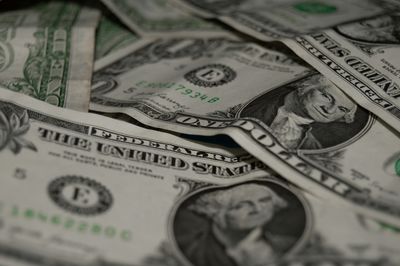


There are a few things a nation needs to be considered a “real” country, and technically, none of them is an official currency. But regardless, it’s a nice thing to have, right? So it’s no surprise that, back in 1792, declaring the US dollar to be the new land’s standard unit of money was one of the first pieces of business that Congress decided to get down to.
The rest of this article is behind a paywall. Please sign in or subscribe to access the full content.But if those first lawmakers were hoping to clear up the financial situation with that act, they would have been sorely disappointed. By the 1850s, the US had as many as 8,000 different kinds of banknotes in circulation around the country, all with different and pretty arbitrary values depending on where and when they were spent. It was, historian Brian Murphy told NPR back in 2012, “not a good system”.
So, here’s a question: why did this situation exist? How did it come about? Where did all those myriad banknotes go? And perhaps most importantly, why can’t we pay for things in Santa Clauses anymore?
The birth of chaos
It’s not that those first congressmen couldn’t have expected the problems that would arise. In fact, they were already living through a similar crisis of their own: in 1787, when representatives met for the Constitutional Convention, Edmund Randolph was already lamenting “the havoc of paper money”, in which notes in the US were traded and issued with no regulations as to their provenance or value.
“The problem was acute across New England,” wrote historian Joshua Greenberg in his 2020 book Bank Notes and Shinplasters: The Rage for Paper Money in the Early Republic. “A newly elected pro-paper currency administration in Rhode Island issued huge quantities of state notes in 1786 that fell in value to eight cents on the dollar not long after they were printed. Moral questions arose about debts paid off with the bad money and even led Baptists to discipline members who tried to repay their creditors with paper bills rather than [coins].”
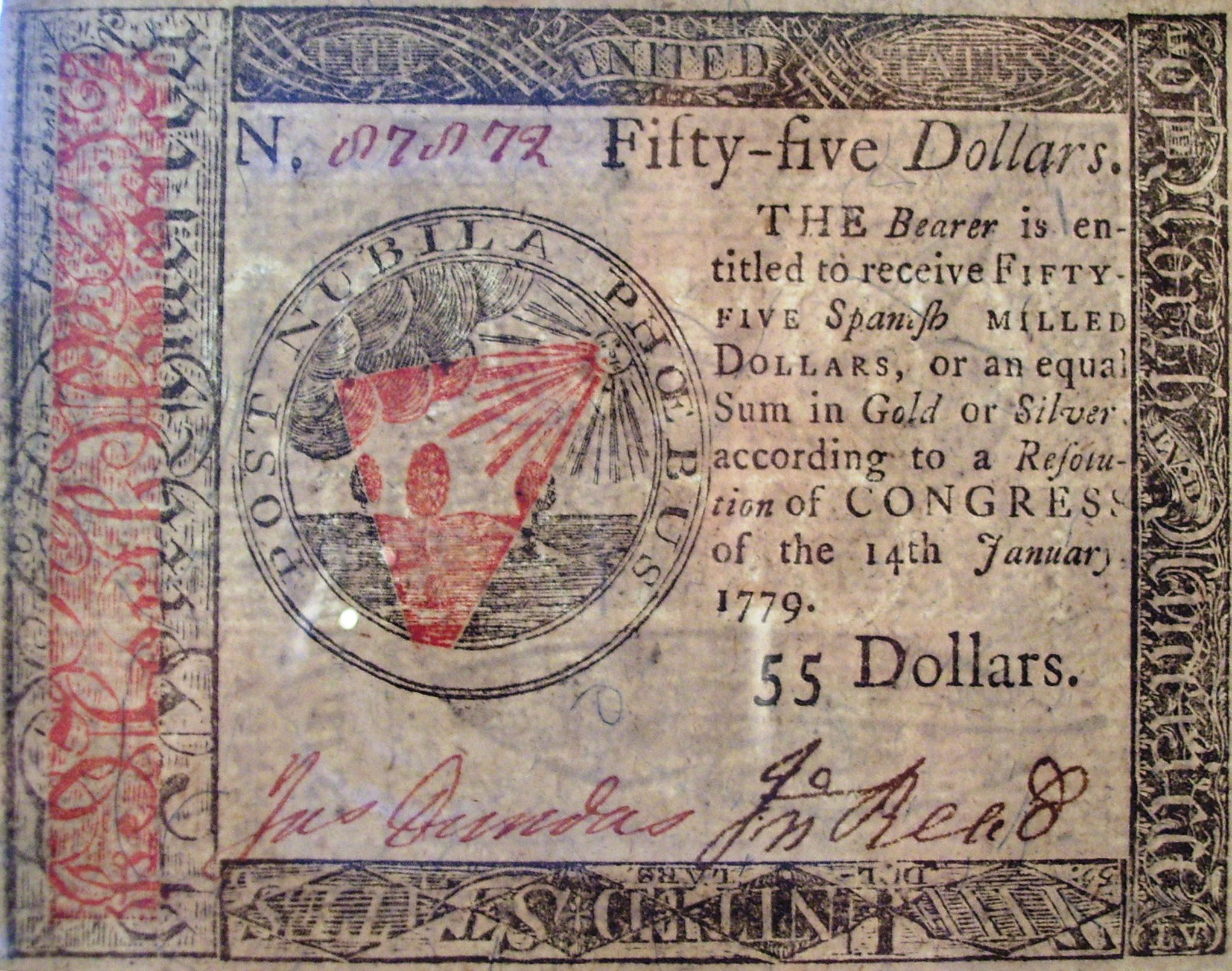
Clearly, something needed to be done, and so the framers did it: they outlawed states from “coin[ing] Money”, bestowing instead that right on the First (and later, the Second) Bank of the United States. Which was great and all, except that these couple of government institutions simply couldn’t keep up with the demands of the ever-growing population.
Meanwhile, countless state-chartered or state-regulated banks were popping up across the nation. “When the Constitution was ratified only three banks existed in the United States, but the number rose swiftly,” Greenberg wrote. “More than 2,000 banks opened between 1782 and 1860 and […] Americans endured a chaotic monetary landscape made up of nearly 10,000 unique bank notes issued by hundreds of banks under numerous competing and sometimes contradictory state regulations.”
“These legal bills did not even include the countless quasi-legal shinplasters [i.e. basically worthless notes] issued by merchants, corporations, or municipal governments,” he added.
Living in the madness
You might think such a situation would be almost unbearably complex. And, honestly, you’d be right. Take this diary entry from a traveler in 1840: “Started from Virginia with Virginia money; reached the Ohio River; exchanged $20 Virginia note for shinplasters and a $3 note of the Bank of West Union,” it records. “Paid away the $3 note for a breakfast; reached Tennessee; received a $100 Tennessee note; went back to Kentucky; forced there to exchange the Tennessee note for $88 of Kentucky money; started home with the Kentucky money.”
The entry goes on and on in this manner until, eventually, “a hundred yards from the tavern door, all notes refused except Baltimore and Ohio Railroad”. What a nightmare.
In this world, how much you had in your wallet depended not on the numerical value of the notes, but a whole host of insider information: where the notes were issued geographically – they would often decrease in value the further you got from where they were issued; who issued them – notes from a bank considered more stable might fetch more, perhaps even their face value, while those from a shady business should be refused outright; local laws and regulations, and so on.
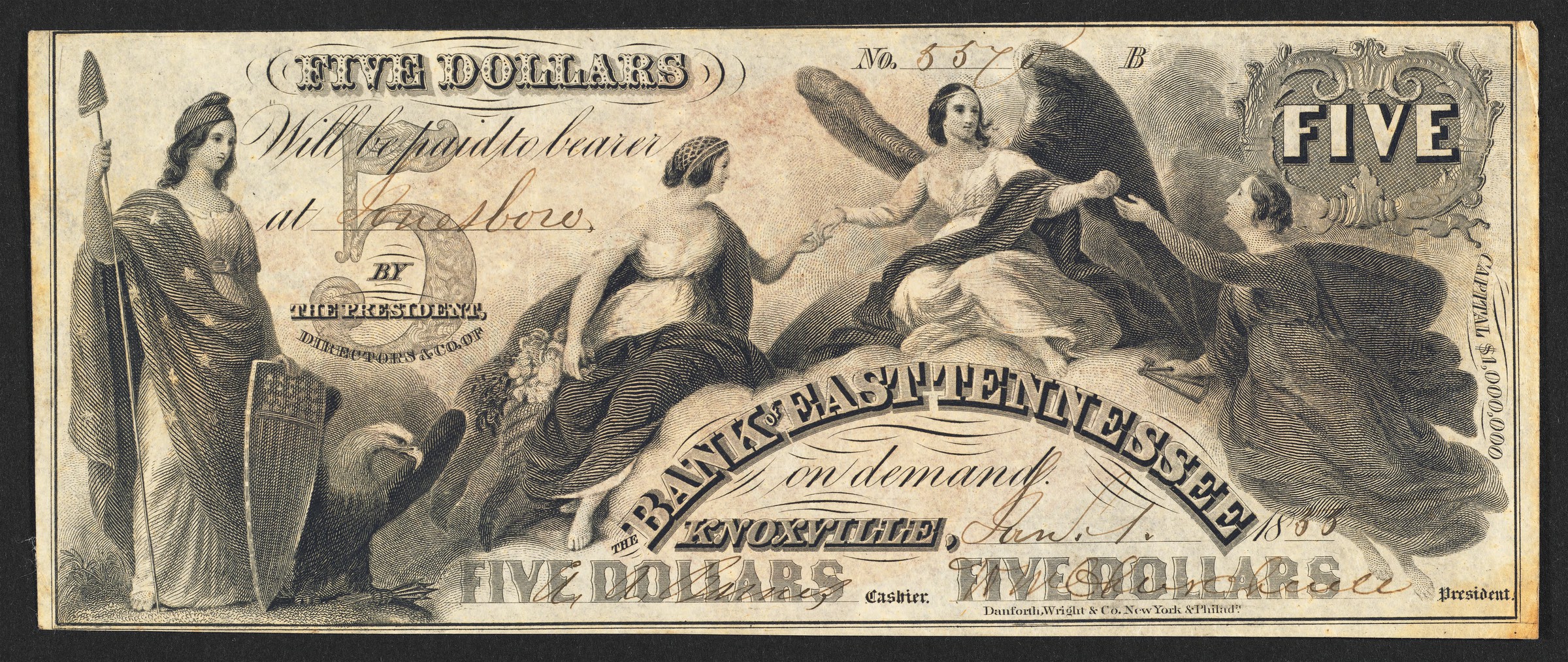
Americans had to be incredibly savvy at recognizing different kinds of banknotes and eyeballing their value at a moment’s notice. And you couldn’t even rely on the grandeur of the thing to guide you: scam notes from fake banks could look convincingly expensive – and real notes could be whimsical as all get-out.
“The Howard Banking Company's $5 bank note [is] one of my personal favorites,” Matt Jaremski, now a Professor of Economic History at Utah State University, told NPR, “because it's a Santa Claus note.”
“You get a picture […] of the bank president up in the left-hand corner. And then right in the middle, you get a picture of Santa Claus on a sleigh,” he explained. “So […] if you have this note, Santa Claus and all, you'll go to the Howard Banking Company. And they are obligated to pay you $5 in gold and silver coins.”
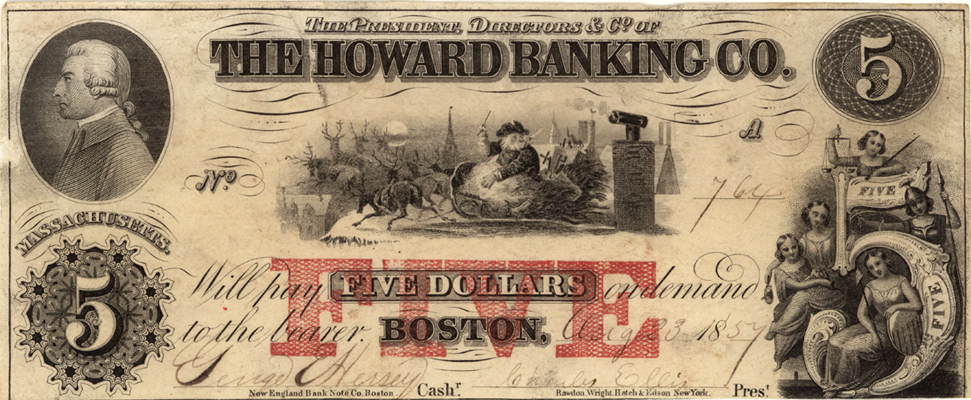
Of course, as we’ve seen, nobody else would be obligated to do so – but perhaps the hope was that the image of old Saint Nick would inspire them to be generous.
End of an era
There’s only so long a situation like this can continue, and – as you’re likely already aware from, you know, modern banknotes – it did eventually end. But the reason why probably isn’t what you’d expect.
“During the first two months of 1862 the finances of the federal government were in dire straits,” wrote historian Marc Egnal in a 2012 New York Times article. The country was mere months into the civil war, he explained, and the economic picture “could not have been more grim. The War Department could no longer pay the country’s soldiers and sailors; generals hounded Washington for money. Government revenues, which came chiefly from the tariff, fell from an annual average of $60 million during the prewar years to $42 million once the war began.”
The Union was going broke – and so it did something as simple as it was groundbreaking. The government printed $150 million of legal tender Treasury notes, known as “greenbacks” because of their distinct emerald-colored ink, which it used to pay for soldiers and supplies. For the first time, all the northern states were united in their use and acceptance of a single set of bank notes, issued not by some bank or company two towns over that might not even exist, but by the government.

At the same time, these northern states were seeing the creation of something else quite novel: national banks. These were institutions regulated not by states but by the federal government – another sneaky way for the Union to raise funds for the Civil War, since that compelled the new banks to buy government bonds.
Both these measures were big, and dramatic, and considered at the time to be most likely temporary – the kinds of emergency measures that might be necessary during a war, but would probably end in due course after it all blew over. But here’s the thing: the government had, almost by accident, made banknotes trustworthy.
For the first time, bills were uniform across states – and what’s more, they were worth what they said they were worth. It’s no wonder people wanted to keep them. And so it was thanks not to any motivation to end the chaos of thousands of competing banknotes across the US, but a sudden and dire need to raise money for war, that the dollar was finally standardized.
And American citizens never fell prey to a system of unregulated and scam-riddled currencies ever again. The end.


 1
1