Nature
 PUBLISHED
 1
1


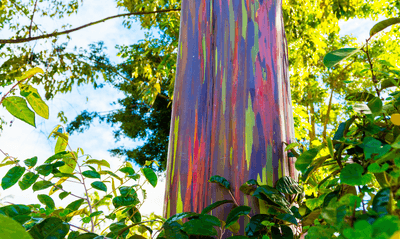


It looks like something from a fantastical land, or even AI slop, but the Rainbow eucalyptus is very real.
The rest of this article is behind a paywall. Please sign in or subscribe to access the full content.Rainbow eucalyptus (Eucalyptus deglupta) grows fast and tall, reaching up to 80 meters (262 feet) in ideal conditions. Native to the rainforest of the Philippines, Indonesia, and Papua New Guinea, it has since been introduced to other parts of the world with a similar climate, including Hawaii, Southern California, and Florida.
The tree's trunk is striped with shades of golden brown, bright yellow, neon greens, scarlet red, sunset orange, and even blue-ish purples. Although there's been curiously little research into the mechanisms behind the rich coloration, it's thought that its kaleidoscopic range of colors is due to the species' shedding process.
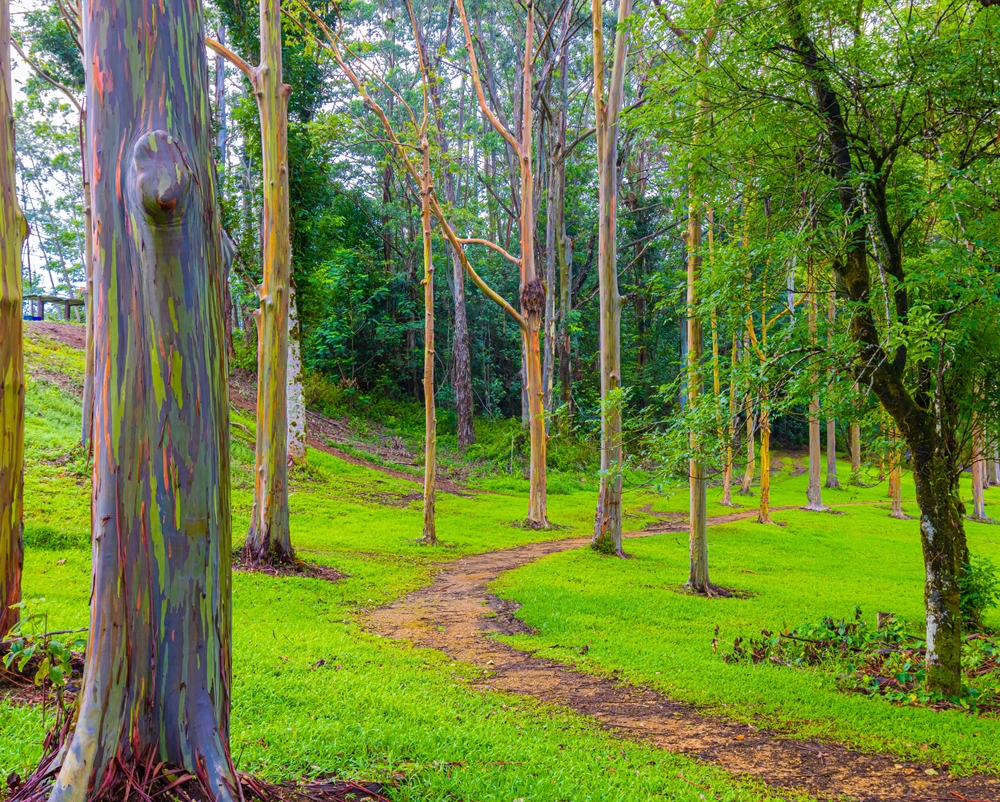
Unlike most other trees, like oak, which have continually thickening layers of bark, the eucalyptus continually peels away in thin ribbons. Each time a strip of brown bark falls away, it uncovers a transparent layer that reveals chlorophyll, the green pigment used in photosynthesis.
Once exposed to the outside air, the layer becomes richer in tannins, natural compounds that shield the tree from fungal infections. As these tannins mature, the layer goes through a stunning spectrum of blues and purples before turning red and gold, eventually returning to brown to start the cycle anew.
While the living tree is a marvel of color, its wood is prized for more utilitarian reasons. The species is widely harvested for its valuable timber, which is used for furniture, flooring, construction, and so on. It’s also cut down for pulpwood to make paper that is actually white. Once harvested and processed, the timber loses the "rainbow" effect.
Unfortunately, these desirable properties have made the species a target for overexploitation. According to the IUCN Red List, the Rainbow eucalyptus is vulnerable to extinction.
However, its good looks may be its saving grace: it is increasingly cultivated in ornamental gardens and parks, ensuring that this multi-colored species continues to thrive under human care.