Health and Medicine
 PUBLISHED





Most optical illusions last for a few fleeting moments when you're staring at the book, screen, or whatever medium the illusion is presented in, but the normal rules don’t apply to the McCollough effect. Gawk at these trippy images for long enough and the consequences could linger for hours, days, or even months. You have been warned.
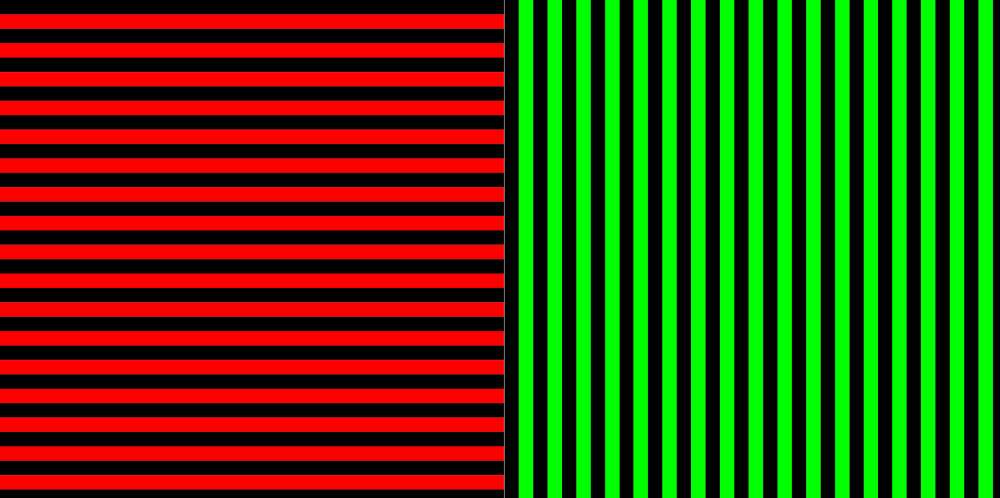
The rest of this article is behind a paywall. Please sign in or subscribe to access the full content.The premise is very simple: stare at one image with horizontal black-and-white stripes overlaid with a red tint, then at another with vertical stripes overlaid with green. Flick back and forth between the two for at least 2 or 3 minutes, perhaps longer if you can, keeping your gaze firmly centered on the images.
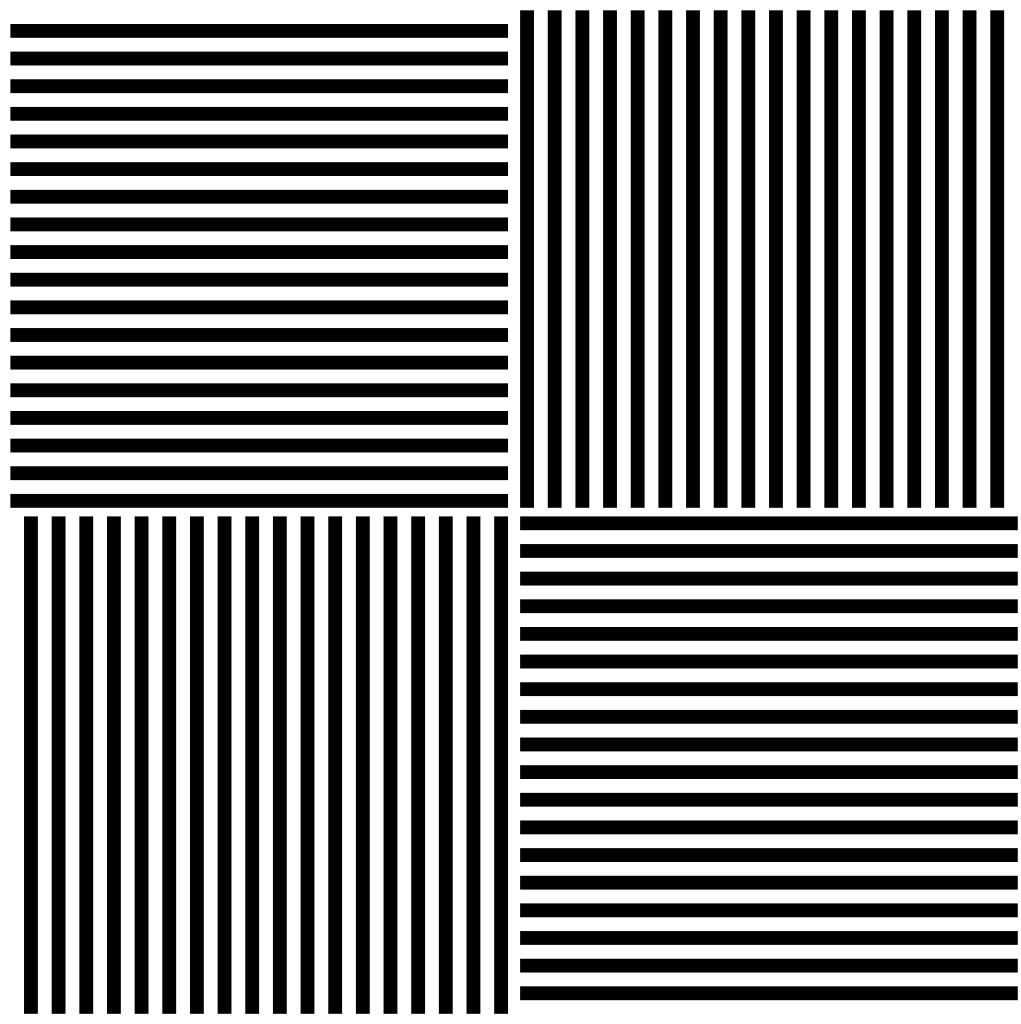
After several minutes of exposure, something strange happens. Now, when you look at a plain black-and-white grid, your brain inserts "phantom" colors: the horizontal lines appear faintly green, and the vertical lines appear as a light reddish pink. In reality, the image is monochrome, but your visual system has inversely imprinted colors from the induction images onto the black-and-white scene.
This is all wholly humdrum for an optical illusion, you might say, but here is where it gets really weird. When it was first described by psychologist Celeste McCollough in 1967, she hinted that the aftereffect seemed unusually persistent. It would take further studies, however, to reveal just how long it really lingers.
Scientists initially assumed the McCollough effect faded within hours, but it turned out there was a flaw in the way they were measuring it. Each time they tested their subjects, the testing itself was weakening the effect. It's a bit like asking someone to recall a half-forgotten dream again and again, only to find the details grow hazier with each retelling.
When researchers tested subjects only once, leaving the effect completely undisturbed in between, it didn't fade for an extremely long time. Even after 2,040 hours – that's roughly 85 days or 2.7 months – the illusion remained strong in some of the experimenters’ human guinea pigs.
A quick word of warning: it's not a good idea to stare at these images for too long, particularly if you plan on relying on sharp visual acuity in the hours (or days, weeks, months) ahead. If the effect sticks around, you can end up seeing it on things like garden fences, window blinds, or brick walls. At the very least, it can leave you feeling fuzzy-eyed and a little headachy. That said, there is no solid evidence that the McCollough effect causes any serious or lasting damage.
A more convincing argument is that the McCollough effect takes place not in the eyeball but in the visual cortex itself. The brain is faced with the constant task of creating and maintaining reliable, efficient models of the world, so it learns to closely associate certain colors with certain orientations. Once that association is reinforced a bit, it sticks around because it might be useful, as far as the brain knows.
This hypothesis was touched on by an interesting case study in 1995, when scientists tested a patient who had suffered significant brain damage from carbon monoxide poisoning. Her eyes remained anatomically healthy, but trauma to her visual cortex left her able to perceive color while losing the ability to process form or structure.
Fascinatingly, their experiment suggests she still experienced the McCollough effect, indicating the mechanism may sit somewhere within the primary visual cortex, or possibly even earlier in the visual pathway.
The exact mechanics behind it, though, are still not completely understood. For now, the best explanation is just a slightly more complicated way of saying “brains be braining”.


 1
1