Culture and Society
 PUBLISHED
 3
3


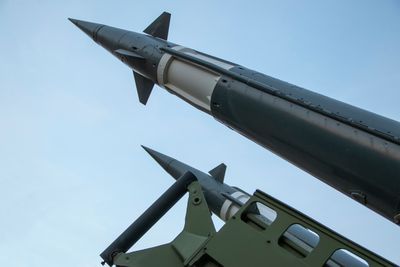


For the first time in decades, we are emerging into a world without nuclear arms controls. On February 5, 2026, the critically important New START treaty, which has restricted the nuclear weapons arsenals of both Russia and the US, expired. At present, there are no signs of any new negotiations to replace it at a time when global norms are shifting towards an unstable future.
The rest of this article is behind a paywall. Please sign in or subscribe to access the full content.This development may well signal the end of nuclear restraint, a return to nuclear weapons testing, and the start of a new global arms race.
Limiting arsenals
Let’s be clear: The end of the New Strategic Arms Reduction Treaty (New START) is not a signal for some imminent nuclear catastrophe (though the increasingly belligerent rhetoric around nuclear weapons and other military matters doesn’t leave one feeling exactly safe). However, it does signal an important sea change in international norms concerning these weapons, their development, stockpiling, and deployment.
New START was signed by President Obama and President Medvedev of Russia in April 2010 and came into force in 2011.
The treaty called for reductions in nuclear weapons and their launchers. This included limiting the number of strategic nuclear warheads both countries could have to 1,550, the number of deployed and non-deployed strategic launchers to 800, and the number of deployed intercontinental ballistic missiles, submarine-launched ballistic missiles, and heavy bombers they could have to 700.
If the United States and Russia both agree to abide by the limits of New START after its expiration, they will continue to monitor each other closely to ensure compliance.
Jennifer Knox
Crucially, the treaty also included mechanisms to verify compliance and mandated short-notice, on-site inspections of missiles, warheads, and launchers included in the treaty. These latter requirements provided assurance for both parties.
The treaty was a success – by February 5, 2018, both states had achieved the agreed-upon reductions. But history is a fickle thing, and despite its successes, the world was already changing.
A new era
Treaties are not immortal; they need updating or they expire, and New START was no exception. The treaty was originally designed for a 10-year term with the possibility of extending it by five years. This extension was eventually agreed upon in 2021, but only at the last hour. However, its provisions did not allow for any further formal extension.
Then, in 2023, Russia suspended its participation in New START, followed shortly by the US. Although this was not a formal withdrawal from the agreement, it did represent an end to the mutual inspection arrangements and data exchange – a significant step down from a culture of trust and cooperation.
This was a significant hollowing out of the treaty, indicating that a full collapse was underway well before it legally expired.
Despite this, both countries indicated that they would continue to abide by the treaty’s core limits. And both countries had the means to check the compliance of the other, even without onsite inspections.
“The United States and Russia have sufficient intelligence capabilities to be confident that neither country has exceeded New START's limits in a strategically meaningful way,” Jennifer Knox, Policy and Research Analyst at the Union of Concerned Scientists, told IFLScience.
“For example, even though Russia suspended its participation in New START in 2023, the United States was able to assess with ‘high confidence that Russia did not engage in any large-scale activity above the Treaty limits’ in 2025. If the United States and Russia both agree to abide by the limits of New START after its expiration, they will continue to monitor each other closely to ensure compliance.”
So, what does this mean for the world? The demise of New START is less a dramatic transformation, and rather a symptom of a much broader and long-brewing shift in global attitudes towards nuclear weapons and arms control cooperation. Does it mean the world is about to experience some sort of disaster? No, but it does mean we are entering a less stable era where trust has less currency.
“The loss of New START's verification mechanisms, including on-site inspections of nuclear facilities, is truly unfortunate; these activities helped the United States and Russia confirm compliance with the treaty terms, but they also built trust and strengthened the muscles of cooperation,” Knox added.
Without the assurance that the US and Russia are willing to formally cooperate on limiting their nuclear weapons capabilities, we could face a new global arms race. This would not be limited to the US and Russia alone, as it was during the Cold War. Although they hold the world’s largest stockpiles of weapons (both countries have inventories of over 5,000 warheads), other countries like China are already expanding and modernizing their nuclear forces.
We are entering a dangerous new period of uncertainty, where decisions today could spark a nuclear arms race that lasts for decades.
Jennifer Knox
Any future treaty will likely need to include China, but they have stated that they will not join any arms control negotiations while their own arsenal remains much smaller than others’ (China has around 600 warheads). The rise of China’s military capabilities and nuclear expansion is often cited as a justification for abandoning numerical limits, such as those imposed by New START, in favor of resuming weapons developments and renewing existing arsenals.
“China has recently undergone a major expansion of its nuclear forces, but at 600 warheads its nuclear arsenal is still significantly smaller than the US arsenal of 3,700 warheads,” Knox said.
“China has not characterized this expansion as a departure from its traditional nuclear posture. Instead, China emphasizes that the growth of its arsenal is meant to ensure the survivability of its nuclear forces in response to changing US capabilities, including US missile defense.”
Nevertheless, the relationship between the US and Russia is significant for signaling the state of the world stage at this time, as the geopolitical arrangement is more complex than it was during the Cold War.
“It's important to keep in perspective that the United States and Russia together control more than 87 percent of the world's nuclear weapons. That's why US-Russian strategic arms control is so essential to reducing the risk of nuclear war. But seven other countries also possess nuclear weapons: China, France, the United Kingdom, India, Pakistan, Israel, and North Korea.”
“Compared to the traditional bipolar structure of the Cold War, our world is increasingly multipolar, complicating the political, economic, and military relationships among states. In terms of nuclear competition, multipolarity makes it more difficult for states with nuclear weapons to signal their intentions, increasing the risk of miscommunication and miscalculation, especially during a crisis.”
How did we get here?
As mentioned above, this situation has been developing for some time. For instance, Russia’s annexation of Crimea in 2014 marked a decisive rupture in US-Russian relations, introducing greater levels of deterrence-first thinking, rather than assumed levels of mutual trust. At the same time, the move weakened dialogues between NATO and Russia, leading to arms control negotiations looking increasingly like concessions, rather than stabilizing factors.
Another significant blow came in 2018, when the US withdrew from the Iran nuclear deal (JCPOA). This signaled to the world that the negotiated nuclear agreements may not always be honored, even when compliance mechanisms were in place. In the following year, the Intermediate-Range Nuclear Forces (INF) Treaty, which had eliminated an entire class of nuclear missiles from Europe since 1987, collapsed, ending a decades-long agreement. This ushered in a new era for missile deployments while also foreshadowing a change in attitudes towards constraint.
From here, language between the US, Russia, and China gradually turned towards modernizing, rather than limiting, nuclear weapons arsenals. Russia’s invasion of Ukraine and the ongoing war in that context has continued to harden nuclear rhetoric, including promoting explicit nuclear threats from Russia. It was this destabilization that lead to Russia suspending New START, as the inspection arrangements became impracticable and communications channels continued to narrow.
Now, for the first time since the Cold War, nuclear weapons were being used as political threats.
“The United States and Russia already have enough deployed nuclear weapons to kill tens of millions of people in less than an hour,” Knox explained.
“Neither country has any imaginable use for more powerful or destructive capabilities. But by investing in more and bigger weapons, they only prompt the other country to do the same, resulting in an endless, dangerous, and wasteful cycle of competition.”
On October 30, 2025, President Trump announced on social media that the newly named Department of War would “start testing our nuclear weapons” again for the first time since the 1990s. This, he argued, was “because of other countries nuclear testing programs”.
There is currently no evidence to suggest any other country is conducting nuclear explosive tests. This does not mean they are not engaged in nuclear weapons-related experiments at their own testing sites, however. It just means they are not detonating explosives, which is dangerous for both the environment and for populations living near the test sites. A resumption of nuclear tests would also violate the terms of the Partial Test Ban Treaty and the Comprehensive Nuclear-Test-Ban Treaty (CTBT) which the US is a signatory of.
At present, it is unclear whether the US will start testing nuclear explosives again, but the possibility further erodes decades of trust. If tests do take place, they will severely damage global security and will likely trigger reciprocal behavior from others.
Despite this, there is still time for the situation to be improved. Sure, negotiations of a new treaty would take a long time, but steps can be taken to reduce the chances of a complete collapse of nuclear restraint. Existing nuclear weapon states – Russia, China, the US, the UK, and France – can still establish high-level discussions to reduce these risks and build confidence again. Regular informal exchanges could be enough to stabilize the situation before any formal limits are agreed. This can be a multilateral affair, not limited to just Russia and the US’s weapons.
“We are entering a dangerous new period of uncertainty, where decisions today could spark a nuclear arms race that lasts for decades,” Knox said. “We must press leaders in the United States and Russia to act with restraint and return to the negotiating table as quickly as possible.”