Nature
 PUBLISHED
 3
3




Humans have been scouring the sky for alien life for centuries, and we’ve had, let’s face it, little success. Proposed reasons for that range from the existentially bleak to the profoundly terrifying and back to the boringly sensible again – but perhaps the answer is something more practical. Maybe we just haven’t been speaking the right language.
The rest of this article is behind a paywall. Please sign in or subscribe to access the full content.Of course, finding a lingua franca between two species with zero shared culture is no mean feat. A delightfully interdisciplinary team from Australia might have a solution, though – and it all comes down to bees.
Yes, bees.
Why bees?
“It did all start with the bees,” says Scarlett Howard, a research fellow in the School of Biological Sciences at Monash University and coauthor of both the new paper and an article in The Conversation.
“As an interdisciplinary team, we explored the abilities of bees to process numbers, perform mathematics, and learn abstract number concepts,” Howard tells IFLScience.
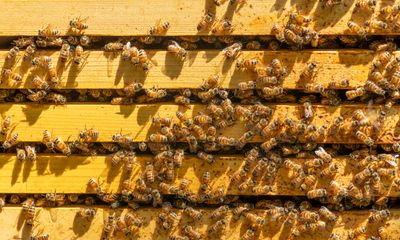
The insects, they found, were able to understand the concept of zero – a harder thing to grasp than you might imagine, and so far only verified generally in humans, crows, certain monkeys, and, as of 2017, yes, bees; they could categorize numbers as odd or even; they could even link numbers to symbols, like how we see a “6” and imagine – well, “six”. They could even perform very simply binary options – adding and subtracting one to values – and, Howard explains, “they possessed a mental number line for ordering quantities from left to right, like humans.”
“There are many other discoveries we have made concerning bees and their numerical abilities,” she says, “but these are the major ones that inspired us.”
It's a collection of abilities that are startlingly familiar, considering all the differences between our two species. Bees’ brains are tiny: barely the size of a sesame seed, with around a million neurons – barely a speck in the wind compared to the 86 billion in our own meaty brains. It’s only relatively recently that we’ve been able to understand the insects as anything more than tiny, instinct-driven robots, assuming as we did that such a simple brain could never produce more complex thoughts or emotions.
Now, however, we’re beginning to know better.
Of course, we don’t think that bees are pure mathematicians.
Andrew Greentree
“The ancestors of bees and humans diverged over 600 million years ago, yet we both possess communication, sociality, and some mathematical ability,” points out Howard, along with paper coauthors Adrian Dyer, an associate professor in the Department of Physiology at Monash, and Andrew Greentree, a professor of quantum physics at RMIT University, in the new article for The Conversation.
“Since parting ways, both honeybees and humans have independently developed effective, but different, means of communication and cooperation within complex societies,” they write.
So: where we have language, bees have the waggle dance, they note – a quite sophisticated method of communication that can convey the distance to some resource, its direction and angle from the Sun, and its quality. Bees are, it seems, smart. It would perhaps be an act of hubris not to try to communicate with them.
“Of course, we don’t think that bees are pure mathematicians,” Greentree tells IFLScience. “[Not] yet.”
“But it does suggest that a suitably intelligent bee (with suitably large memory) could create all of mathematics from the starting point that we’ve trained them to,” he says.
From B to ET
It took a chance conversation with a couple of non-experts for the idea to spark further. “Andrew was explaining what we achieved to his children,” Howard tells IFLScience. “While telling his children the story of bees and mathematics, Andrew realised the link between teaching human number concepts to a distantly related species of insect to the potential design of a universal language that could be used to communicate with intelligent alien life.”
The project emphasises that impactful and fun ideas start with great teams and genuine people with open minds.
Scarlett Howard
The idea of math as a universal language – “universal” in the truest sense of the word, allowing for communication between our own species and those from elsewhere in the galaxy or beyond – is not new. It’s cropped up in science fiction and science fact: “The covers of the Golden Records, which accompanied the Voyager 1 and 2 space probes launched in 1977, are etched with mathematical and physical quantities to ‘communicate a story of our world to extraterrestrials’,” the trio point out in their article.
Before that, there was the 1974 Arecibo radio message, which beamed out into space a sequence of 1,679 zeroes and ones, spelling out in binary the numbers one to ten and the atomic numbers of the elements that make up DNA.
Evidently, math has the popular vote as a potential means of communication with alien species – assuming we can get over the philosophical bumps, of course. But that just leaves one important question: suppose we do work out this language. Best case scenario, a message could be exchanged with residents of our nearest star system in around a decade – not a lot of time for small talk, in other words. So… what do we say?
“I’m not sure” what a conversation would look like in practice, Greentree says. “A lot would depend on what kind of message we wanted to send.”
“For example, we might just want to tell the aliens that ‘there’s another intelligent race out there’,” he tells IFLScience. That might mean simply beaming out a sequence of numbers that’s unlikely to turn up randomly, he says – perhaps, as many previous hopeful attempts have tried, the primes.
“However, if we wanted to encode information, that becomes much more difficult,” he adds. “We would have to develop some kind of dictionary, starting from simple concepts and building into full language.”
“It's important to acknowledge that these ideas are a team effort,” Howard stresses. “The thought experiment was incredibly fun to form, debate, deconstruct, and publish. The team's expertise spans theoretical physics, arts, humanities, biology, neuroscience, cognition, and sensory ecology.”
“Thus, the project emphasises that impactful and fun ideas start with great teams and genuine people with open minds,” she says.
A philosophical knot
If you want to start a fight in a math department – or, for that matter, a philosophy department – you should simply find the nearest group of professors and ask the following: “is math invented, or discovered?”
It’s a question you may not have spent much of your own life thinking about – and for good reason, frankly, since like so many Big Philosophical Questions, it’ll probably never be answered conclusively either way, and contemplating it too much will just leave you frustrated.
But in this case, the answer may have crucial implications for the feasibility of the math-as-communication idea. If math is invented, and what we consider unbreakable laws of logic and the universe are in fact products of our own imagination – well, who’s to say an alien species would come up with the same formulations?
In that case, perhaps math doesn’t hold the answers. But the team are more optimistic: “I think our contribution is a part of [that] conversation,” Dyer tells IFLScience. “I think the evidence suggests that perhaps both [discovered and invented] are (or can be) true.”
“This is exactly the question that we’re hoping to be able to shed some light on,” Greentree says. That is, he adds, “at some stage in the future!”
The study is published in the journal Leonardo.