Nature
 PUBLISHED


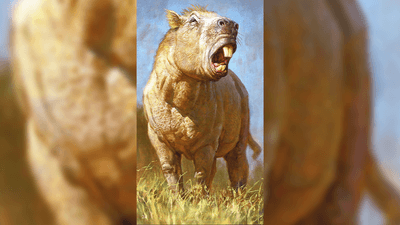


If Rodents of Unusual Size are your sort of thing, then allow us to introduce you to the largest of them all: Josephoartigasia monesi. This absolute unit is the biggest rodent ever known to have lived, and if you thought a nibble from one of its modern-day relatives had a decent amount of force about it, just wait until you hear about how strong its own bite was.
The rest of this article is behind a paywall. Please sign in or subscribe to access the full content.J. monesi was first described in 2008, although the near-complete fossilized skull its description would come from was actually found all the way back in 1987, in Uruguay. It ended up being donated to the country’s National History and Anthropology Museum, where it sat for nearly 20 years before being rediscovered by the museum’s curator.
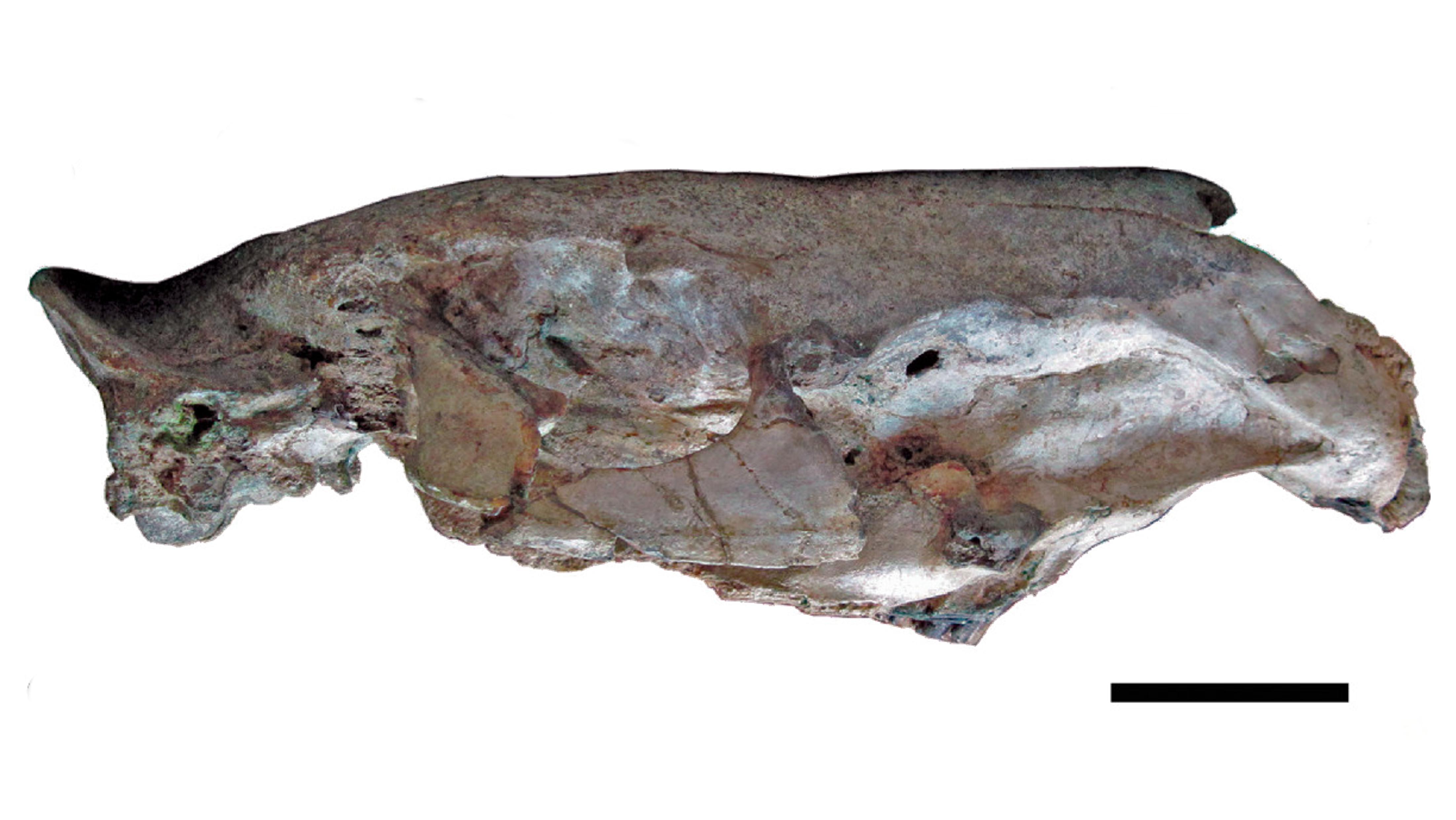
Based on the age of geological formation in which the skull was found, researchers were able to determine that the giant rodent lived between 4 to 2 million years ago. Rather than a massive rat, it’s thought to have looked more like the modern-day pacarana (Dinomys branickii), a fellow South American rodent.
While there’s agreement that J. monesi is the largest rodent known to have lived, there remains some debate over exactly how big it was. When it was first discovered, the team behind the find put its weight between as low as 468 kilograms (1,032 pounds) – which is still nearly eight times that of the heaviest capybaras, the largest living rodents – and a truly whopping 2,586 kilograms (5,661 pounds). That’s heavier than some rhinos, and we all know what tanks they are.
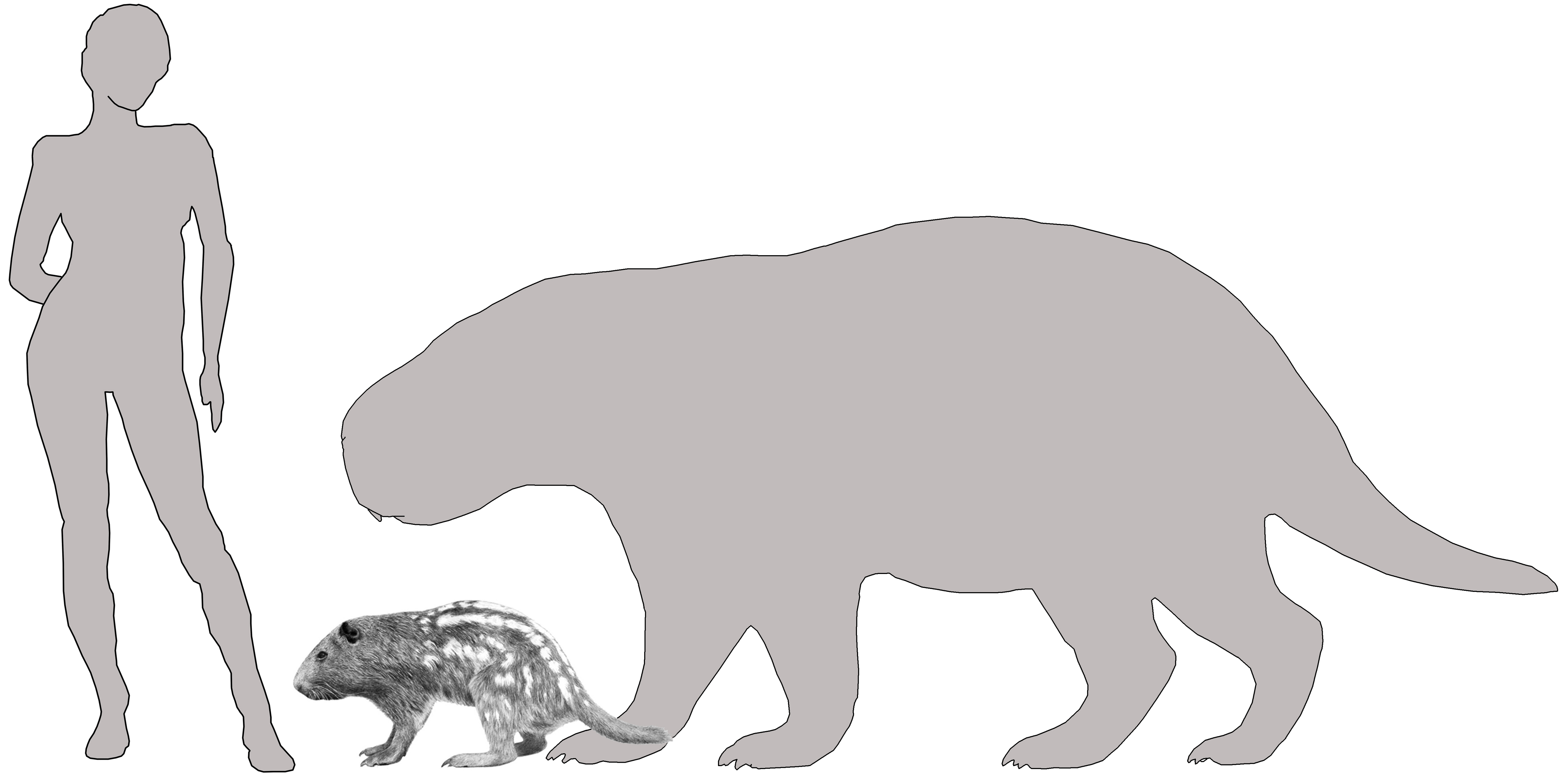
However, later estimates of the rodent’s size have been far more conservative, with a study in 2022 placing it at 480 kilograms (1,058 pounds). Why the difference compared to the sky-high initial figures? According to the author of the more recent study, there was an unrecognized factor skewing the results.
“High estimates in previous studies appear to be due to the unrecognized, nonlinear relationship between certain skeletal measurements (skull size) and body mass,” Russell K Engelman, the author of the 2022 study wrote. In other words, just because J. monesi had a big ol’ noggin, that doesn’t mean it was the weight of a truck.
Regardless of its chonk levels, it’s thought that J. monesi had an impressively powerful bite. Using simulations, a 2015 study predicted that the mammoth rodent’s bite was 1,389 Newtons (N) at its incisors, and 4,165 N at its third molar.
Although that’s only around a quarter of the force of the strongest bite of a living animal, it’s worth remembering that it takes around 4,000 N to break a human femur – one of the strongest bones in our bodies.
The good news for anyone about to have nightmares about giant chompy rodents – other than the fact that J. monesi is long dead – is that it’s thought to have primarily used its bite for getting through tough vegetation, digging for roots, and maybe even like tusks for defense.
A massive capybara-like creature with elephant vibes? We’re here for it.