Nature
 PUBLISHED


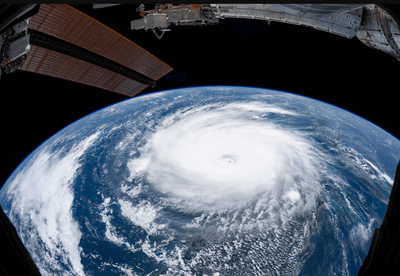


Storm scientists at Colorado State University (CSU) are predicting a slightly below-average Atlantic hurricane season for 2026 in their initial forecast. From June to the end of November, they’re estimating the Atlantic Ocean will see 13 named storms, around six of which will become hurricanes, and two becoming major hurricanes (Category 3 or higher).
The rest of this article is behind a paywall. Please sign in or subscribe to access the full content.These are relatively low-ball numbers, just 75 percent of the activity seen in average season from 1991–2020. The long-term seasonal average for an annual hurricane season is 14 named storms, seven hurricanes, and three major hurricanes.
The latest CSU forecast also puts landfall odds below historical norms. There's a 32 percent chance of a major hurricane hitting the US coastline this year, compared to a long-term average of 43 percent. For the East Coast, the chances of a big hurricane making landfall are as low as 15 percent (down from an average of 21 percent), and for the Gulf Coast, it's 20 percent (27 percent average).
Given the past few years, the somewhat quieter forecast is more than welcome. The 2025 season was a violent one, with activity around 105 percent of the average season. It was headlined by Hurricane Melissa, a Category 5 storm that made landfall in Jamaica, causing nearly $9 billion in damage and 95 recorded fatalities across the Caribbean. The previous year also witnessed an extraordinarily active and destructive Atlantic hurricane season, featuring the infamous Hurricane Milton.
However, it’s still very early days, and the researchers warn there's still a great deal of uncertainty in these early predictions. The CSU team will issue updates to this forecast on June 10, July 8, and August 5.
“So far, the 2026 hurricane season is exhibiting characteristics similar to the 2006, 2009, 2015 and 2023 seasons. Our analog seasons ranged from well below-average Atlantic hurricane activity to somewhat above average,” Phil Klotzbach, a senior research scientist in the Department of Atmospheric Science at CSU and lead author of the report, said in a statement.
“While the average of our analog seasons is somewhat below normal, the large spread in observed activity in our analog years highlights the high levels of uncertainty that typically are associated with our early April outlook,” Klotzbach explained.
Atlantic hurricane season officially starts each year on June 1 and ends on November 30, with a peak of activity between mid-August and mid-October. It's a six-month window when warm waters in the Atlantic Basin fuel some of the most powerful and destructive storms on Earth.
One of the primary reasons why CSU experts are predicting a below-average Atlantic hurricane season for 2026 is the forecast of a strong El Niño, which tends to dampen storm activity in this part of the world.
El Niño is a recurring climate pattern defined by warmer-than-average water in the eastern and central tropical Pacific. It has a knock-on effect across Earth, impacting global climate and weather patterns in a myriad of ways – including hurricanes in the Atlantic. Elevated Pacific temperatures pump stronger upper-level westerly winds across the Caribbean and tropical Atlantic, increasing vertical wind shear. These conditions can make it harder for storms to form and intensify, effectively acting as a natural brake on hurricane activity.
But even though the 2026 Atlantic hurricane season is currently looking set to be thankfully unremarkable, the researchers warns it’s no reason to be complacent.
“It takes only one storm near you to make this an active season for you,” added Professor Michael Bell, another author of the report.