Health and Medicine
 PUBLISHED


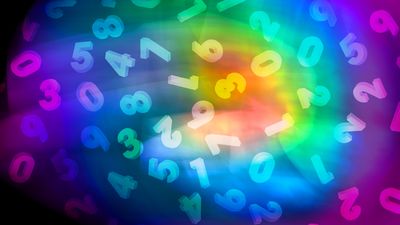


Synesthetes talk a big game, with their claims of hearing colors and seeing sounds – but is it all they say? A new reviewed preprint study suggests that, basically, yeah, it is: “synesthetes […] measurably experience their synesthetic colors effortlessly,” the authors write, “much like non-synesthetes view an actual […] color.” How do they know? It all comes down to your pupillary response.
The rest of this article is behind a paywall. Please sign in or subscribe to access the full content.Go from a bright space to a dark one, and it takes a little while for your eyes to adjust – that’s one of the spurious justifications given for why pirates wore eyepatches. The reason for that is purely physical: faced with too much light, your iris contracts, making your pupil literally shrink – it’s similar to a camera aperture narrowing, but with the benefit of protecting your retina from getting burned out.
For darker spaces, the opposite happens. Then, your eyes need as much light as possible to make out what you’re looking at – so, like a camera maximizing exposure, your iris relaxes to make your pupil bigger, allowing more light to get inside.
Now, these effects are most obvious when the whole environment changes – when you go, for example, from a bright summer’s day into a dark room protected by blackout blinds, or vice versa. But the same changes happen, albeit on a much smaller scale, when you simply look at bright or dark things: seeing a black silhouette of an apple, for example, will make your pupils a tiny bit larger than seeing a vibrant red one.
So far, so standard. But here’s where things get interesting: if you present a visual synesthete with some input that triggers their synesthesia, would their pupils act as if they’re seeing the objective truth? Or would they instead accommodate the swirling colors and shapes produced by their sensory mix-up?
To test this, the researchers recruited 16 grapheme-color synesthetes, whose specific type of synesthesia manifests as written letters and numerals being perceived as certain colors. From there, the test was simple: “Participants viewed graphemes (digits) on a computer screen during eyetracking,” the authors write, “and indicated, after each trial, which color most closely matched with the respective grapheme.”
In other words: present your participants with, say, a “5” written in dark gray font, and measure whether their pupils act as if seeing that color or a different one. And the results were clear: “pupils constrict when viewing digits that evoke brighter synesthetic colors and dilate to digits that evoke darker synesthetic colors,” the authors confirm.
“In contrast, non-synesthetes presented with the exact same physical input do not show modulation of pupil size to the brightness of their associated colors,” they point out – meaning that synesthetes really are seeing something different from the rest of us.
It’s a result that “would not be expected if synaesthesia were purely associative,” Rebecca Keogh, a research fellow at Macquarie University in Australia and expertise in pupillary responses, told Live Science last week. It “supports the idea that these experiences have a perceptual, image-like quality.”
That said, “one limitation is that the study focuses on a specific type of synesthesia: grapheme-color," added Keogh, who was not involved in the new study. That means there’s, oh, 150 or so more to investigate, assuming no others get discovered in the meantime – and “it is not yet clear how well these findings generalize to other forms of synesthesia,” Keogh cautioned.
The reviewed preprint, along with the publicly available peer reviews, are published in eLife.


 1
1