Nature
 PUBLISHED



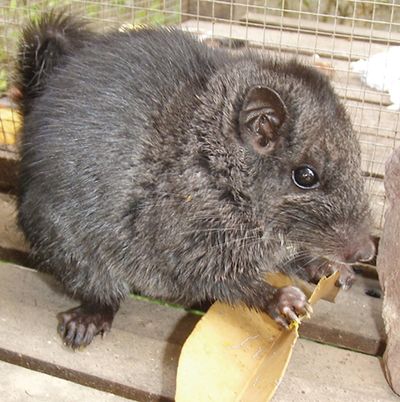


In 2005, researchers described what they believed to be a new family, genus, and species of rodent. It was a delightfully adorable discovery in the realm of squirrel research, but hardly Pulitzer Prize-winning science. What followed, however, was far stranger. This elusive rat-like creature turned out to belong to a rodent family long thought to have fallen into extinction some 11 million years ago.
The rest of this article is behind a paywall. Please sign in or subscribe to access the full content.The first clues emerged in 1996, when biologist Robert Timmins came across some unusual rodents being sold as food at Thakhek Market in Khammouan Province, southern Laos. Two years later, further evidence surfaced in the form of skulls and photographs from villagers in Thakhek District, along with additional jaw fragments recovered from owl poop in a Laotian cave system. A third specimen was then spotted being held by a young boy along the roadside, once again in Thakhek.
Specimens were sent to the Natural History Museum in London, where they were initially classified as a totally unknown species: the Laotian rock rat (Laonastes aenigmamus). At the time, researchers proposed it was so distinct from all living rodents that it warranted a new taxonomic family.
But then things got weird. After a thorough rummage through historic fossil collections, another team of scientists argued that its unusual skull shape was uncannily similar to the rodent fossils dated from the early Oligocene to late Miocene found at sites in Pakistan, India, Thailand, China, and Japan. In a paper published in the journal Science in 2006, they concluded it was actually the sole survivor of an ancient group of rodents that died out 11 million years ago: Diatomyidae.
The Laotian rock rat, they wrote, was a “particularly striking example of the ‘Lazarus effect’ in recent mammals.” Also known as a "living fossil," this rare phenomenon describes cases when a species disappears from the fossil record only to reappear later, alive or in younger fossils.
Soon after the 2006 paper was released, researchers David Redfield and Thai wildlife biologist Uthai Treesucon traveled to Laos and managed to film a live specimen in the wild, providing hard evidence the species was alive and well. Working with local hunters and guides near the Thai border, they eventually succeeded after several failed attempts, photographing and recording the animal before releasing it back into its rocky habitat.
As you can see in the video above, the species is a bit like a cross between a squirrel and a rat. Oddly, though, it’s clearly not adapted to climbing. Unlike its more athletic rodent cousins, the species waddles like a duck, preferring to scamper across limestone outcroppings rather than scaling vines and tree trunks.
The case of the Laotian rock rat is a great reminder of what modern science stands to learn from Indigenous knowledge and local know-how. While biologists were puzzling over specimens in distant laboratories, Laotians were as familiar with this creature as we are with a sewer rat. If only they had spoken to that kid on the roadside sooner.