Nature
 PUBLISHED





A new study reveals a profound glimpse into the strange and diverse organisms living nearly 10 kilometers below the surface off Japan’s coast. Over a two-month period, an international team of researchers catalogued around 108 distinct organism groups as well as the deepest-ever recorded fish. And if this wasn’t enough, they also witnessed a never-before-seen creature that has baffled taxonomic experts across the world.
The rest of this article is behind a paywall. Please sign in or subscribe to access the full content.Lurking in the western Pacific Ocean, a relatively short distance from Japan, are two deep-sea trenches that each boast terrifying depths. Although neither are among the deepest in the world – that status belongs to Challenger Deep and the Tonga Trench – the Ryukyu trench and Izu–Ogasawara trench (sometimes called the Bonin trench) still boast depths of around 7,500 to 7,900 meters (24,606 to 25,918 feet) and 9,700 to 9,800 meters (31,824 to 32,152 feet) respectively.
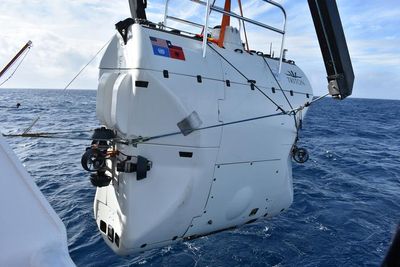
As you can imagine, investigating what lives at these crushing depths is far from easy, but back in 2022, researchers at the Minderoo-UWA Deep-Sea Research Centre at the University of Western Australia and the Tokyo University of Marine Science and Technology undertook a two-month expedition to examine the biodiversity in these trenches. Funded by Caladan Oceanic LLC and Inkfish, a philanthropic research institution, the team embarked on this journey aboard the DSSV Pressure Drop and took excursions into the trenches using the crewed deep-sea submersible Limiting Factor (whose names attentive readers may recognize from the Culture novels of Iain M. Banks).
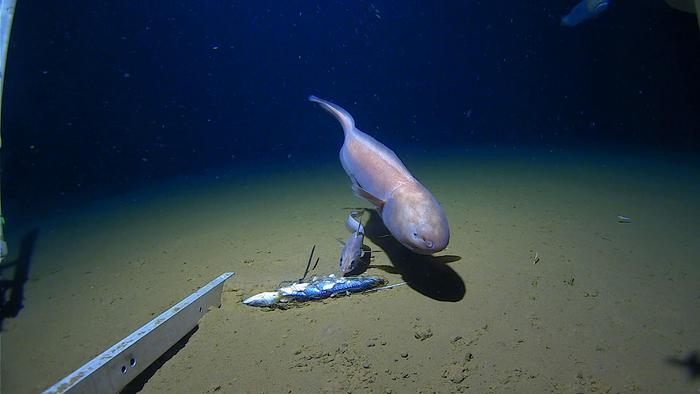
Typically, researchers rely on trawls and physical sampling techniques to bring deep-sea specimens to the surface for examination. However, this approach often damages the delicate organisms they catch and provides little insight into their behavior.
The researchers aboard the Pressure Drop took a different approach. They navigated the crewed submersible along a planned route (known as a transect) to study seafloor-associated animals and their habitats directly, and they combined this with releasing baited “landers” to attract species like fishes and decapods (crustaceans).
“This combination enabled us to build the most comprehensive visual baseline yet for abyssal and hadal megafauna in the Northwest Pacific to date,” the team explained in a statement.
The journey to the abyssal plain – not something from a fantasy story but rather the ocean depths between 3,000 and 6,000 meters (9,842 and 19,685 feet) deep and the hadal zone (anything deeper than 6,000 meters) offered a range of incredible sights.
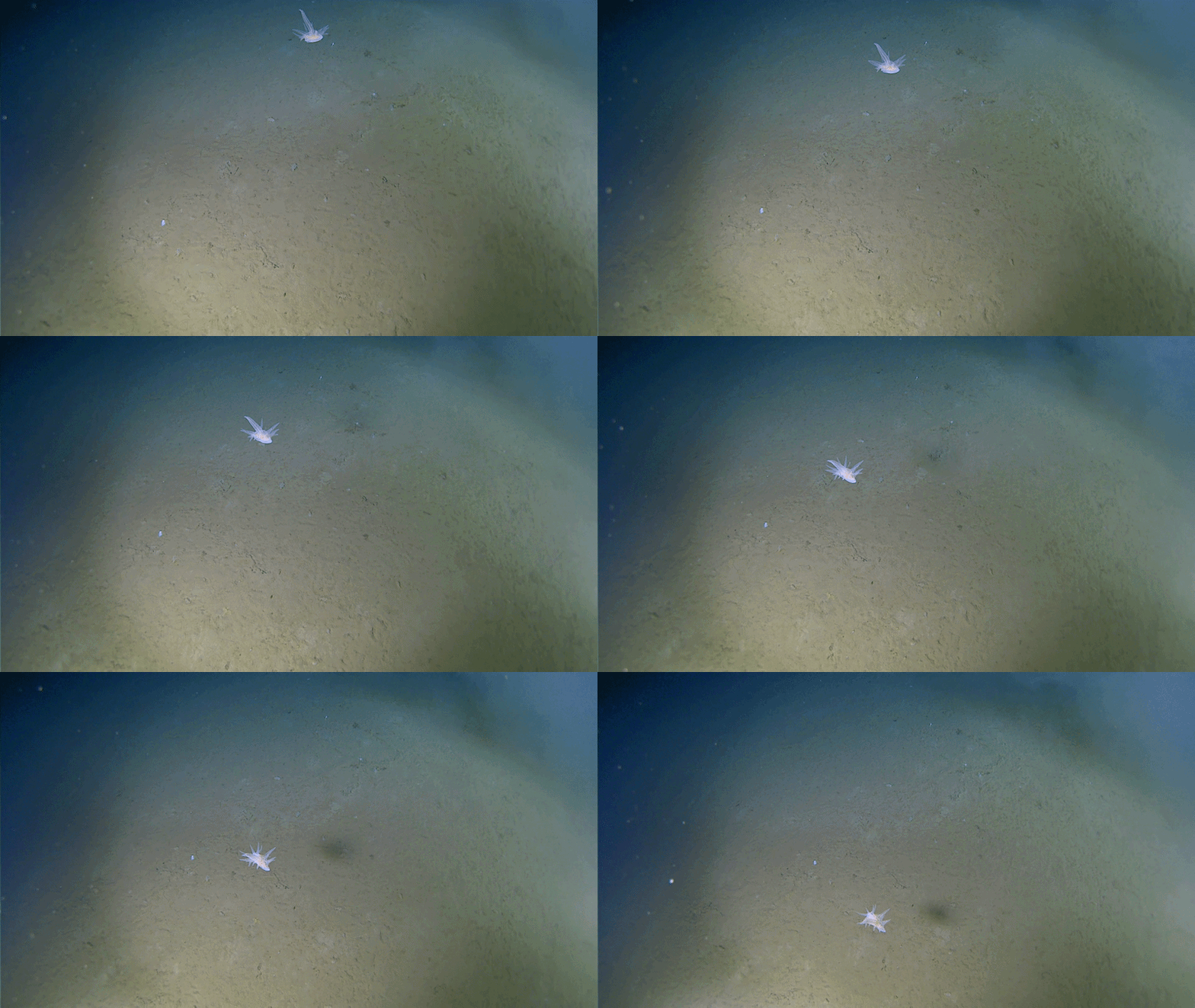
The strangest among them was an enigmatic, slow-gliding organism that has currently been designated as Animalia incerta sedis. This creature was filmed twice floating along at depths of around 9,137 meters (29,977 feet), and despite extensive discussions with global taxonomic experts, no one has been able to confidently assign it to a known phylum (a relatively broad classification of organism, which tells you just how odd this thing really is).
The new organism has traits that resemble nudibranchs – sea slugs – or sea cucumbers, but its true identity remains unknown.
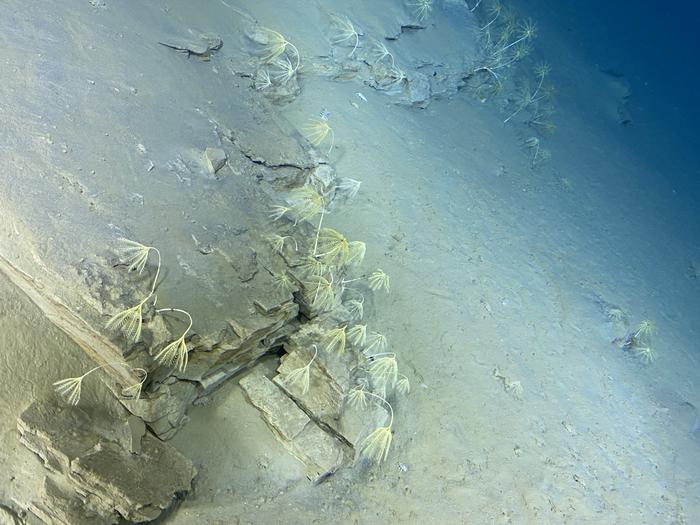
The crewed submersible transects also allowed the team to observe dense populations of deep-sea life in their natural seafloor habitats, giving insights into how these deep-sea dwellers interact with one another. At the base of the Boso triple junction – a rare geological point at 9,737 meters – the researchers saw incredible “crinoid meadows,” which look like underwater fields covered in animals that are sometimes called sea lilies.
In the depths of the Izu-Ogasawara Trench, between 9,568 and 9,744 meters (31,391 and 31,969 feet), the researchers recorded carnivorous sponges that belong to the Cladorhizidae family. This represented the deepest in-situ observation of carnivorous sponges to date.
The team also managed to gain footage of a snailfish (Pseudoliparis sp.) feeding at a record depth of 8,336 meters (24,349 feet). This was achieved using the baited landers method and represents the deepest in-situ observation of a fish ever recorded. The landers also revealed the presence of Alicella gigantea, a giant species of amphipod that appears to scavenge across all three surveyed trenches.
Although this study demonstrates that many organism groups are shared across the region, there are distinct local patterns. These differences reveal how geological processes, depth and the availability of nutrients from the surface waters shape life in these environments.
"While it’s easy to think of deep-sea trenches as untouched wilderness, our findings also showed evidence of human-derived debris, likely transported by downslope processes,” the team explained.
They emphasized that their research demonstrated the necessity of non-destructive visual approaches.
"Historically, our understanding of abyssal and hadal ecosystems, including those associated with subduction features, relied largely on trawls and physical samples," they said. "While these methods provide essential information, they can damage fragile organisms and rarely capture behaviour or ecological context."
The team hopes that by producing a comprehensive and illustrated guide to these deep-sea habitats, they can support future imagery-based biodiversity surveys.
"This study was not simply about observing deep-sea organisms, but also aimed to establish a foundation for future research at these depths,” they concluded.
“More than anything, the hadal zone remains one of Earth’s least-explored and most intriguing frontiers.”
The paper is published in Biodiversity Data Journal.