Culture and Society
 PUBLISHED
 1
1




It is no secret that the US has become deeply polarized – just look at the state of your news feed. The “left” and “right” have never seemed further apart, political discourse has turned increasingly bitter, and public distrust is at an all-time high. But where did this rift originate? According to recent research, the divide can be neatly traced back to a single, pivotal turning point: 2008.
The rest of this article is behind a paywall. Please sign in or subscribe to access the full content.In the new study, psychologists at the University of Cambridge in the UK demonstrate a new technique for measuring political issue polarization using a machine learning algorithm.
They started with over 35,000 survey responses gathered between 1988 and 2024 for the American National Election Studies, which looked into all kinds of core political issues, ranging from economics and democracy to race and inequality.
The researchers then applied “clustering algorithms” to the data to sort people into different groups. Rather than simply looking at Republicans versus Democrats, the system finds groups of people who actually think alike, share core values, and act accordingly. By measuring the distance between these groups and how tightly members agree with one another, the team can create a quantitative score for a nation’s political division.
The findings showed that divisions within the US population on social and political issues have increased by 64 percent since 1988. The polarization is closely linked to a fork in the road that occurred in 2008 when left-leaning and right-leaning Americans sharply diverged in their beliefs.
“Our study shows that 2008 was a major turning point for the divisions between left and right on many of the issues that define contemporary US politics,” senior author Dr Lee de-Wit, who leads the Political Psychology Lab at the University of Cambridge, said in a statement.
Interestingly, the data suggests this gap is widening primarily because the left-leaning public has shifted significantly in a "progressive" direction, while the views of the right have remained remarkably unchanged in an otherwise rapidly changing world. Specifically, the study found that the American left was 31.5 percent more socially liberal in 2024 compared to 1988, while the US right was only 2.8 percent more conservative.
“Although sentiment varies by topic, the American public has moved left on many issues during the 21st century. This shift may surprise those familiar with the rightward turn of Republican leaders over the same period, as well as recent US headlines,” explained De-Wit.
“Part of the recent success of the US right may be their ability to tap into outgroup animosity for a perceived ‘woke’ left, rather than a firm belief in some of the more extreme right-wing positions adopted by the Republican leadership,” he added.
The year 2008 was a critical turning point in the history of the early 21st century. Barack Obama was elected as the first Black US president on a campaign of “hope, progress, and change”, while the iPhone 3G and the Apple App Store were released, ushering in the era of constant connectivity and social media echo chambers.
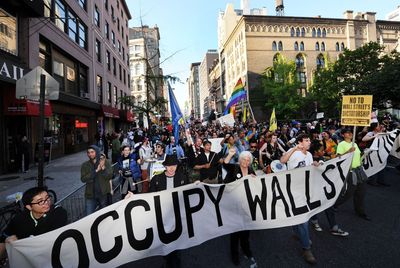
Perhaps the biggest of all, it was the year the global economy entered a downward spiral in the Great Recession. The upset started with the collapse of the US housing bubble and the subprime mortgage crisis, but it let out a shockwave that blasted banks and businesses around the globe. Millions of people lost their homes and livelihoods, and public trust in establishment institutions was shattered.
As history has shown repeatedly, from the Great Depression in the 1930s to the stagflation of the ‘70s, economic upsets are almost always followed by political instability. The 21st century, so far, has proven not to be immune to this trend.
The study is published in the journal Royal Society Open Science.