Nature
 PUBLISHED


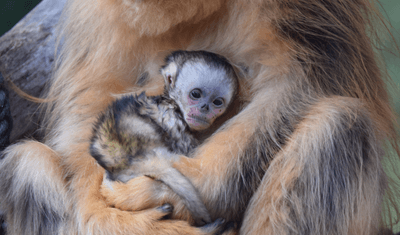


A baby golden snub-nosed monkey has been born at a zoo in France – the first of its kind ever born outside Asia. As a species at risk of extinction, the birth represents a major milestone in global conservation efforts for this funky-looking monkey.
The rest of this article is behind a paywall. Please sign in or subscribe to access the full content.The newborn was welcomed into the world at ZooParc de Beauval on the morning of Wednesday, March 11, 2026.
Its mother, called Jindou, arrived at the zoo in April 2025 along with another female, Jinhua, and a male, Jinbao. They arrived from the Shanghai Wild Animal Park in China, which has been keeping in touch with the French park throughout the pregnancy and birth.
“The keepers are closely monitoring the baby's development, as the first few days after birth are always crucial for primates – especially when the female is a first-time mother, as is the case with Jindou,” ZooParc de Beauval said in a statement.
Golden snub-nosed monkeys (Rhinopithecus roxellana) are native to the mountainous forests of southwestern China, a chilly landscape where snow cover can last up to six months a year. It's believed their nearly non-existent noses evolved as an adaptation for this icy environment, reducing the risk of frostbite and preventing snow from accumulating in their nostrils during freezing winters. Along with their unusual snoots, they are known for their vibrant orange pelts, sky-blue faces, and dark, beady eyes.
The species lives in polygynous harems where a single male mates exclusively with several females. Females mature by age 5 and males by age 7, typically producing a single, light-furred infant every two years following a gestation period of 6 to 7 months.
Their social structure is highly cooperative. While mothers are primary caregivers, males will protect and groom their young. The group will also practice allonursing, in which young can be nursed by a female other than their biological mother.
Sadly, the species is listed as “endangered” with extinction under the IUCN Red List. Among their biggest threats are habitat loss and fragmentation caused by deforestation, agricultural expansion, and climate change. Historically, they were also poached by locals for their fur and body parts, which are traditionally believed to have some medicinal value.
After centuries of pressure, the wild population reportedly shrank to just 16,000 individuals in the 1990s. However, the population has since grown to closer to 27,000, largely thanks to conservation efforts, including partnerships like the one between Shanghai and ZooParc de Beauval.