Health and Medicine
 PUBLISHED


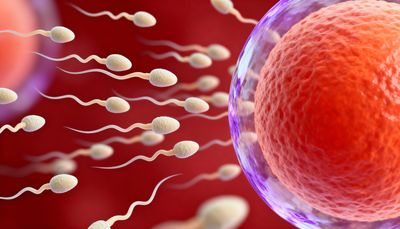


Developing a drug that inhibits sperm production without causing any hormonal changes could be the answer we’ve been searching for when it comes to male contraception. According to a team of scientists at Cornell University, when they tested the concept in mice it was found to be fully reversible, with them going on to produce healthy offspring.
The rest of this article is behind a paywall. Please sign in or subscribe to access the full content.Reversible male birth control has been the thorn in scientists’ side for decades now. Given all the options targeting the female reproductive system – nobody’s saying they’re perfect, but at least there are options – it’s hard to understand why the same progress hasn’t yet happened on the male side. Right now, the two choices are condoms or a vasectomy.
There are a range of approaches in various stages of testing – it’s just that none have so far taken that crucial last step towards a licensed, marketable product. From ways to stop sperm swimming or developing normally, to digging into the genetics behind fertility, to even building a sperm-blocking “wall” within the vas deferens, there have been some innovative ideas.
But this new study, according to the team, looks at things from yet another new angle.
“We’re practically the only the group that’s pushing the idea that contraception targets in the testis are a feasible way to stop sperm production,” said director of the Cornell Reproductive Sciences Center Paula Cohen in a statement.
The drug at the center of things is called JQ1. As-is, it won’t ever be used in humans – it was originally an investigative molecule in the study of cancer and inflammatory disease, but it caused side effects too severe to ever be a viable treatment. But it is a useful research tool.
JQ1 disrupts a stage of meiosis – the process of producing sex cells, or gametes – called prophase I. If this is interrupted, sperm cells won’t be formed. The team wanted to test whether this disruption could be achieved in a reversible way without long-term harm to fertility.
One advantage of this approach, were it to be effective, is that it could stop sperm being produced without having to interfere with hormones. Many female contraceptives, such as the pill, are hormone-based, but these can be associated with side effects that are attracting increasing scientific interest, with some indications that some women, for a range of reasons, may be preferentially opting for other methods.
The team administered JQ1 to male mice for three weeks and found that it successfully stopped them producing sperm. In-depth analysis revealed that the germ cells in the testes were progressing normally through the very early stages of meiosis but then failing to produce mature sperm. They also checked for any off-target effects by screening the liver and kidneys, finding no serious issues.
The treatment was then stopped. Within six weeks, normal meiosis appeared to have been mostly restored. The mice were producing sperm and were able to be bred with females, yielding healthy, fertile baby mice.
“It shows that we recover complete meiosis, complete sperm function, and more importantly, that the offspring are completely normal,” said Cohen.
Next, the team are looking to see if they can reversibly halt meiosis slightly earlier, just as prophase I starts. This, they explain would make administering the drug easier, because as meiosis progresses the body creates a blood-testes barrier to protect the developing sperm. They’re working on three new gene targets right now, and hope to launch a company within the next two years to keep conducting R&D.
Even if this does lead to a viable male contraceptive product for humans, it will be quite some time before we get there. It would likely take the form of an injection or patch, according to Cohen.
“The development of reversible, nonhormonal male contraceptives remains a critical unmet need for achieving reproductive equity,” the authors write in their paper. As of today, that need remains unmet – but these results provide a promising avenue for further exploration.
The study is published in the journal PNAS.


 1
1