Nature
 PUBLISHED



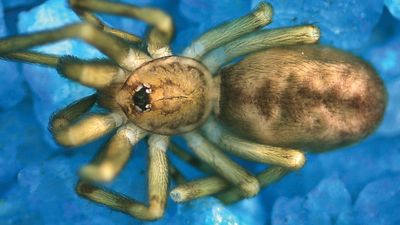


Researchers in South America have discovered a new species of spider that makes its home in urban buildings. Given this spider’s proclivity for walls, the scientists decided to name it Pikelinia floydmuraria after the iconic rock band Pink Floyd (with “muraria,” derived from the Latin word for “wall”). But rather than being just another web in the wall, this research also reveals important insights into another species, opening up new questions to be answered.
The rest of this article is behind a paywall. Please sign in or subscribe to access the full content.Despite how they may make some of us feel, spiders are among the most important groups of arthropod predators on the planet. They play a crucial role in controlling insect populations. In fact, it has been estimated that spiders consume around 800 million tons of insects each year.
For humans, this reduction in insect numbers is most often welcomed in agricultural settings, where it limits various pests. But it can also have significant health benefits too, especially as spiders eat flies (dipterans) that can spread diseases.
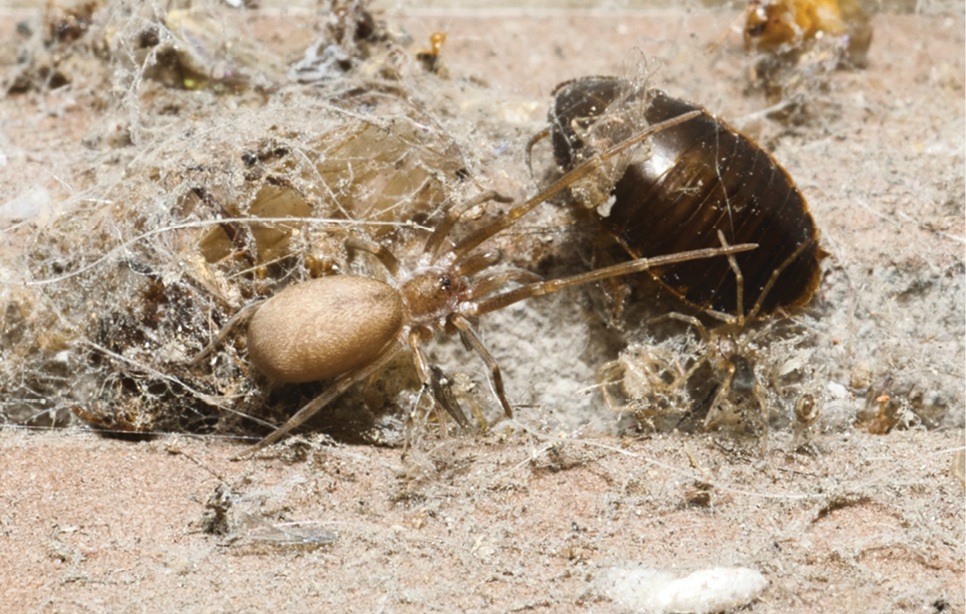
In this latest study, researchers from institutions across South America describe a new species of Pikelinia spider, a genus of South American spiders that inhabit crevices. The newly identified spider measures around 3 to 4 millimeters in length, a fact that may only make a few people comfortably numb.
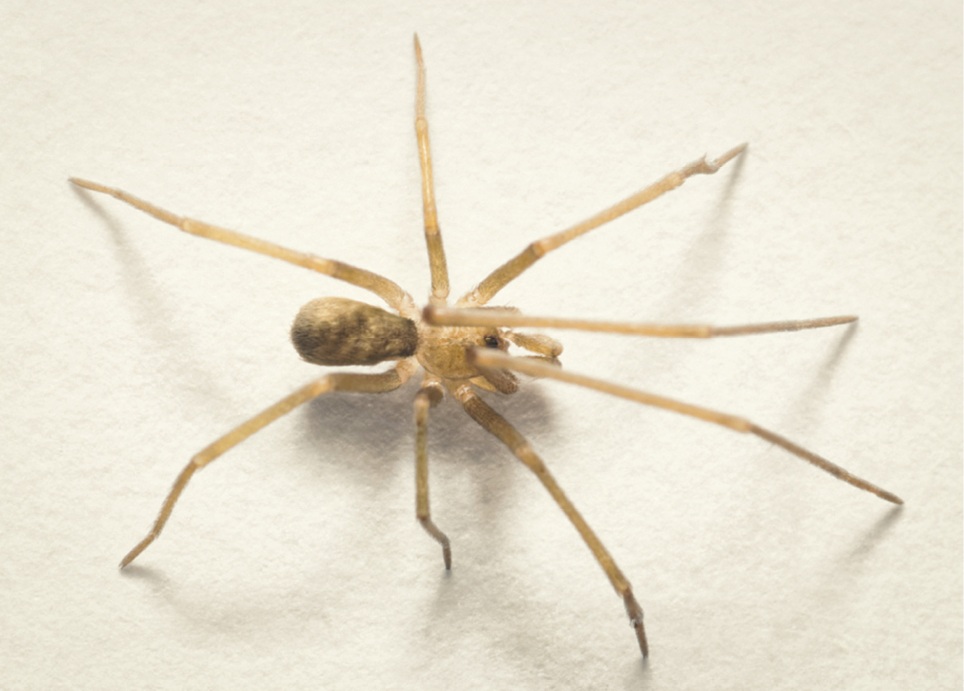
But despite this diminutive size, Pikelinia floydmuraria is likely responsible for managing the presence of household pests. For instance, dietary analysis showed that this spider, like the wider Pikelinia population in the city of Armenia, Colombia, eats ants (Hymenoptera), flies and mosquitoes, and Coleoptera (beetles).
The researchers also observed the tiny Pikelinia spiders capturing and consuming ants that were six times their own size. Given the nature of the pest species this spider eats, the researchers believe they may have adapted to weave their webs near artificial light with the specific aim of catching phototactic (light-attracted) insects. This would help maintain a healthier balance in the urban environment.
Aside from learning about the preferred habitat and diets of this new Colombian species, the team was also able to investigate its connection to a related spider from the Galapagos Islands. For the first time, scientists were able to fully describe and illustrate the female internal genitalia of Pikelinia fasciata, a species in the Galapagos that was first discovered in 1902.
The morphological similarities between the two species – such as them having nearly identical male palpal structures (specialized mating organs that transfer sperm to females) – suggest a close evolutionary relationship. But while this may elicit new information about these spiders, it does raise important questions. Most significantly, did they develop these traits due to a shared ancestry, despite the Pacific Ocean separating them, or did it develop as a coincidental ecological adaptation?
“The synanthropic occurrence of Pikelinia floydmuraria [...], its morphological affinities with Galapagos congeners [organisms with the same genus], and the unresolved diversity of Colombian Pikelinia obscure its biogeographic origin,” the team writes in the paper.
The team suggests that molecular and DNA-based dietary analysis could help map out the spider’s evolutionary history, definitively determine its biogeographic origin, and quantify its full potential as a natural regulator of pests in urban settings. So, researchers, don’t leave them spiders alone.
The paper is published in Zoosystematics and Evolution.