Health and Medicine
 PUBLISHED


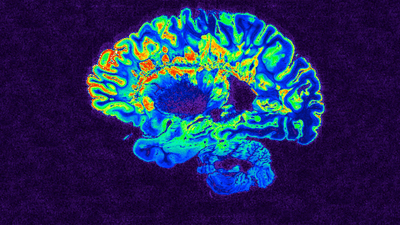


A new discovery is bringing light to a neglected corner of multiple sclerosis (MS) research by revealing how the disease damages the gray matter of the brain. With most historical research focusing on the brain’s white matter instead, study author Steve Fancy believes the new findings could help scientists “begin fighting MS on an entirely new front.”
The rest of this article is behind a paywall. Please sign in or subscribe to access the full content.“We can now point to a mechanism for why these vulnerable neurons in the brain are lost,” Fancy, a professor at the UC San Francisco Weill Institute for Neurosciences, said in a statement.
The hallmark of neurodegeneration in MS is the loss of myelin, a sheath-like coating on nerve fibers that acts a bit like the plastic around the electrical wires in your home. Beneath the outermost layers of the brain, these coated fibers – or axons – make up what’s called the white matter. Myelin insulates an d protects the nerve axons, allowing impulses to travel efficiently along them and preserving communication between distant parts of the brain.
When the myelin is damaged and white matter starts to break down, it leads to symptoms common in MS such as vision changes, numbness, muscle weakness/spasms, and loss of balance.
The disease has been divided into four different types with different features. The most common is relapsing-remitting MS, in which people have attacks of symptoms interspersed with periods of recovery. In some cases, this can become what’s called secondary progressive MS, where the symptoms gradually get worse over time.
A small number of patients are diagnosed with primary progressive MS, where you see this gradual progression right from the start. These patients may still have times where their symptoms are more stable – the disease can look very different in different people.
Changes in white matter are the signs that clinicians look for on brain scans when diagnosing MS and tracking patients’ progress. But the authors of these two new papers were looking at a different type of brain tissue altogether: the gray matter, which is made up of the cell bodies of neurons, rather than the long axons that protrude from them.
“It’s become clear that in addition to promoting remyelination in progressive MS, it’s essential to find ways to directly protect grey matter neurons themselves,” said Fancy.
Gray matter lesions are less common and harder to spot on a brain scan, but they are known to be present in chronic and disabling MS. Neurons expressing a gene called CUX2 are known to be particularly vulnerable.
In the first of two papers, the team observed neuronal development in a mouse model and found that these CUX2 neurons are born very early when the brain is growing quickly. Rapid multiplication is a stressful thing for cells, and the authors saw that these neurons have a clever little helper in the form of a gene called ATF4, which helps protect them from DNA damage. Take that gene away, they found, and the whole frontal part of the brain won’t form properly.
“ATF4 is at the center of the strategy for surviving [DNA damage],” said Fancy.
What appears to be happening in MS is that this protective mechanism can no longer keep up. In their second paper, the authors detail experiments with a mouse model of MS, where they show that the inflammation within the brain leads to DNA damage in CUX2 neurons, eventually causing cell death and gray matter lesions.
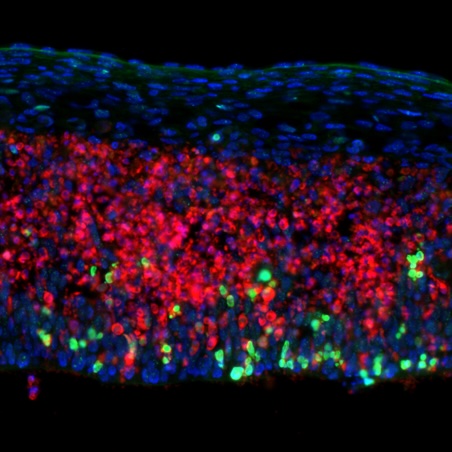
The findings could inspire new treatments for MS, focusing on making these neurons more resilient to damage. The authors also write that future research should investigate whether there are any genetic factors that make this population of neurons more vulnerable to damage, thus increasing the risk of developing MS.
“The CUX2 neurons are like a ‘canary in the coal mine’ for the brain affected by MS. If we can protect these neurons, we might be able to contain the damage before the disease progresses,” said co-corresponding author David Rowitch, MD, PhD, of the University of Cambridge.
The study is published across two papers (paper 1 and paper 2) in Nature.


 1
1