Nature
 PUBLISHED


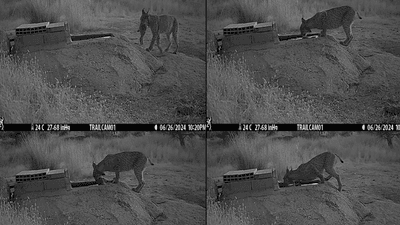


Camera traps are providing researchers with unprecedented access to animal behavior. From drones capturing whale births, to blonde echidnas trundling past cameras in Tasmania, this technology can show us moments in the lives of these animals we could never normally see. For a lynx in Spain, it has captured a never-before-seen behavior for this species as a female dunks her dinner in a water trough.
The rest of this article is behind a paywall. Please sign in or subscribe to access the full content.A female Iberian lynx (Lynx pardinus) was recorded on a camera trap in central Spain near a water trough. However the female wasn’t simply thirsty, she’d come to dunk her freshly caught rabbit prey (Oryctolagus cuniculus) into the water.
Washing of food items is known about in primates, birds, and raccoons (we’ve all seen the cotton candy videos), but this is more typical among species that consume fruits or a more omnivorous diet. Most of these behaviors were also witnessed in captivity, with only long-tailed macaques reported to wash food in the wild.
Soaking prey, like the lynx demonstrates, has not been reported in carnivores, and usually prey is consumed soon after death. Any manipulation is typically to aid in consumption or to store prey to eat at a later time.
What is unusual is that this behavior has been seen in more than one lynx in this area. In the Montes de Toledo region of central Spain, females Luna and Naia were seen soaking their prey of rabbits on camera traps almost exactly three years apart. The behavior was first seen in 2020, and since then the team have observed eight instances of this prey-soaking behavior by five different females at five different water troughs.
The question on the researchers' minds is why are the lynxes doing this? Based on the camera trap records there seems to be no pattern in recorded temperatures that would indicate it was a response to hotter, drier conditions or drought. It also seems that the lynxes of Montes De Toledo are the only ones reported exhibiting this prey-soaking behavior, as there are no other wild or captive reported records for this species.
“All recorded events involved females, either in territories bordering those of other females previously recorded with this behavior, or in their descendants, where it was independently documented,” explain the authors.
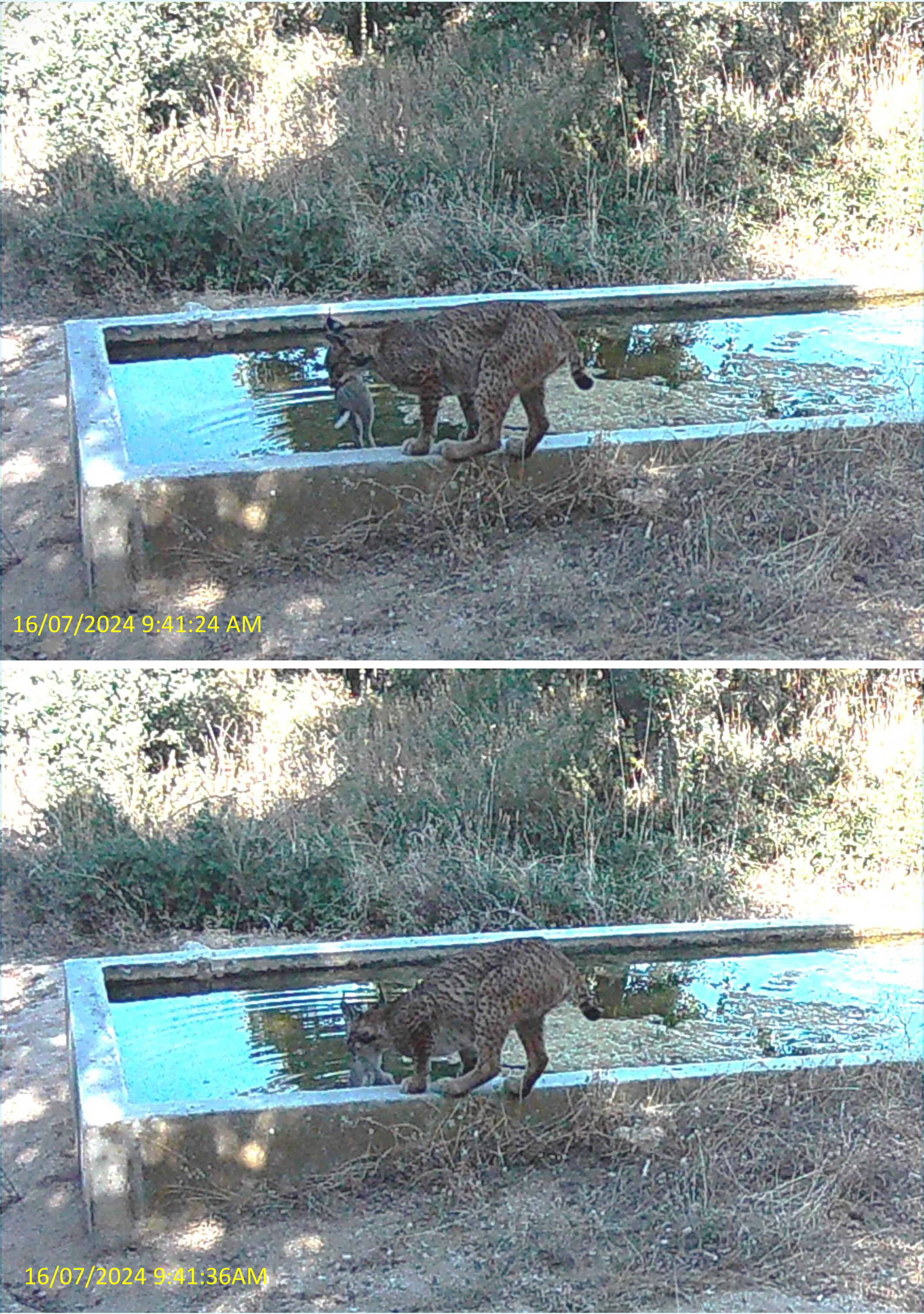
The authors suggest that while wild lynxes are mostly solitary, the females share overlapping home ranges or are directly related to other females with this behavior. This behavior may therefore represent a rare example of a culture unique to this group, though there is no direct evidence of learning observed between lynxes.
The team also suggest that prey-soaking could help the transition of cubs from milk to solid food during the late summer period. To test this, they conducted some small experiments to see if soaked rabbit carcasses retained water better under different conditions.
“Immersion also led to measurable water retention: after a 15-s soak followed by exposure to direct sunlight, retained water dropped from 1.91 percent to just 0.3 percent of the body weight within 20 min. Under shaded conditions and a longer 30-s soak (similar to those observed in the wild[...]), retained water decreased more slowly, from 5.14 percent to 3.7 percent after 40 min,” explain the authors. They note that this was an exploratory experiment and further study is needed to work out if the lynxes are doing this as a means to transport water.
Camera traps continue to reveal new behaviors in a range of species, and can highlight the need for long-term monitoring to capture moments that may otherwise pass unseen. What is even more important is that understanding these behaviors can inform conservation strategies to protect species like the vulnerable lynx, which came back from the brink of extinction, in the future.
The study is published in the journal Ecology.