Humans
 PUBLISHED


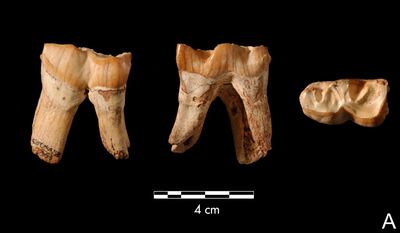


To survive the Paleolithic, ancient hominins had to make sure they maximized their resources, which meant letting nothing go to waste. For the rhino-hunting Neanderthals western Europe, this may have entailed reusing the teeth of their prey as tools.
The rest of this article is behind a paywall. Please sign in or subscribe to access the full content.In fact, rhinoceros teeth have been highlighted by some researchers as excellent materials for toolmaking. Their large enamel surfaces and shock resistance, for instance, may make them suitable for flaking in the same way as flint when it is knapped.
Perhaps unsurprisingly, therefore, stashes of rhino teeth have been found at Neanderthal sites across the world, including La Caune de l'Arago in France and Panxian Dadong in China. Understanding how these dental resources were used by our extinct cousins, however, is something that remains difficult to elucidate.
Getting their teeth into the subject, researchers looked at rhinoceros remains from 12 Neanderthal sites across Spain and France. Of these, two stood out for their accumulation of teeth displaying markings that may be consistent with toolmaking.
The study authors were thus left with a total of 281 teeth belonging to two extinct species of rhinoceros, retrieved from the Middle Paleolithic sites of El Castillo in Spain and Pech-de-l’Azé II in France. At both locations, Neanderthals are known to have processed the bones of large mammals.
Analyzing the ancient teeth, the study authors note that they all bore similar markings, including “recurrent notches and scaled areas, as well as some fresh fractures and sliding marks.” Importantly, no such patterns were found on other prehistoric rhino teeth housed at the Muséum National d'Histoire Naturelle (MNHN) in Paris, indicating that these markings are not natural and were therefore probably produced by human activity.
To confirm this, the researchers conducted their own knapping experiments using modern rhinoceros teeth, which they obtained from three zoos in France. Ultimately, they found that the enamel on this dentition was not particularly suitable for knapping flakes, but that the teeth worked well as retouchers, soft hammers, and anvils that could be used to shape stone into tools.
Furthermore, when utilizing rhinoceros teeth for this purpose, the study authors note that the markings left on the enamel matched those seen at both El Castillo and Pech-de-l’Azé II.
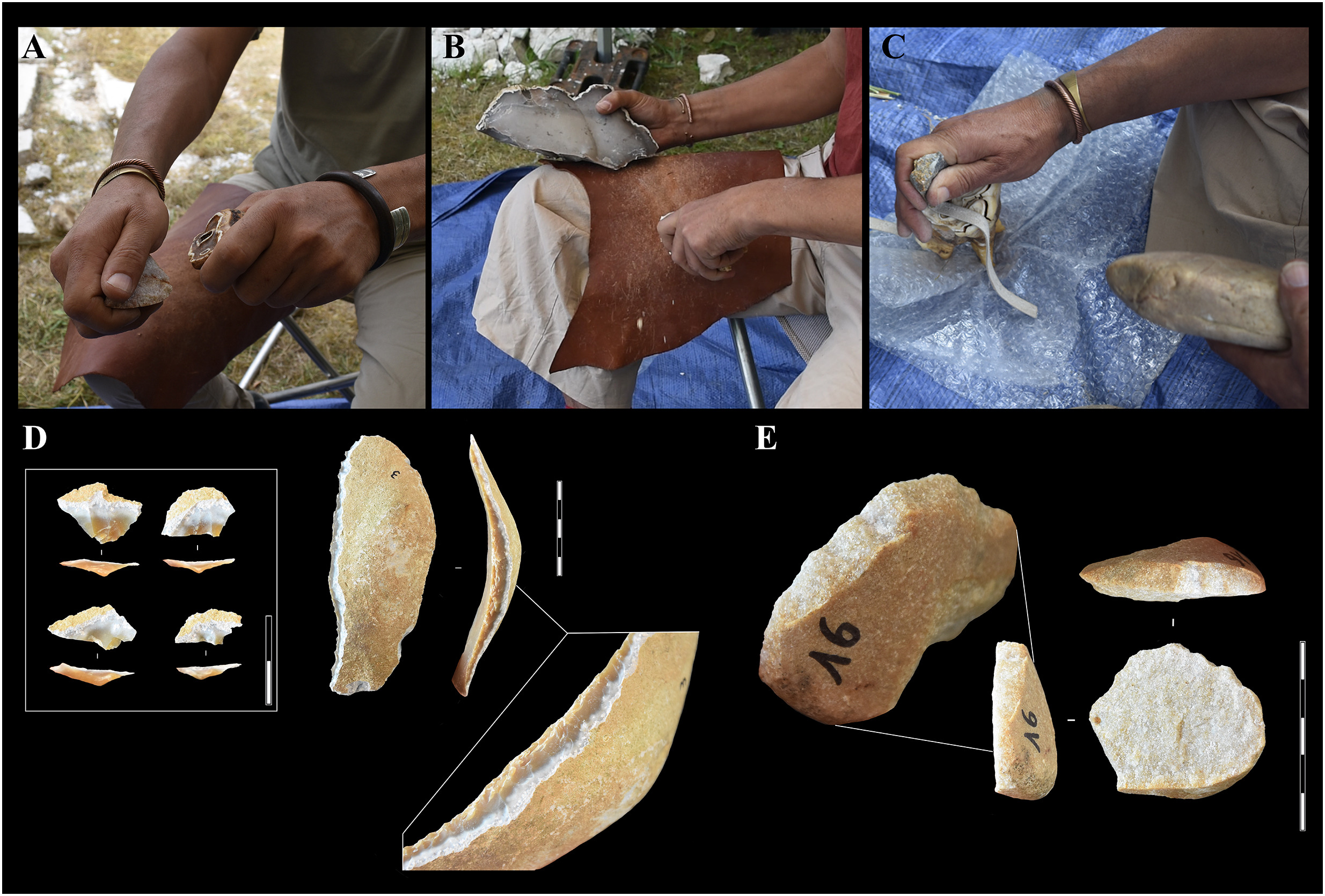
“The archaeological experiments carried out in this work produced relevant modifications in the teeth, mainly scaled areas, pitting areas, and tooth fractures, followed by sliding marks and notches,” explain the researchers. “The morphology, recurrence, and location of these marks […] are similar to those documented in the archaeological assemblages,” they add.
Interestingly, the study authors also point out that the majority of the rhino teeth utilized by Neanderthals appear to have been harvested from elderly animals. This may indicate that the teeth of older individuals were more suitable for tool use – possibly because of their flatter surfaces – although it could simply reflect the fact that aging rhinos were easier targets.
“According to our results, the traces identified on the rhinoceros teeth recovered at El Castillo (Spain) and Pech-de-l’Azé II (France) are potentially attributable to the use of teeth as soft hammers and anvils, suggesting that these elements could be part of the Neanderthal tool kit,” conclude the researchers.
Such a finding adds to our growing appreciation of Neanderthals' resourcefulness and adaptability, with another recent study indicating that this extinct hominin also made use of horse teeth for similar purposes.
The study is published in the Journal of Human Evolution.