Health and Medicine
 PUBLISHED
 20
20




After years of work, scientists have solved the mystery of an unusual side effect that impacted some recipients of the Oxford/AstraZeneca and Johnson & Johnson COVID-19 vaccines. Most importantly, the discovery could help vaccine developers to produce safer vaccines based on the same technology, preventing the same issues occurring in the future.
The rest of this article is behind a paywall. Please sign in or subscribe to access the full content.Most of the COVID vaccines still in use today are mRNA vaccines, but some of the ones rolled out earlier in the pandemic, notably from Oxford/AstraZeneca in the UK and Johnson & Johnson in the US, were different. These were adenovirus vector vaccines, which use a harmless-to-humans carrier virus (in this case, an adenovirus) to transport part of the virus they're actually trying to vaccinate against.
The reason why these COVID vaccines were able to be developed so quickly was because this technology was not new – the developers of the Oxford/AstraZeneca vaccine, for instance, had already been trialing an adenovirus vector vaccine against MERS, another coronavirus, when the pandemic hit.
They were very effective, and alongside the mRNA vaccines from Pfizer and Moderna were cornerstones of the early response to the pandemic, helping to turn the tide of infections, save lives, and allow restrictions to be lifted.
But no medical intervention is completely risk-free, and it quickly became apparent that a very rare side effect was impacting some of those receiving the adenovirus vaccines.
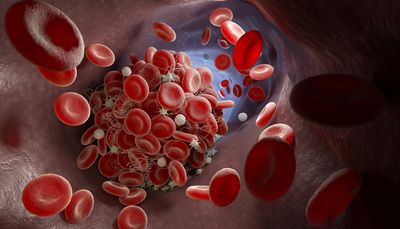
It was called vaccine-induced immune thrombocytopenia and thrombosis (VITT). It is serious and potentially life-threatening, causing blood clots to form in tandem with a precipitous drop in platelets. Initially baffling to medics, it was soon discovered that VITT was caused by an unusual autoantibody that some people carry against a human protein called platelet factor 4 (PF4).
An international team of scientists led by a group at Flinders University in Australia are now reporting the final step in their quest to understand exactly how PF4 autoantibodies lead to VITT, what components of the vaccine cause the reaction, and whether it’s possible to prevent it.
“It has been a fascinating journey with an outstanding international team of collaborators to complete a trilogy of publications in the New England Journal of Medicine to solve the mystery of this new group of blood clotting disorders, and potentially translate our discoveries into safer vaccines,” commented co-author Professor Tom Gordon in a statement.
The first step came in 2022, when Professor Gordon and Dr Jing Jing Wang co-led a study that discovered genetic risk factors underlying the PF4 autoantibody. A different study in 2023 connected the dots that the same risk factors could cause a VITT-like disorder in some people after exposure to a natural, human adenovirus. While the ones used in vaccines are not pathogenic to humans, there are adenoviruses that cause the common cold.
Step two brought all of these groups of scientists together to confirm that VITT caused by vaccines and the similar disorder caused by natural infection were essentially identical. This suggested that it was the adenovirus itself, not any other component of the vaccine, that was at fault.
And now, the team have used powerful molecular analysis to discover why exposure to an adenovirus causes this reaction in some people. Their bodies confuse a natural adenovirus protein with the human PF4 protein, causing those autoantibodies to activate and triggering the harmful clotting response.
“By modifying or removing this specific adenovirus protein, future vaccines can avoid this extremely rare reaction while continuing to provide strong protection against disease,” said Dr Wang.
The whole saga is an example of science and regulatory practices working at their best. Once the side effect was identified, changes were made to vaccine rollout plans to ensure those most at risk would be offered a different vaccine. And in the years since, in the background, scientists around the world have been working to understand the situation and figure out how to prevent it happening again.
“It is a brilliant piece of molecular sleuthing, the culmination of a body of work that unravels the genetic and structural basis for how a normal immune response to a virus protein leads to pathogenic autoimmunity,” commented co-author Professor James McCluskey.
The study is published in the New England Journal of Medicine.