Health and Medicine
 PUBLISHED


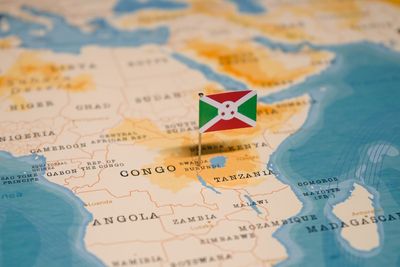


A mystery disease has led to five deaths in the East African nation of Burundi, leaving health authorities scrambling to find the cause. The World Health Organization (WHO) is supporting local efforts to manage the situation, with Burundi’s Ministry of Health leading the response and labs in the neighboring Democratic Republic of the Congo (DRC) helping out with analysis.
The rest of this article is behind a paywall. Please sign in or subscribe to access the full content.So far, what we know is that 35 people have been infected and five have died. The WHO reports that the first alert about the unknown illness was made on March 31. Most of the cases have been confined to members of one household and their close contacts.
The symptoms have included fever, vomiting, diarrhea, blood in the urine, fatigue, abdominal pain, and in severe cases, jaundice and anemia.
These sorts of symptoms can arise with a number of different infections, but lab tests for many of the likely candidates have so far come back negative: Ebola, Marburg virus disease, Rift Valley fever, yellow fever, and Crimean-Congo hemorrhagic fever. That leaves authorities with a puzzle on their hands.
“While it’s reassuring that preliminary analysis is negative for these serious infections, further investigations are ongoing to determine the cause of the disease. All the necessary measures are being taken to safeguard public health and prevent potential spread of infection,” said Dr Lydwine Badarahana, Burundi’s Minister of Health, in the WHO statement.
A 2023 report from the WHO detailed how Burundi faces a “high burden of communicable and non-communicable diseases”. In terms of infections, malaria, tuberculosis, HIV/AIDS, and a number of neglected tropical diseases all pose a considerable public health challenge. Cholera cases have also seen an uptick recently.
Burundi has also been part of a multi-country outbreak of mpox in recent years, with cases also reported in Madagascar, the DRC, Kenya, and Liberia. The WHO’s most recent situation report at time of writing, released March 26, catalogs 34 reported cases in Burundi, with the hardest-hit nation being Madagascar with 368.
Dealing with a disease that has been identified and studied is one thing; tackling an outbreak of an unknown pathogen is quite another. Scientists around the world are constantly engaged in research to help the world better prepare for these events.
One recent case study of this is, of course, COVID-19. When the first reports started coming of respiratory infections in China in late 2019, no one knew the cause. By March 2020, the virus had been characterized and named as the scientific community raced to understand its spread and figure out ways to control it.
There are a lot of potential disease-causing agents out there. “The global virome is largely uncharacterized,” wrote the authors of one 2019 paper that identified a whole new family of human DNA viruses. What type of pathogen – be it virus, bacteria, or something else – is causing the illnesses in Burundi, and whether it’s a known or unknown threat, remains to be seen.


 1
1