Health and Medicine
 PUBLISHED


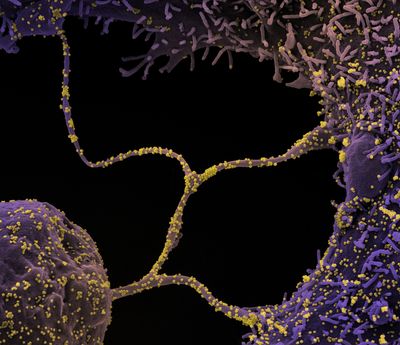


Doctors in the United States have documented what is believed to be the longest-known case of COVID-19, lasting an extraordinary 776 days before the patient’s death. The unnamed man, who was living with HIV, shows how weakened immunity can allow the coronavirus to linger, mutate, and adapt in ways rarely seen in healthy people.
The rest of this article is behind a paywall. Please sign in or subscribe to access the full content.Medical experts at Boston University report that the 41-year-old man fell sick with a cough, headaches, and tiredness in mid-May 2020, shortly after being in close contact with a lab-confirmed COVID case.
However, it was not until September 2020 that his COVID-19 infection was officially diagnosed when his health worsened and he was rushed to hospital.
The man was diagnosed with HIV/AIDS in 2002, and he was not reliably taking his prescribed antiretroviral therapy (ART), the standard treatment that helps suppress HIV and preserve immune function. Without it, his immune system was left severely weakened, unable to mount a defense strong enough to clear the coronavirus.
Over many months, the virus inside him picked up a wide array of mutations, including several resembling those later found in major variants, such as Omicron. While these viral changes created a unique mix of strains within his body, none appear to have spread beyond himself, perhaps because they were so finely adapted to his own immune environment.
Remarkably, PCR tests persistently detected the virus until the very end. Just two days before his death – caused by factors not directly linked to the infection – swabs from his nose and throat still tested positive for COVID-19.
When extremely long COVID cases like this are reported, complex medical histories and a suppressed immune system are usually major factors. It’s also known that these exceptional cases can foster the creation of highly mutated strains of the virus.
In April 2024, doctors in the Netherlands reported a 72-year-old immunocompromised man who remained infected with COVID-19 for 613 days. Back in 2022, another immunocompromised patient at a London hospital tested positive for COVID-19 for 505 days before dying.
While most COVID-19 infections in healthy people resolve in days or weeks, these extreme cases highlight how dangerous the virus can be when it encounters a severely weakened immune system. The researchers also say it underlines the importance of continued global monitoring, as prolonged infections could potentially fuel the emergence of new variants, despite the pandemic being over.
The new study is published in The Lancet: Microbe.


 1
1