Nature
 PUBLISHED
 1
1


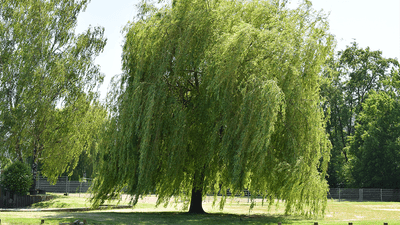


Around 1620 CE, Jan Baptista van Helmont, a chemist and physician from Brussels, began a five-year experiment occasionally referred to as "one of the first experiments in modern biology". Though it wasn't perfect, it marks one of the first quantitative experiments in the field, and drew us closer to answers about how plants grow, replacing ancient (and incorrect) beliefs.
The rest of this article is behind a paywall. Please sign in or subscribe to access the full content.For centuries, humans didn't really know how plants worked. Prior to the discovery of photosynthesis, the prevailing belief went back to the idea of Greek philosopher Aristotle, who thought that plants consumed their "food" from the soil.
"The Greeks from the time of Aristotle (384–322 [BCE]) and Theophrastus (372–287 [BCE]) believed that plants absorbed their nutrients from the soil and, much like animals, converted them into body mass by some vital principle that separated living from nonliving things," a paper on the topic explains. "Part of this 'vital' view of plants was that they absorbed only nutrients that were used for growth, as there were no observable waste products that were expelled from plants."
It makes a sort of intuitive sense, and for a time people were satisfied with that explanation. Plants are made of stuff, like animals are, and they must be getting it from somewhere – without modern knowledge it would seem quite sensible to suggest that they are getting their sustenance from the soil.
"Plants were compared to animals and the conclusion drawn that plants like animals could feed upon materials of like nature with themselves, but not upon materials of unlike nature. Hence the important food of plants consisted of the decaying animal and vegetable matter, the 'humus' component of the soil," a paper explains.
As plants do not produce poop, unlike animals, Aristotle thought that they were able to select only the substance from the soil which was necessary for their growth and structure.
"This food material was accordingly elaborated in the earth for the plants' use, much as the food utilized by higher animals is elaborated in their stomachs," the paper continues. "Therefore, the role of plants was considered to be passive in the work of nutrition, since the food which they absorbed was already prepared in the soil. Growth in plants was thus looked upon largely as a process of accretion, unaccompanied by chemical change."
While this was the dominant view for some time, there were other ideas around. In the sixth century BCE, before the time of Aristotle, Greek philosopher Thales believed water to be of more importance in plant nutrition and growth. This idea was revived 2,000 years later by Jan Baptista van Helmont, and put to an early scientific test.
van Helmont, though still someone who held mystical views and a keen follower of alchemy, did put forward some fairly modern scientific experiments. He once proposed collecting "200 or 500 poor people with fevers, pleurisy etc" and dividing them into two groups, one to be treated by him, and others to be treated with "blood-letting or perceptible purging". While modern day trials do not conclude entirely with seeing "how many funerals each of us will have" at the end of them, it could be called a randomized control trial.
Though he never conducted that trial, and his idea was only published after his death, one experiment he did get around to was his test of where plants gain their sustenance. The idea was pretty simple, and in retrospect wasn't the best way to conduct the experiment. But it nonetheless helped show that the old idea that plants gained most of their "food" from the soil was incorrect.
For his experiment, he grew a willow tree in a measured amount of soil, providing only water over the course of five years.
"By this apparatus I have learned that all things vegetable arise directly and in a material sense from the element of water alone. I took an earthen pot and in it placed 200 pounds of earth which had been dried out in an oven. This I moistened with rain water, and in it planted a shoot of willow which weighed five pounds," he explained of his willow tree experiment.
"When five years had passed the tree which grew from it weighed 169 pounds and about three ounces. The earthen pot was wetted whenever it was necessary with rain or distilled water only. It was very large, and was sunk in the ground, and had a tin plated iron lid with many holes punched in it, which covered the edge of the pot to keep air-borne dust from mixing with the earth. I did not keep track of the weight of the leaves which fell in each of the four autumns. Finally, I dried out the earth in the pot once more, and found the same 200 pounds, less about 2 ounces. Thus, 164 pounds of wood, bark, and roots had arisen from water alone."
If you have come across the word "photosynthesis" at any point in your life, you are probably screaming it at your screen right now as if the long-dead former alchemist can hear you. Once you are done screaming about photosynthesis, you may also begin to scream "what about the nutrients in the soil", which is another fair point.
van Helmont had not shown that water was the source of plant growth, although the experiment does demonstrate that plants are not getting most of their mass from the soil, and that water is important to the process. If he had placed the tree entirely in water, poor growth and/or the death of the tree early on would have shown that soil had a role in plant growth, as rain water is not enough to sustain the trees alone.
Though he came to the wrong conclusion, his experiment was at least a good first attempt to try and test these ideas experimentally. Centuries later Joseph Priestley showed that plants produce oxygen, by placing mint in a closed container and burning a candle until all the gas (now known as "oxygen") was used up and the candle went out. Around a month later, he showed he was able to relight the candle, and that the plants produced this gas.
In 1779, Dutch scientist Jan Ingenhousz refined this further, discovering that plants submerged in water produce bubbles when exposed to light. We now know that plants get most of their mass from photosynthesis, with water being vital to the process, and gaining key nutrients from the soil. We wouldn't have gotten there without experiments like this one, taking a quantitative approach to figuring out how plants emerge from the ground.