Nature
 PUBLISHED



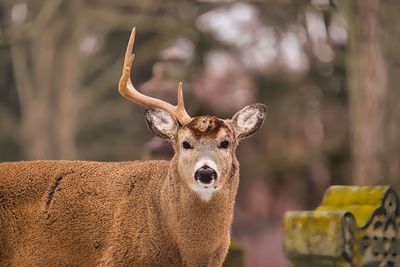


A majestic red deer stag standing high on a hill is an impressive sight, especially with its huge antlers reaching towards the sky. These are vitally important features in deer society, capable of winning females and defending the male from others trying to steal his patch. Why, then, do they simply fall off every year?
The rest of this article is behind a paywall. Please sign in or subscribe to access the full content.One thing it's important to know about mature antlers is that, unlike horns, they are actually branched, dead bones (horns, on the other hand, are made from keratin wrapped around a core of live bone). North American species with antlers include white-tailed deer, moose, and elk. Caribou (also called reindeer) also have antlers in both the males and females.
Each year, these species' antlers are dropped in a process called casting. When the antlers first regrow, they are covered in "velvet", a specialized kind of skin that contains a lot of blood vessels and nerve cells. Once they finish growing, the velvet dies and is removed by the deer rubbing their antlers on the ground and on tree branches. This process can turn the white bone of the antlers into a more brownish hue left by the velvet and blood vessel residue.
Antlers are thought to be the fastest-growing mammalian tissue in the world, and their growth is triggered by increasing sunlight levels and the production of testosterone. “A big bull specimen of the moose Alces alces, the largest living species of deer, native to Europe and North America, can grow a full set (rack) of antlers weighing 36 kg in a single summer, adding 0.5 kg of bone each day,” explains the Guinness World Records.
Larger antlers are often seen as a sign of age, strength, and genetic fitness. The males typically use them during the mating season, when fighting can be pretty aggressive. Once the mating season is over, testosterone levels in the animal's blood drop, causing the antlers to shed.
Growing antlers is a pretty energy-intensive process that requires a lot of nutrients, minerals, and protein. So during winter, not having antlers allows the deer to conserve their energy when food is more scarce. Also, if a stag were to keep the same set of antlers his entire life, since they are dead tissue he would be stuck with whatever he could grow as a young buck. By regrowing each year, the deer can produce more impressive headgear that comes back bigger each time.
While it might be tempting to take a pair of antlers found in the woods, the US Fish and Wildlife Service stresses that it's illegal to take natural items from many public lands. Antlers are a vital part of the ecosystem, providing rodents and other creatures with a valuable calcium source.
Legal shed collection is possible but may require a permit or an ethics questionnaire and could have different requirements in different areas even within the same state. Shed bans are often in place during particularly important months to protect the safety of the animals and people, while illegal shed poaching has even become more prevalent in recent years driven by demand for dog chews and home decor.