Nature
 PUBLISHED


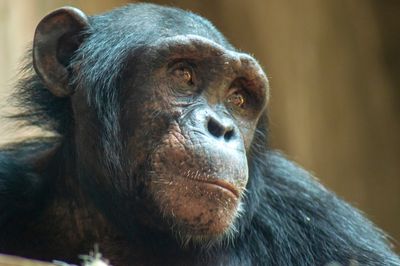


If you thought the spat between Steve Rogers and Tony Stark was bad, just wait until you hear about the Ngogo chimpanzees. Once the largest known group of chimps in the wild, over the course of around three years the community split into two, and violence between the groups has followed ever since. Now, in a first, researchers have clearly documented this so-called “civil war” – and what they’ve found could provide insight into human conflict too.
The rest of this article is behind a paywall. Please sign in or subscribe to access the full content.This isn’t the first time that chimpanzees have been seen making a violent split, but the Ngogo chimps, who live in Kibale National Park, Uganda, have been particularly well studied over the years. As a result, the team behind this latest research had three decades’ worth of behavioral observational and network analysis data to make conclusions from.
What they go on to describe in their paper is a shift, beginning in 2015, from a cohesive chimpanzee community to one that rapidly became increasingly separated, avoiding each other both in location and reproductively. The researchers believe that this may have been triggered by the deaths of multiple key males within the community a year earlier.
Separation within groups of chimps isn’t unusual – but it’s normally only temporary. This time, it was permanent; by 2018, two distinct groups had emerged, something the researchers call “exceedingly rare”. The Ngogo chimpanzees now consisted of the 107-strong Central group, and the 83 members of the Western group.
While the smaller in number of the two, it was the Western group that began the transition of the split into lethal aggression, beginning with attacks on Central adults, and by 2021, infants.
“What’s especially striking is that the chimpanzees are killing former group members,” said Aaron Sandel, associate professor of anthropology at UT Austin and the study’s lead author, in a statement. “The new group identities are overriding cooperative relationships that had existed for years.”
Based on observed attacks, Sandel and colleagues calculated that between 2018 and 2024, the Western chimps attacked and killed one adult male and two infants from the Central group every year – although, with evidence to suggested unobserved lethal attacks, they believe these figures could be higher.
It’s understandable that people might be tempted to see similarities in the conflict between the two chimpanzee groups and that between humans. Our closest genetic relations have, after all, been found to be like us in other ways. When a grisly divide arose between a group of chimpanzees in Tanzania’s Gombe National Park in the 1970s, primatologist Jane Goodall likened it to a civil war.
But not everyone is so keen on that comparison, with Sandel cautioning “against anyone calling this a civil war.” Still, the researcher said that “the polarization and collective violence that we have observed with these chimpanzees may give us insight into our own species.”
In particular, the authors highlight the lack of a cultural system in driving the wedge between the chimps; there was no religion, ethnicity, difference of opinion over signing the Sokovia Accords, or any of the other factors that we might believe to be essential in motivating human conflict, at play here.
“If relational dynamics alone can drive polarization and lethal conflict in chimps without language, ethnicity or ideology, then in humans, those cultural markers might be secondary to something more basic,” Sandel explained. “If that’s true, then we may have the potential to reduce societal conflicts in our personal lives, and that gives me hope. As our paper concludes, it may be in the small, daily acts of reconciliation and reunion between individuals that we find opportunities for peace.”
The study is published in Science.