Health and Medicine
 PUBLISHED




In a new study, scientists have explored key unanswered questions about the biology of Borna disease virus 1 (BoDV-1), a virus in the same order as the Ebola, measles, and rabies viruses. Human infections are rare but nearly always fatal – so based on what we know so far, just how concerned should we be?
The rest of this article is behind a paywall. Please sign in or subscribe to access the full content.BoDV-1 falls within the order Mononegavirales. As well as the Bornaviridae family, this order comprises the Rhabdoviridae (e.g. rabies), Paramyxoviridae (e.g. measles and RSV), and Filoviridae (e.g. Ebola and Marburg). That’s a lot of important human pathogens, which is one reason scientists have been keen to learn more about the Bornaviridae.
“Bornaviruses are less well known than many other human RNA viruses, yet they represent the last major unresolved case for nucleoprotein-RNA structural analysis among human-infecting mononegaviruses,” said Yukihiko Sugita, first author of the new study and an associate professor at Kyoto University, in a statement.
To date, there have not been many reported cases of BoDV-1 in humans, but those that have been recorded have been very serious. It generally results in brain inflammation (encephalitis), which is nearly always fatal.
There have been approximately 50 cases of BoDV-1 in Germany, and the disease is also known to be endemic in neighboring Switzerland, Austria, and Liechtenstein. It is considered a zoonotic infection, meaning it has natural animal hosts from which it has spilled over to humans, but precisely how that happens is not well understood.
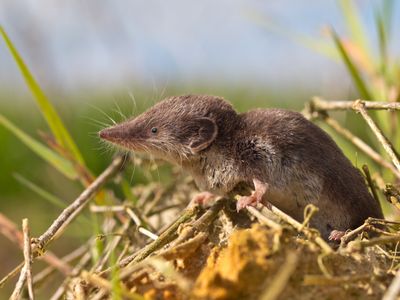
The primary animal host species is thought to be the bicolored shrew (Crocidura leucodon), which appears to harbor the virus without suffering any symptoms. Other animals are known to get “accidentally” infected, much as humans do, including horses and sheep.
In 2018, a small cluster of cases was reported in Germany with potential links to organ transplants from the same donor.
And just to confuse things, there’s also a related bornavirus that was discovered more recently, which has also been reported in Germany. It’s called variegated squirrel bornavirus 1 (VSBS-1) – no prizes for guessing that its host species is the variegated squirrel (Sciurus variegatoides). These critters are mostly endemic to Central America, but the cases of human VSBS-1 in Germany have been linked to the exotic pet trade. The symptoms are quite similar to those of BoDV-1, and again it’s usually fatal.
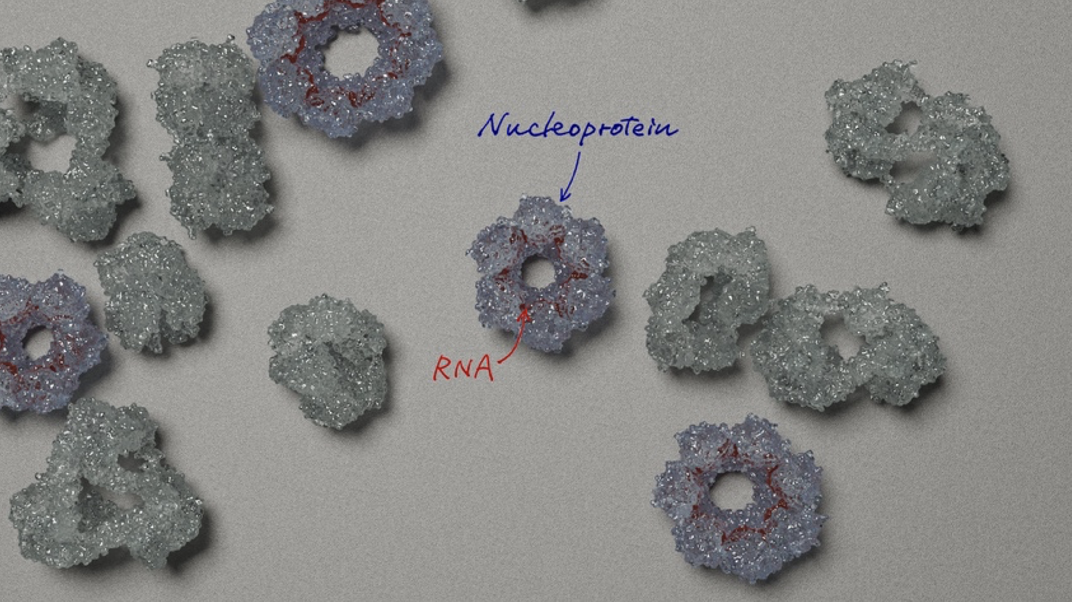
Given the severity of the disease and how little is understood about the virus, Sugita and the team used cryo-electron microscopy to obtain some high-resolution images of BoVD-1 nucleoprotein-RNA complexes. These are structures that protect the virus’s genome and support the RNA synthesis needed for replication, so it’s crucial to understand them if you want to have a chance at controlling the virus.
The team's got previous in this area, having done similar structural work on the Ebola virus. The results from their microscopy, they say, represent the first detailed descriptions of these complexes in the Bornaviridae family.
The complexes form 3D ring structures containing a groove where the viral RNA sits. Each nucleoprotein can fit eight RNA nucleotides, which is unique among the other known viruses in their order. The nucleoproteins themselves can also form even when there’s no RNA present. Understanding the processes by which the nucleoproteins assemble and the RNA molecules interact with them could provide valuable ways to target the virus with drugs.
“By illuminating these fundamental viral processes,” the authors write in their paper, “our work supports future targeted interventions against BoDV-1 and enhances our preparedness for emerging mononegaviruses by revealing conserved structural features that could be exploited for broad-spectrum antiviral strategies.”
As to whether we need to worry about BoDV-1 right now, the answer is not really. It’s a serious disease for those who do become infected, but it remains very rare.
Research like this is important because the more we learn about diverse types of viruses, the better equipped we will hopefully be to respond if a new one should come along – the hypothetical Disease X that authorities use as a placeholder for an as-yet-unknown pathogen with pandemic potential.
“Broader structural comparisons will advance our understanding of viral diversity and evolution and, hopefully, inform the development of targeted antiviral strategies,” the authors conclude.
The study is published in the journal Science Advances.


 1
1