Humans
 PUBLISHED


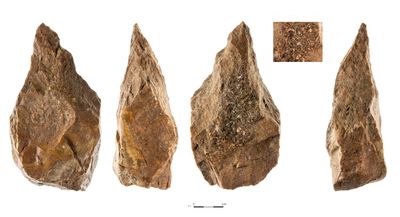


Prehistoric humans even older than the Neanderthals deliberately produced stone tools with fossils and geodes at their center. According to researchers, these exceptional items were probably infused with a kind of spiritual “potency”, hinting at the existence of ritual practices and abstract beliefs among early members of the Homo lineage.
The rest of this article is behind a paywall. Please sign in or subscribe to access the full content.The incredible lithic assemblage was first discovered in the Sakhnin Valley in Israel by local independent researcher Muataz Shalata, who then contacted Professor Ran Barkai from Tel Aviv University. Describing the moment when the pair met, Barkai told IFLScience how “Muataz took a handaxe out of his bag and gave it to me with the fossils facing down, so the face I saw looked like a regular handaxe. But when I turned it around, I was really shocked.”
“It's the first time I’d seen something like that, and in fact I think no one has seen something like that, so It was a really, really impressive moment,” he said.
Palaeolithic handaxes are extremely common worldwide, and are typically knapped from flint or chert. Only a few “exceptional” examples have ever been found, including one in England that features a shell at its center and one from the famous Sima de los Huesos site in Spain, which is made of brown-veined quartzite.
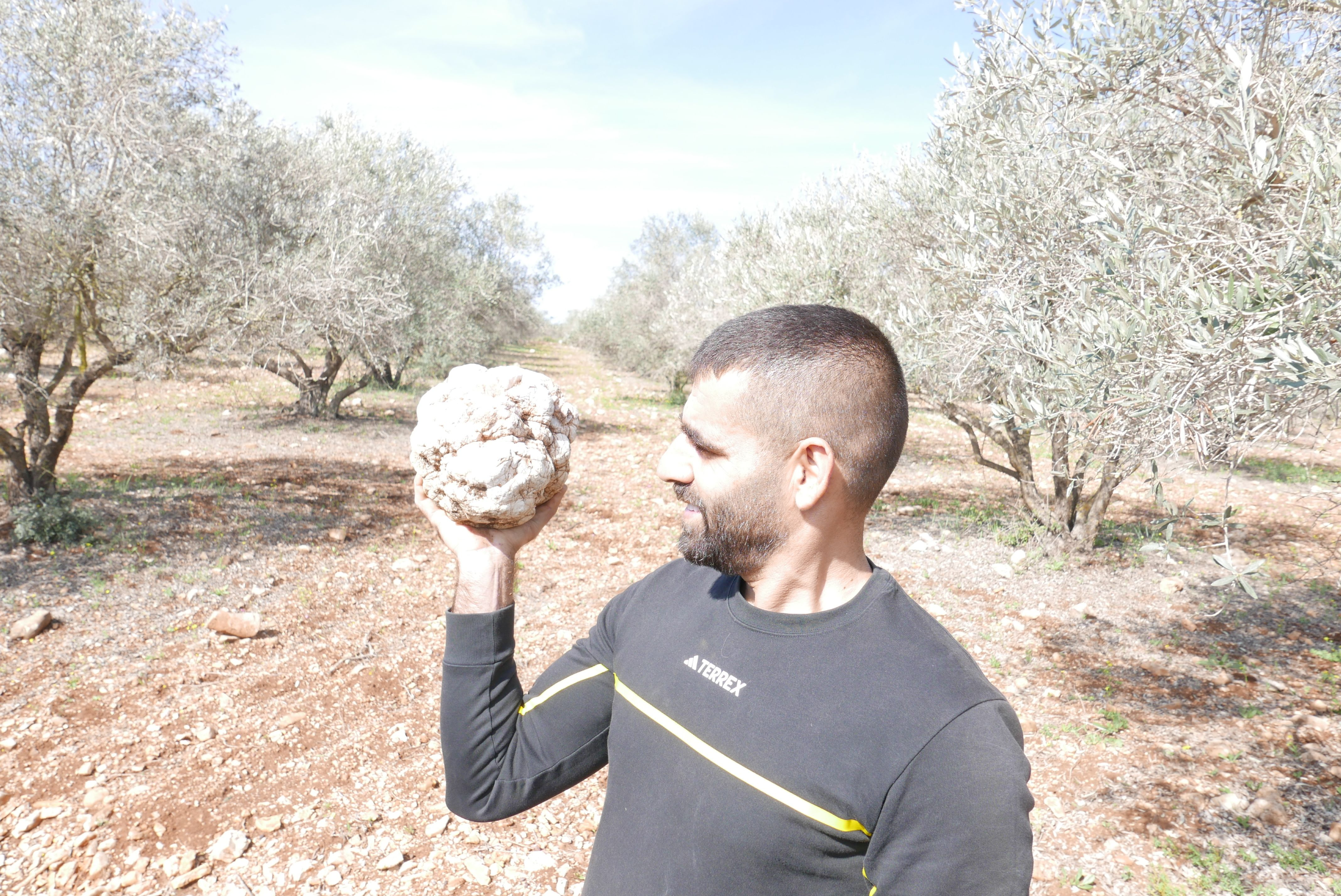
In the Sakhnin Valley, however, Barkai and Shalata went on to discover 10 extraordinary handaxes featuring fossils and crystals. They also found a spheroid shaped from a geode – a task that would have been extremely difficult to accomplish, given the almost impossibility of knapping such crystals.
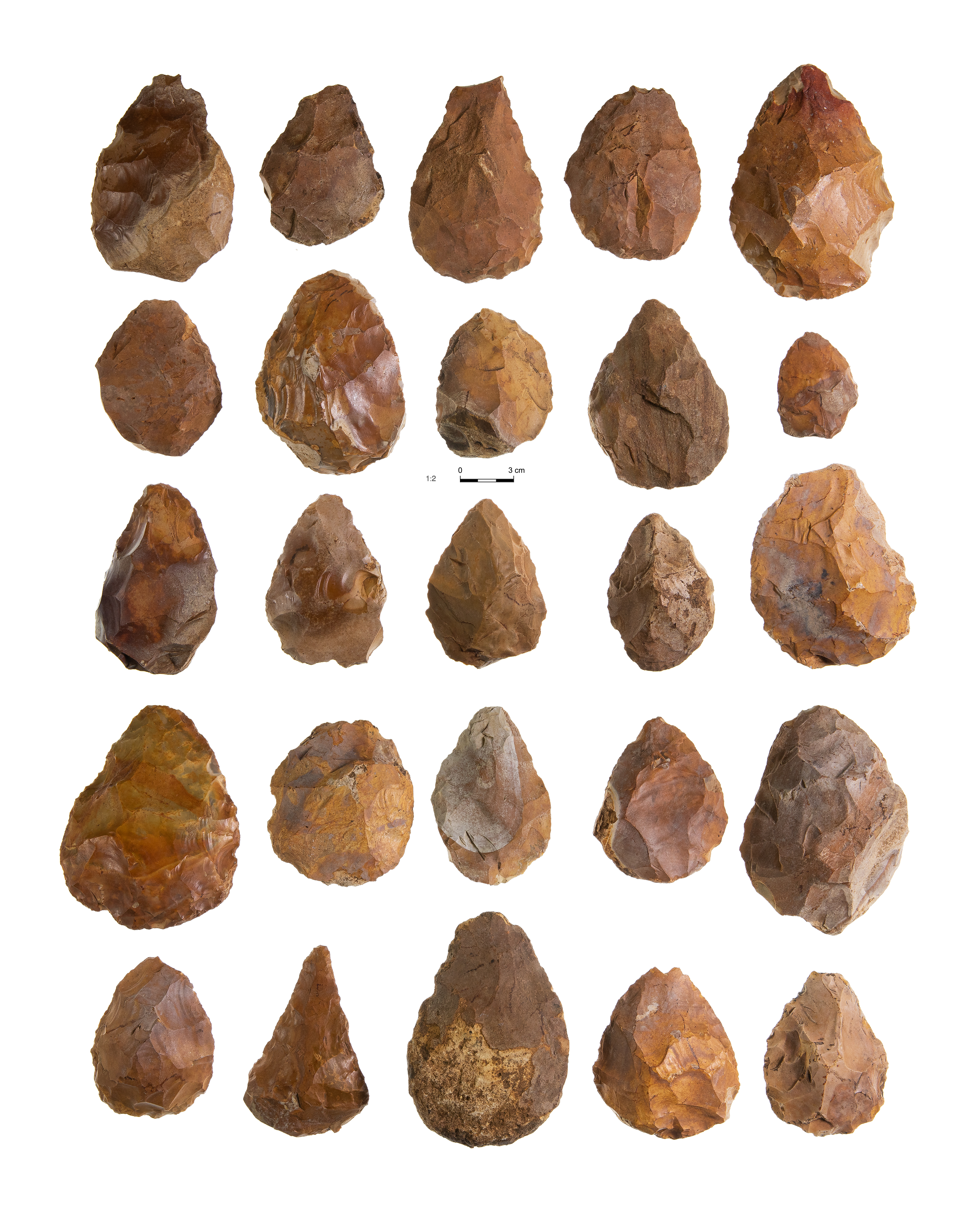
While the Sakhnin Valley is unusually rich in fossils and geodes, Barkai says that it also contains an abundance of high-quality flint – and indeed, the team have so far uncovered around 200 regular flint handaxes bearing no exceptional features. The fact that some tools were made from less amenable materials therefore suggests that this was an intentional act that was performed for a particular reason.
Generally, handaxes in the region were used to process large game, with ancient elephants being the major source of prey. However, the nature of these tools suggests that they belong to the late Acheulean industry, which arose around half a million years ago – just as these elephants were beginning to die out.
According to Barkai, the creators of these eye-catching utensils “realized that their major source of calories was disappearing, and I think that they were terrified about that. And at least in my wild imagination, the fact that they included geodes and fossils in their handaxes is because they saw some kind of potency in these primordial elements.”
“I think that they were looking for some help, some assistance from the cosmos in order to find solutions to their problems,” he says.
In this sense, Barkai suggests that handaxes were actually “mediators between humans and the cosmos that they lived in. So they were both tools and symbols, if you wish.”
Generally, the late Acheulean is associated with the complicated assortment of hominins that fall under the umbrella term "Homo erectus", although it’s unclear which of these actually represent separate species. As such, the researchers attribute these extraordinary lithic creations to H. erectus in the broadest sense of the label, without getting any more specific.
I'm sure that they were dancing, singing, sitting around the fire, telling stories.
Professor Ran Barkai
“We can say with a grain of salt that this is some kind of Homo erectus, but it could be any other type of human which is pre-Neanderthal and pre-sapiens,” says Barkai. Regardless of the tool-maker’s identity, however, these remarkable finds indicate that abstract thought and complex behaviors may have emerged earlier in human evolution than is generally believed.
“This strange combination of fossils, geodes, handaxes, elephants, and this unusual psychedelic landscape allowed them to perform all kinds of ceremonies and execute all kinds of beliefs that they felt could be of support,” says Barkai.
“So I think that rituals go back way in time, in human evolution, and that they were practiced in order to solve problems and look for answers,” he adds. Exactly what these rituals entailed is impossible to say, but Barkai says the symbolic behaviors of our ancient ancestors may have been similar to those practised by modern human cultures.
“I'm sure that they were dancing, singing, sitting around the fire, telling stories,” he says.
The study is published in the journal Tel Aviv.
Correction, April 3, 2026: The captions of the two images within the body of the article have been updated to clarify that the first shows a natural geode, and the second shows regular handaxes without the inclusion of fossils or geodes.