Nature
 PUBLISHED



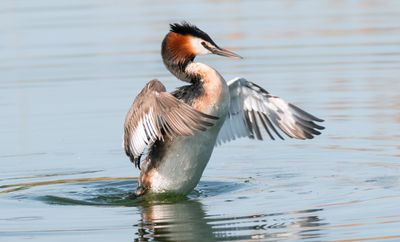


A photographer in Spain has captured rare images of a great crested grebe with a chiffchaff in its mouth. These elegant birds are most known for their dancing courtship displays, but it seems this pair has found a new favourite pastime.
The rest of this article is behind a paywall. Please sign in or subscribe to access the full content.Juan Montiel was at Las Cañas nature reserve in Navarre, Spain, when he witnessed chiffchaffs flying along the surface of the water hunting insects. He didn’t expect to see what came next: two great crested grebes stalked, caught, and drowned them in the water. The grebe pair then swallowed the chiffchaffs. Over a 90-minute period, Montiel saw two more hunting attempts by the grebes, but neither was successful.
Great crested grebes (Podiceps cristatus) are elegant water birds once hunted for the fancy feathers used in their courtship displays. In the UK, the birds came close to extinction in the late 19th century, but the population has rallied since The Plumage Prohibition Act of 1921. Notably waterbirds, their diet is almost exclusively fish, but more than one case of the birds consuming other species has been observed.
ⓘ IFLScience is not responsible for content shared from external sites.
While eating other birds might sound unusual, great crested grebes have previous. In 2019, a video from the Durham Wildlife Trust in the UK showed a great crested grebe eating a sand martin. In the US, a pied-billed grebe was seen capturing and consuming a masked warbler in 2021, as well as a yellowthroat in a separate incident in 2016.
While this is a relatively small species when compared with the great crested grebe, the pied-billed grebe is known to have a broader diet that includes crustaceans. Its beak and jaw muscles are therefore strong enough to crush the bodies of crayfish and the spines of catfish. It is thought to be this strength that allowed the pied-billed grebe to consume the warbler.
Great crested grebes are also known to pluck feathers from themselves and swallow them. While the motivation behind this behavior isn't entirely understood, one hypothesis suggests it can help protect their stomachs from fish bones or eliminate parasites from their gut. Grebes are also known to feed feathers to their young chicks, which they transport around on their backs.
A similar act of bird-on-bird violence was seen in wild mallard ducks in Trei Ape reservoir in southwest Romania that were spotted chowing down on a black redstart chick, while a second observation in the same area saw a mallard attacking and consuming a grey wagtail.
The account was reported on the french birding site Ornithomedia.