Nature
 PUBLISHED



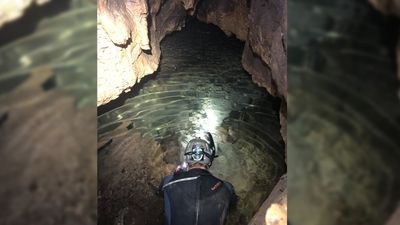


A palaeontologist stumbled on more than he expected while exploring a water cave in Texas in 2023. Although he was looking for fossils in a subterranean stream, he didn't anticipate discovering a veritable treasure trove of Ice Age bones, some from animals that have never been found in Central Texas before.
The rest of this article is behind a paywall. Please sign in or subscribe to access the full content.The new fossils belong to a giant tortoise and an extinct creature known as a pampathere, a relative of armadillos that was around the size of a lion. The fragments of shell and armor were discovered in Bender’s Cave – which is located on private property in Comal County – by Dr John Moretti, a palaeontologist at the University of Texas’s Jackson School of Geosciences.
“There were fossils everywhere, just everywhere, in a way that I haven’t seen in any other cave,” Moretti explained in a statement. “It was just bones all over the floor.”
Water caves play an important role as passageways for groundwater in Central Texas, but anecdotal accounts have also suggested they are home to many fossils that have accumulated over thousands of years. Essentially, the bones of ancient animals were washed into the cave systems through sinkholes during erosion and flooding events that took place in the distant past. They have been there ever since.
According to Moretti, these fossils may have flushed into the caves during the last interglacial period, a warm period that occurred around 100,000 years ago during the last Ice Age. Although there has been extensive palaeontology research in the area over the past century, the fossils of these animals have not been found in Central Texas before.
“This site is showing us something different, and that’s really important because of all the work that’s been done in this region,” Moretti said.
“If it is interglacial in age, it’s a new window into the past and into a landscape, environment, and animal community that we haven’t observed in this part of Texas before.”
Between March 2023 and November 2024, Moretti and John Young, a local caver and co-author of this new study, made six trips into Bender’s Cave. In this time, they collected fossils from 21 different zones, requiring them to crawl along streambeds while wearing goggles and snorkels. Although the water level in the caves varies due to rainfall, it remained around a few feet deep during their period of exploration.
In addition to the tortoise shell and pampathere armor, Moretti and Young also found a claw from a giant ground sloth and bones from camels, mastodons and saber-toothed tigers. Due to the underwater conditions, none of these specimens required excavation. All the fossils appeared polished and slightly rounded with a degree of rusty red mineralization. This suggests they were all swept into the cave around the same time. But while their placement in the water made them easy to collect, the lack of surrounding geological material makes it difficult for the researchers to determine their age through radiometric dating or other means.
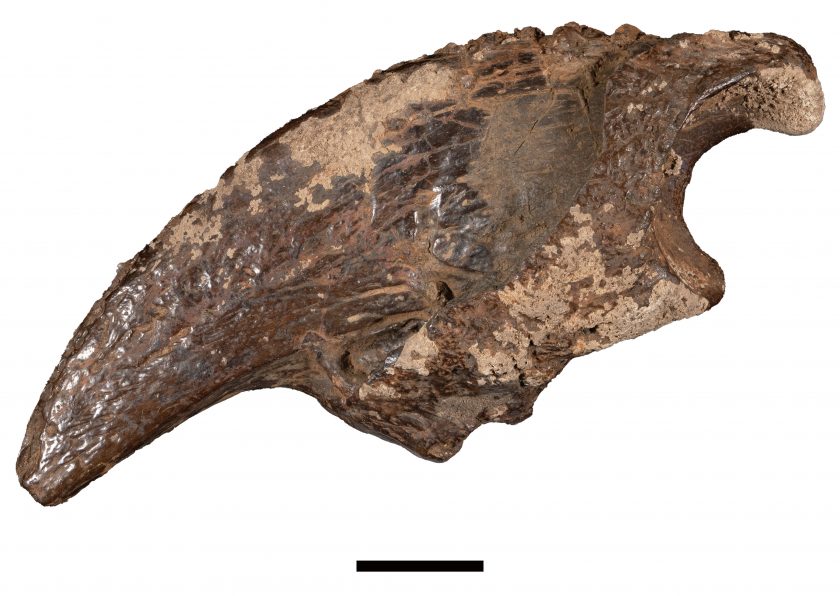
Despite this, there are good reasons to believe these fossils belong to the interglacial period. Firstly, one would expect to have seen these animals in the existing fossil record for Central Texas if they were contemporaneous with the younger fossils that have been discovered across the last century.
Another clue is related to habitat and temperature. Ground sloths and mastodon lived in forests, and the giant tortoise and pampathere required warmer temperatures to survive. The warm of the interglacial period could have provided this.
Finally, the fossils in Bender’s Cave appear to have a lot in common those from sites in the Dallas area, as well as the Gulf Coast which are known to date back to the interglacial period. Moretti performed a statistical analysis of these sites based on the similarity of their fossils, this grouped Bender’s Cave with these interglacial sites, rather than the other ones in Central Texas.
Moretti stresses that, although it take palaeontological expertise to do this research, to refine the picture of prehistoric Texas also requires landowners and scientists to work together as many of the relevant sites are owned by the former.
“These connections and partnerships make possible a lot of the natural science that gets done in Texas,” he explained. “It takes contributions from everyone – not just scientists at universities – to learn about the natural world we live in and depend on.”
The paper is published in Quaternary Research.